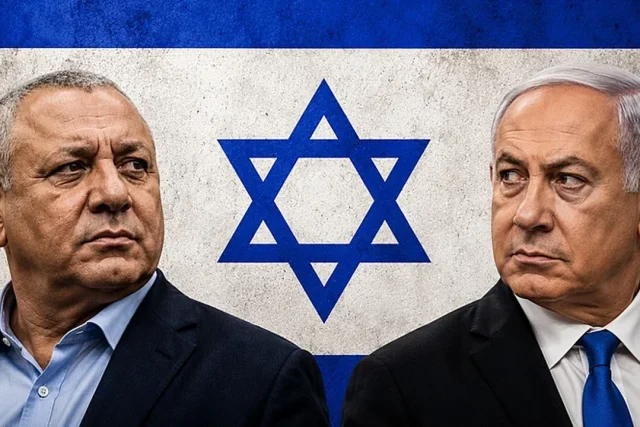




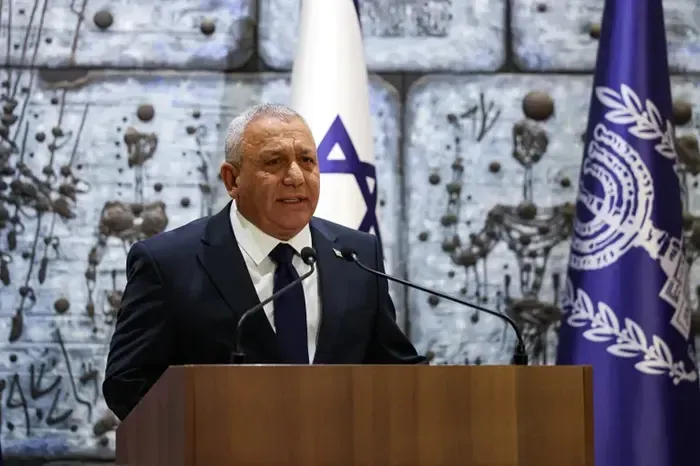
Gadi Eisenkot, a candidate for the position of Prime Minister of Israel, has accused Benjamin Netanyahu—the outgoing Prime Minister and leader of the interim government—of orchestrating a “racist and violent” election campaign targeting Israel’s Palestinian (Arab) citizens.
Eisenkot, who has been tasked with forming Israel’s new government, shared a lengthy post on social media this Friday addressing the current situation in the country. In his post on X (formerly Twitter), he noted that Arab citizens make up 21 percent of Israel’s total population. He stated that since the start of the election campaign, they have been subjected to a campaign—fueled by the outgoing Prime Minister and his associates for political gain—that seeks to delegitimize them through racist and violent rhetoric. This was reported by Al Jazeera. Gadi Eisenkot emphasized that the Prime Minister of Israel serves all citizens, including those who did not vote for him. Arab citizens of Israel are an integral part of the nation’s history. Attempting to marginalize a specific segment of the population and stigmatize them as a whole is an act against the state.
In the Israeli elections held on October 27, the four-party coalition led by Eisenkot secured 48 seats.
Meanwhile, the coalition of right-wing and religious parties led by Netanyahu won 53 seats. Neither side reached the 61-seat majority required to form a government. Arab-led parties, which represent Israel’s Palestinian citizens, secured a record 19 seats. Throughout the election, Netanyahu repeatedly alleged voter fraud by these Arab-majority parties; however, Israel’s own election authorities have rejected these claims.
Netanyahu also criticized the Arab-led parties for allegedly refusing to label Hamas a “terrorist group” following the attacks on Israel on October 7, 2023—even though leaders of these parties had, in fact, condemned the Hamas-led assault.
Eisenkot remarked that while one might disagree with the representatives of the Arab parties—or even harbor deep-seated animosity toward some of them—that is a separate matter. However, an entire population cannot—and should not—be maligned, and I will not allow that to happen. Meanwhile, Eisenkot has ruled out the possibility of forming a government that includes those specific parties. Securing their support would bring his coalition to 67 seats. Alternatively, with the backing of the ultra-Orthodox Jewish parties—United Torah Judaism and Shas—his coalition would reach exactly 61 seats.
Regarding the initiative to form a national unity government, Eisenkot stated that he intends to complete the task of government formation as quickly as possible; in his view, failing to do so would be a grave mistake. Eisenkot, who ran in the election as Netanyahu’s primary challenger, has six weeks to form a new government. Reports have emerged suggesting that Netanyahu—despite his weakened political standing following the election—is considering a new military strike against Iran. However, the United States, Israel’s own military leadership, and Eisenkot himself are not in favor of such a move. Eisenkot has argued that, barring an extreme emergency, Netanyahu should refrain from escalating tensions further.
In a post on Friday, Eisenkot mentioned that he had met with Netanyahu and his military secretary on Thursday to discuss the security situation, though he did not provide specific details regarding the meeting. Earlier in the week, Eisenkot had indicated an openness to including Netanyahu in his coalition government; he even hinted that he would welcome Netanyahu’s far-right Finance Minister, Bezalel Smotrich, into the alliance.