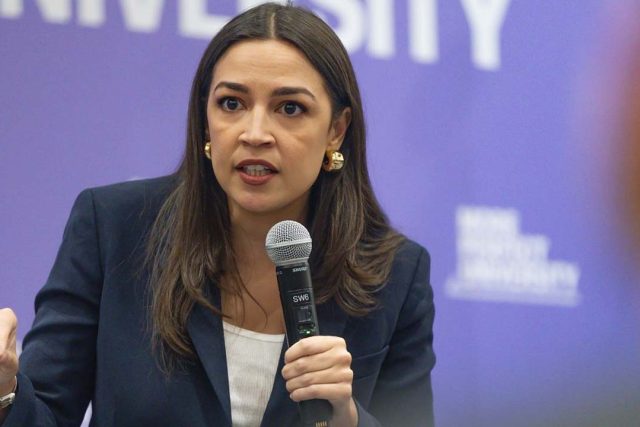









Colette Kress has been appointed as the interim Chief Executive Officer (CEO) of Nvidia, the world’s leading chipmaker. Kress, 59—who previously served as the company’s Chief Financial Officer (CFO)—will now lead the firm until a successor to co-founder Jensen Huang is found.
The company has entrusted this role to Kress following the departure of Huang, who had been at the helm of Nvidia for nearly three decades. Her appointment signifies more than just a change in leadership; it also suggests a potential shift toward a new balance in Nvidia’s business strategy.
According to a report by Reuters, Kress often sought to maintain financial discipline amidst Huang’s ambitious plans, which frequently involved massive investments and high-stakes business decisions. The two reportedly held differing views, particularly regarding multi-billion dollar investments in the artificial intelligence (AI) sector and various financing agreements with other companies.
Within Nvidia, Kress was viewed as a crucial “counterbalance” in the decision-making process. Whenever Huang proposed major business expansions, Kress would highlight the potential financial risks and the realities of such investments.
Jensen Huang’s Ambition vs. Colette Kress’s Financial Caution
Under Jensen Huang’s leadership, Nvidia rose to a position of absolute dominance in the AI chip market. However, in recent years, concerns have grown among Wall Street investors regarding the company’s heavy investments in AI infrastructure and its financing deals with various AI firms.
Nvidia’s investment portfolio includes AI companies such as OpenAI and Lambda. Some investors have criticized these arrangements, arguing that they create a “circular flow” of capital among various entities within the AI sector. A person familiar with the matter told Reuters that disagreements arose between Kress’s team, Huang, and Nvidia’s sales division regarding large-scale, high-risk financing deals. A notable example of this is the plan to fund an OpenAI data center project in Ohio.
Initially, there was a plan to provide $250 billion in support, but this was later reduced to $120 billion.
Another individual familiar with the situation noted that no one else shares Huang’s aggressive mindset when it comes to investing in his own customers. Huang had also encouraged Nvidia to fund startup companies.
A Symbol of Pragmatic and Steady Leadership
Those familiar with Nvidia’s internal dynamics describe Kress as significantly calmer, steadier, and more pragmatic than Huang.
Before joining Nvidia in 2013, she worked at several major technology firms, including Microsoft, Cisco, and Texas Instruments.
An individual familiar with Kress told Reuters, “Colette is a pragmatist. Her calm and steady leadership could help maintain market confidence and keep the company stable.”
Following uncertainty regarding a potential leadership transition at Nvidia, Kress participated in several discussions aimed at reassuring customers and suppliers.
Observers also believe that under her leadership, Nvidia’s strategy regarding its relationship with the U.S. government could shift. There is a possibility that the company might move away from the contentious stance that emerged with the U.S. government during Huang’s tenure over chip export controls.
However, while Kress’s interim appointment has provided temporary relief to the market, questions remain regarding the company’s ability to sustain its technological momentum in the long term. Many market analysts and investors believe that, given her background as a financial executive, it may be difficult for Kress to match Huang’s technical foresight and his willingness to take risks.
Anshel Sag, a principal analyst at Moor Insights & Strategy, notes that while appointing Kress to an interim role makes sense for stabilizing the market, he does not view her as the type of visionary leader required to sustain Nvidia’s current momentum in the long term.
Following the news of Huang’s departure, Nvidia’s share price fell by nearly 14% on Thursday. The decline eased slightly after the stock hit its lowest level in approximately 16 months.
Who is in the running to become the permanent CEO?
It remains uncertain whether Kress will ultimately be selected as Nvidia’s permanent CEO. The company’s board of directors has stated that the process to identify a permanent successor is underway.
The list of potential candidates includes Nvidia executive Ian Buck, who played a key role in advancing the use of AI technology within the company’s chips and led the development of CUDA, Nvidia’s widely used software platform. Additionally, AMD CEO Lisa Su and Arm CEO Rene Haas are also being discussed as potential candidates for the permanent CEO position at Nvidia.
How much did Kress know about Huang’s activities?
Following the leadership transition at Nvidia, questions have arisen regarding how much Colette Kress knew about Jensen Huang’s personal relationships and the company’s chip sales.
Allegations have surfaced regarding an extramarital affair between Huang and a businesswoman—identified as Alice Huang—whom U.S. intelligence officials suspect of being a Chinese spy. China, however, has denied such espionage allegations. Reuters was unable to reach Alice Huang for comment.
A person familiar with the matter told Reuters that Kress was aware of a relationship between Huang and Kimberly Powell, a vice president in Nvidia’s healthcare division who worked under Huang.
Reuters reached out to Nvidia and Powell for comment but received no immediate response.
Meanwhile, Sunny Cheung, an analyst at the Washington-based Jamestown Foundation, suggests that Kress could face questioning from the U.S. Congress regarding whether Nvidia’s chip sales—specifically those involving entities linked to the Chinese military or intermediaries in Southeast Asia—were adequately monitored.
Joining Nvidia at the encouragement of her two sons
Colette Kress’s decision to join Nvidia was partly influenced by her two sons. In an interview, she revealed that this was a factor in her 2013 decision to join the company.
In a 2023 interview with an Israeli media outlet, Kress shared that her sons were quite young at the time; through playing video games, they were familiar with Nvidia’s chips and encouraged her to join the firm.
Kress holds an undergraduate degree in economics and an MBA. Thanks to the surge in Nvidia’s share price, she joined the ranks of billionaires in 2025.
According to Forbes, Kress’s net worth stood at $1.2 billion as of mid-2026. She ranked 32nd on the list of women in the United States who became wealthy through their own efforts.
Her name has also appeared on lists of influential women in the business sector. In recent years, this Nvidia finance executive has been featured in the rankings of the world’s 50 most influential women, as published by *Fortune* and *Forbes* magazines.