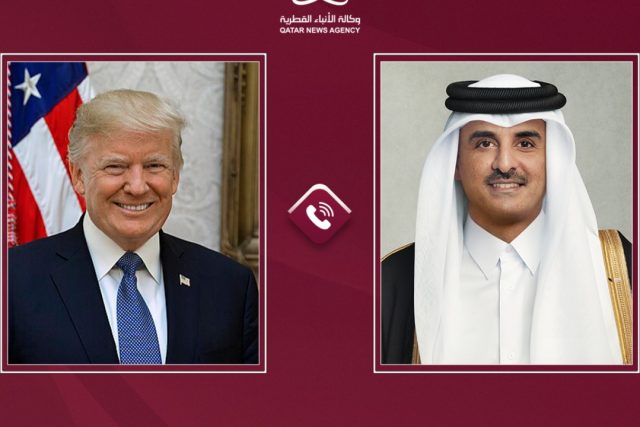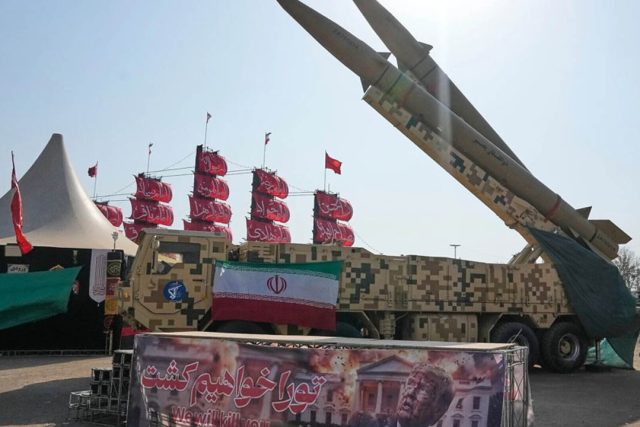





In Israel, Prime Minister Benjamin Netanyahu and his allies have failed to secure a majority. In the United States, President Donald Trump has effectively seen his political influence collapse following the critical midterm elections; he and his party have lost control of both chambers of Congress. Consequently, he no longer has a free hand to act as he pleases—the opposition Democrats have effectively tied his hands. He must now seek their approval for any major decisions, though he retains some authority through his executive powers. As a result, the future direction of U.S. policy in the Middle East—and the prospect of a war with Iran—remains uncertain. Will Trump, alongside his hardline ally Netanyahu, initiate a new war against Iran? That possibility now appears significantly diminished. Netanyahu, reeling from his own electoral setbacks, has yet to stabilize his domestic position; nearly a week has passed, and he has been unable to form a government—nor has any other party. Israel is currently mired in political chaos, making it highly unlikely that Netanyahu would prioritize launching an attack on Iran over securing his own grip on power.
Meanwhile, Donald Trump faces criticism from within his own political party. His Vice President, J.D. Vance, has explicitly stated that the Republicans’ poor performance in the congressional elections was partly due to the war with Iran—a situation that could also damage the U.S.-Israel relationship. As previously noted, Netanyahu drew the United States into a conflict with Iran without Trump seeking authorization from Congress or other key policy-making circles. Trump joined the conflict alongside Netanyahu based on a unilateral decision. While the stated objective was regime change in Iran, the scope of the aggression expanded to include attacks on Iranian schools, nuclear facilities, oil reserves, and operations in the Strait of Hormuz. At one point, Trump even suggested seizing Iran’s oil wealth—much like the approach taken toward Venezuela—but he failed to achieve this. Instead, he has only succeeded in spreading the flames of war across the Middle East. They have managed to spread war to countries in the region, including Saudi Arabia, Qatar, Bahrain, Jordan, Yemen, Lebanon, and Syria. Democrats attempted to hold Trump accountable for these reckless actions, but their efforts were unsuccessful. Now, however, they effectively hold power within Congress; they could revive various legal cases against Trump or seek to hold him accountable. Consequently, it appears that Trump has effectively become a “lame duck.”
In this context, a crucial question remains unanswered: has the likelihood of U.S. President Donald Trump initiating a war against Iran—following the conclusion of the election cycle—increased or decreased? Prior to the midterm elections, it appeared that the United States was on the verge of launching a major new offensive against Iran. Family members of U.S. diplomats were evacuated from the Middle East, and additional U.S. military equipment and forces were deployed to the region. Arab leaders also issued cryptic warnings regarding the prospect of a devastating new conflict. Yet, the attack that diplomats and analysts feared might occur around election day did not materialize. Instead, Republicans are now blaming the war with Iran—and even the situation involving Israel—for their crushing defeat at the hands of the Democrats.
On Wednesday, Trump remarked that the war with Iran and the high energy prices linked to this conflict were, “to a large extent,” the reasons for his party’s historic defeat. Vice President-elect JD Vance was more explicit on Wednesday, stating, “The reason we lost is the war. The President himself said as much last night.” He also pointed to the Trump administration’s relationship with Israel as a factor in the party’s disastrous loss. Notably, the President’s eldest son, Donald Trump Jr., expressed his support for this analysis by Vance on X (formerly Twitter). Individuals familiar with the inner workings of the Trump camp have described Vance as a staunch opponent of military intervention, noting his opposition to a potential U.S. war with Iran.
The 9 percent drop in oil prices on Wednesday, following the U.S. election results, suggests a shift in expectations. Marissa Khurma, founder and CEO of Amena Strategies, told *Middle East Eye* that the election results could provide an opportunity for those within Trump’s inner circle—as well as Congress—to dissuade the President from initiating a new war against Iran. Khurma, who is also a non-resident fellow at Rice University’s Baker Institute, noted that the outcome will depend on how the newly elected members of the House of Representatives and the Senate collaborate to push for a policy shift regarding Iran, and on the counsel Trump receives from his advisors. However, there are reasons to be skeptical of this line of reasoning; the President has previously boasted about his use of the veto power against Congress.
On Tuesday, amidst the election coverage, Trump remarked to *Politico* that he does not intend to simply sit idle for two years, merely exercising his veto power. Yet, as he is ineligible to run for a third presidential term, this 80-year-old billionaire may feel less constrained by the actions of lawmakers. Under the U.S. Constitution, the authority to declare war rests solely with Congress. Notably, George W. Bush was the last president to seek congressional authorization for the use of military force—specifically in 2001 and 2002. Nevertheless, experts suggest that a significant victory for the Democrats could serve to limit Trump’s actions. Khurma notes that it is difficult to predict what Trump might do. However, how Democrats collaborate with Republicans—who are also keen to prevent further escalation—will be significant.
On Wednesday, Senate Democratic Leader Chuck Schumer brought the issue of a potential war with Iran to the forefront of his party’s political agenda, declaring, “We will put an end to this war.” He added that some Republicans have already joined them in this effort.
Despite these statements and a downward trend in oil prices, the deployment of military hardware and forces in the Middle East suggests that the conflict could escalate further. The U.S. currently has two aircraft carrier strike groups and an amphibious assault ship in the Arabian Sea, with a third carrier strike group also en route to the region. Meanwhile, Iran’s leadership appears to be relishing Trump’s political downfall. Mohsen Rezaei, secretary of Iran’s Supreme National Security Council, stated in a post on X (formerly Twitter) that the Iranian nation has inflicted a “strategic defeat” on Trump on the battlefield and in the Strait of Hormuz, while also delivering a “political defeat” in Washington. Although Trump acknowledged that the prospect of a war with Iran contributed to his party’s stunning electoral defeat, he expressed no remorse for his earlier decision to initiate hostilities against Iran. Alan Eyre—a former senior U.S. State Department expert on Iran, now with the Middle East Institute—told *Middle East Eye* that, if anything, Trump may now feel unconstrained to launch further attacks. He noted that the new Congress will not take office until January, and even then, it remains questionable how much real power they will have to restrain the President. “Therefore,” he concluded, “I don’t expect much to change.”