


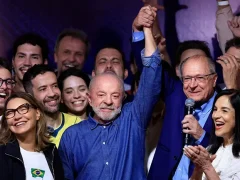

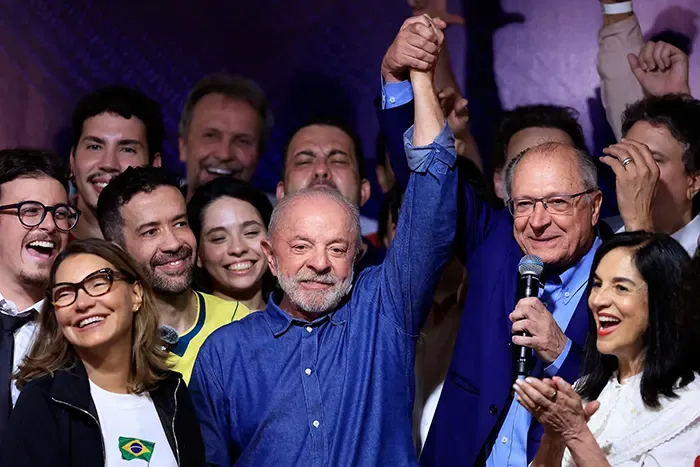
Left-wing leader Luiz Inácio Lula da Silva has won the Brazilian presidential election, defeating right-wing senator Flávio Bolsonaro. Despite trailing by 2.2 million votes in the first round, Lula staged an incredible comeback in the runoff—a feat unprecedented in modern Brazilian history. The final results show that Lula secured 51.75% of the vote (over 64.2 million votes), while Flávio Bolsonaro received 48.25% (over 59.8 million votes)—a margin of approximately 4 million votes. Lula’s victory carries immense significance for both Latin America and the global political landscape. This win—achieved just before his 81st birthday on October 27—marks an extraordinary moment in modern Brazil; never before has a candidate in the country overcome a first-round deficit to win a runoff. Furthermore, Lula has set a record by becoming the first person in Brazilian history to be elected president for a fourth term. Political analysts argue that this is not merely the victory of an individual candidate, but a decisive turning point for the future of the nation’s democratic trajectory and system of governance.
The election outcome is being hailed as a major triumph for democracy and the rule of law. During his campaign, Flávio Bolsonaro had promised that, if elected, he would secure the release of his father, former President Jair Bolsonaro. Jair Bolsonaro, who lost to Lula in the 2022 election, is currently serving a 27-year prison sentence for his role in a plot to stage a coup. Flávio’s agenda also included the impeachment of Supreme Court justices and amendments to the constitution. Analysts believe that Lula’s victory has shielded Brazil’s democratic institutions from such structural overhauls and the threat of authoritarian rule. However, refusing to accept defeat, Flavio has demanded the annulment of the election results, labeling the decision by Supreme Court Justice Cristiano Zanin to extend the voting period by two hours as unacceptable.
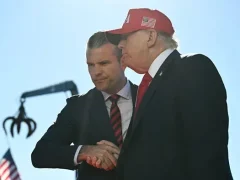
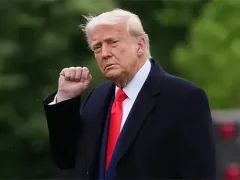
A Barrier to the Rise of the Right: Lula’s return holds significant geopolitical importance. His victory serves as a major obstacle to the recent surge of right-wing politics across various Latin American nations. The defeat of Flavio—known as an ally of former U.S. President Donald Trump—also deals a significant blow to the international right-wing sphere. The Trump administration had supported the Bolsonaro family in various ways, including the imposition of tariffs on Brazil. With Lula’s victory, Brazil is expected to move beyond the U.S. sphere of influence, strengthening its independent foreign policy and trade relations with the Global South, the BRICS bloc, and China. Lula has consistently emphasized the protection of national sovereignty against foreign interference.
Environmentalism and Social Security: This election served as a critical test for environmental protection and social security. During Jair Bolsonaro’s tenure, the Amazon rainforest suffered extensive destruction, and the rights of indigenous peoples were severely undermined. Had Flavio come to power, there was a risk that these environmentally destructive policies would have continued. Lula’s victory will play a vital role in preserving the Amazon—often referred to as the “lungs of the world.” Furthermore, his social programs, aimed at protecting the rights of low-income individuals and women, will be sustained. Nevertheless, given Flavio’s rejection of the election results and the right-wing’s dominance in the Brazilian Congress, Lula will face significant challenges in governing a deeply polarized society.
Combating Algorithmic Manipulation: Lula’s victory also represents a major win against the algorithmic manipulation employed by large technology companies, such as Meta. Lula’s campaign team alleged that Meta was suppressing content from progressive figures on its platform while boosting the reach of content from Flavio. The situation escalated to the point where the electoral court had to intervene, ordering Meta to remain neutral toward all candidates. By overcoming these tech-enabled underhanded tactics, Lula’s victory has become an exemplary model for democratic forces worldwide.
Key factors in Lula’s victory: A strategic shift in Lula’s campaign played a pivotal role in his win. After trailing in the first round, Lula incorporated pro-people economic promises into his platform—such as transitioning to a five-day workweek, debt forgiveness, and offering free public transportation on weekends. Furthermore, while approximately 33.4 million people abstained from voting in the first round, an increase in voter turnout during the runoff significantly contributed to Lula’s success.
The impact of religious and gender-based divisions: The election also highlighted deep-seated divisions regarding religion, crime, and gender. To combat crime, Flavio proposed hardline policies—akin to those of El Salvador’s President Nayib Bukele—including chemical castration for rapists and lowering the age of criminal responsibility to 14. In terms of religious polarization, 62% of Evangelical Christians supported Flavio, while 52% of Catholics backed Lula. Ultimately, however, the votes of women proved to be the most decisive factor in Lula’s victory. In 2006, Flavio remarked that women were merely a “tourist attraction” for the country and opposed maternity leave—a stance that did not sit well with women. In contrast, Lula implemented various social protection measures for women, which led them to overwhelmingly support him. Although right-wing forces dominate the Brazilian Congress, Lula’s victory has, for the time being, halted the rise of the right across Latin America.