
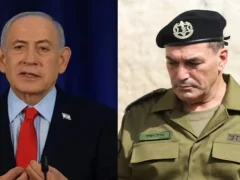





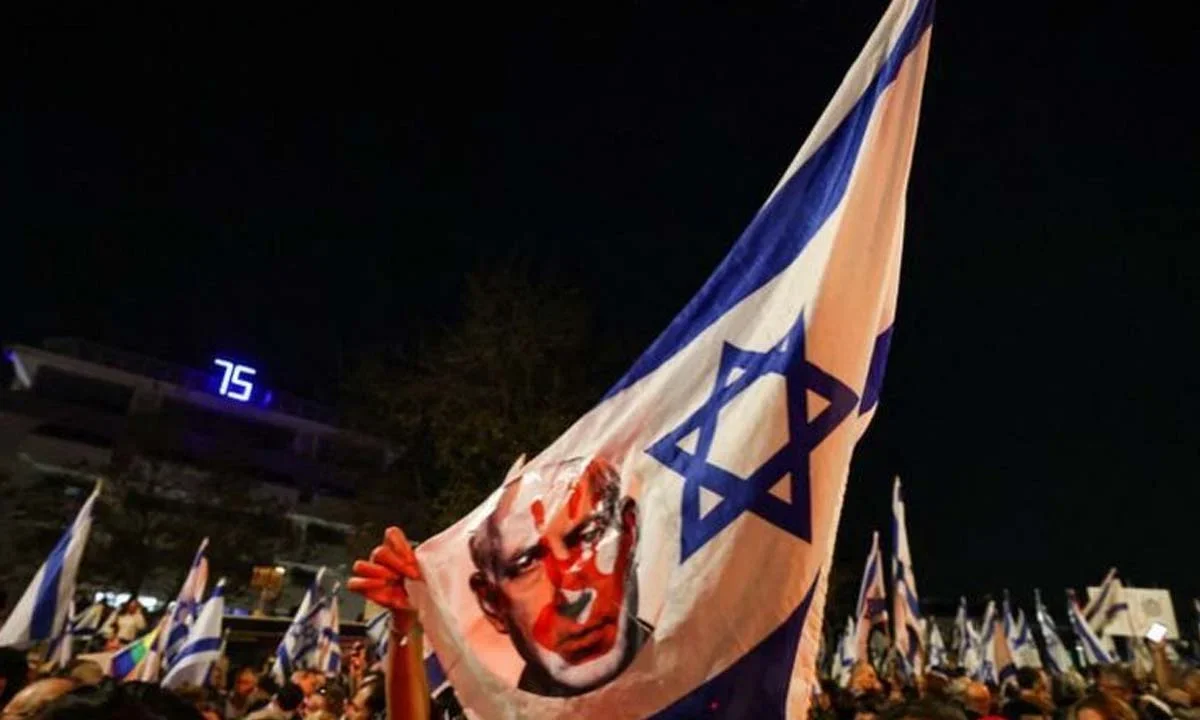
Israel is currently grappling with a multifaceted crisis, driven by the long-term repercussions of the war in Gaza, the prospect of a direct military confrontation with Iran, insecurity in the north, and intense controversy surrounding the actions of Prime Minister Benjamin Netanyahu’s government. Compounding these issues are the strain of military expenditure, economic uncertainty, and a deepening divide across various segments of society. As the government attempts to navigate these challenges simultaneously, questions are being raised regarding its capacity to manage the crisis. Should the situation deteriorate further, political instability could intensify, and the possibility of internal conflict cannot be ruled out.
The British media outlet *The Telegraph* has also highlighted the divisions within Israeli society and politics—particularly concerning the occupied Palestinian territories—noting the potential for escalating internal instability.
Netanyahu Government Under Pressure from Political Divisions
A central feature of Israel’s current crisis is the profound disagreement among its political and social factions. Long-standing disputes over governance, security policy, and the management of occupied territories have become increasingly complex. Tensions between religious and secular political parties, debates over judicial reform, and the contentious issue of mandatory military conscription for ultra-Orthodox Jews have all served as obstacles to political unity.
Furthermore, the Netanyahu government has faced significant criticism for its failure to prevent the attacks of October 7, 2023, as well as for its handling of the subsequent situation.
A report from Israel’s Institute for National Security Studies (INSS)—referencing data from June 2026—indicates that only 25 percent of survey respondents expressed a high level of trust in the government, while 73 percent reported low levels of trust. Similarly, only 31 percent of respondents expressed high confidence in Benjamin Netanyahu, compared to 67 percent who indicated low confidence.
These survey results point to a significant trust deficit between the government and a large portion of society. However, such statistics cannot be taken as definitive proof that the government is on the verge of collapse or that the state structure is crumbling. Election results, the formation of coalitions in parliament, and the stances of opposition political forces could also prove significant in shaping the course of events. The contest involving Netanyahu’s opponents—including political factions aligned with Gadi Eisenkot—is not merely a struggle for power; it also encompasses issues of political accountability, the future of state governance, and security priorities.
**Economic Pressure Mounts Due to War Costs**
The protracted conflict has placed substantial strain on Israel’s economy. According to the annual report from the Bank of Israel, the financial cost of the war—which began in October 2023—is estimated at approximately 350 billion shekels for the period spanning 2023 to 2026. Notably, this figure excludes decisions and expenditures related to military operations against Iran from late February 2026 onwards.
Meanwhile, at the beginning of 2023, Israel’s public debt-to-GDP ratio stood at approximately 60.5 percent. By the end of 2025, this figure had risen to 68.5 percent.
The central bank has identified military expenditures, additional spending in the civilian sector necessitated by the war, and the reliance on debt to finance these costs as key factors exerting pressure on the nation’s fiscal health.
As the debt burden grows, opportunities for investment in sectors such as infrastructure, education, and social development may become constrained. Even if economic growth is sustained, a prolonged conflict risks diminishing the government’s fiscal autonomy. However, the Israeli economy possesses a capacity for adaptation; therefore, it would be premature to conclude that an economic collapse is imminent based solely on rising debt figures.
**Security Concerns in Gaza and the Northern Front**
The protracted military campaign in Gaza has sparked debate regarding Israel’s ability to achieve its stated strategic objectives. Extensive attacks have resulted in significant Palestinian casualties and widespread destruction of infrastructure in Gaza. Yet, the success of these military operations cannot be gauged solely by the scale of the devastation or the frequency of the attacks.
Issues concerning the future administration of Gaza, the security landscape, and the fate of captives and hostages remain critical challenges for the Israeli government. An analysis by the International Institute for Strategic Studies (IISS) in August 2025 noted that the Netanyahu government faces significant obstacles in translating military successes into lasting political outcomes. At the same time, the organization acknowledged several military gains achieved by Israel against Hamas, Hezbollah, and Iran.
The situation in the country’s north has also not fully returned to normal. The return of residents displaced by the conflict and the restoration of damaged economic activities have emerged as critical issues. Reports from October 2026 regarding the situation in the Kiryat Shmona area highlight ongoing security concerns, the disruption of economic activity, and growing discontent among some local residents.
This underscores a clear distinction: while military operations may weaken an adversary, ensuring long-term security and restoring a sense of normalcy are separate, distinct challenges.
Escalating conflict with Iran increases strategic risks.
A direct conflict with Iran in 2026 has further complicated Israel’s security landscape. Following US and Israeli strikes on Iran that began on February 28, Tehran’s retaliatory actions expanded the scope of the conflict. The repercussions extended well beyond Israel and Iran, placing regional infrastructure, US military bases, and commercial shipping at risk.
A September 2026 report by the US Congressional Research Service (CRS) highlights the broad impact of this conflict. According to the report, although a ceasefire was reached in April and a memorandum of understanding was signed in June, these measures failed to pave the way for a lasting agreement, and the conflict subsequently reignited.
This situation demonstrates that while the use of military force can exert pressure on an adversary, translating that pressure into a sustainable political and security settlement remains a difficult challenge.
For Israel, the critical question is not merely the extent of the damage inflicted upon its adversary. Equally important are the achievement of stated objectives, the maintenance of deterrence, the ability to counter retaliatory strikes, and the prevention of the conflict’s escalation. Meanwhile, Iran has also faced significant casualties, economic losses, and the destruction of infrastructure. Consequently, any comprehensive assessment of the conflict would be incomplete without accounting for the losses sustained by both sides.
What are the implications if these crises intensify simultaneously?
Israel currently faces a set of interconnected challenges. These include internal political divisions and a lack of public trust in the government, compounded by the costs of a protracted war, security instability in Gaza and the northern regions, and the ongoing risk of conflict with Iran. Collectively, these factors may narrow the government’s room for maneuver in decision-making and crisis management.
Should these pressures persist, they could deepen social divisions and potentially trigger new political crises. However, there is currently no definitive evidence to suggest that internal conflict or civil war is inevitable.