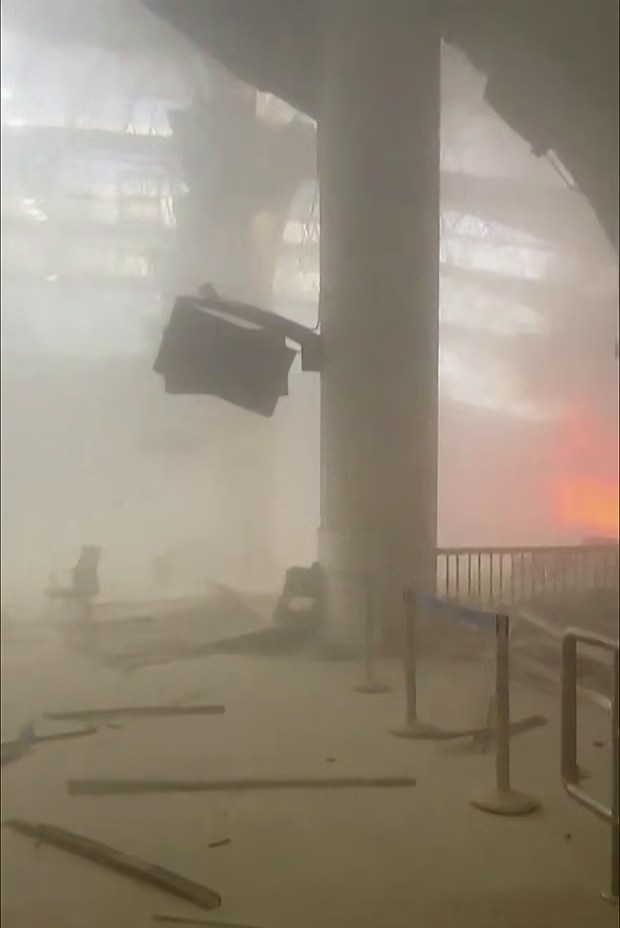
Kuwait International Airport has sustained extensive damage following an attack by Iran. The incident resulted in at least one fatality and 63 injuries. The Kuwaiti military has confirmed this information. This marks the first major deadly attack in the Gulf region since the ceasefire went into effect on April 8.
The United States and Iran have resumed exchanging missile and drone attacks against one another. This latest attack occurred on Wednesday amidst this volatile situation. Consequently, efforts to broker a new ceasefire agreement between Washington and Tehran have once again been thrown into jeopardy.
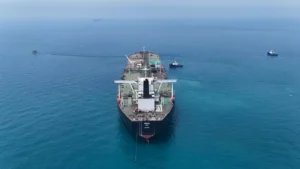
The previous night, the United States fired a “Hellfire” missile at an oil tanker in the Strait of Hormuz for allegedly attempting to “breach” a U.S. blockade. Subsequently, U.S. forces reported that they had successfully repelled an Iranian counter-attack. Additionally, they carried out strikes against various targets on Iran’s Qeshm Island.
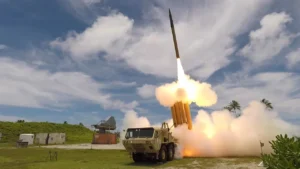
Iran’s Islamic Revolutionary Guard Corps (IRGC) stated that, in retaliation for the attack on Qeshm Island, they launched missile and drone strikes against the headquarters of the U.S. Fifth Fleet in Bahrain. However, the U.S. military’s Central Command has denied this claim by Iran.
U.S. Central Command (CENTCOM) reported that, last Tuesday, they struck an empty oil tanker named the M/T Lexi. Flying the flag of Botswana, the vessel was transiting through international waters—passing near Kuwait—and heading toward Iran’s Kharg Island. A missile was fired from a U.S. warplane at that time with the specific aim of disabling the tanker’s engines.
This incident, in essence, served as the catalyst for the renewed conflict. CENTCOM asserts that the tanker had been issued repeated warnings to halt over a 24-hour period; however, the ship’s crew failed to heed these warnings. The strike was carried out only after these warnings went unheeded. Following this incident, Iran launched a drone attack targeting the passenger terminal at Kuwait’s airport.
Brigadier General Saud Abdul Aziz Al-Atwan, spokesperson for Kuwait’s Ministry of Defense, strongly condemned the attack. He characterized the incident as an act of “criminal aggression” on the part of Iran. Saud stated that the attack caused extensive damage to the airport building and left many injured.
Kuwait’s state news agency reported that, in light of the unfolding situation, the country’s civil aviation authority has suspended all air traffic. Flights scheduled to land at this airport were diverted to alternative airports.
In a statement, Iran’s Foreign Ministry held Kuwait and Bahrain responsible for the situation. Tehran asserted that the United States is utilizing the land and infrastructure of countries in the region—much like a colonial power—to execute aggressive plans against Iran. Iran emphasized that the leadership of Kuwait and Bahrain bears direct responsibility for last night’s attack.