Since Iran entered the battlefield, the Strait of Hormuz—one of the world’s most critical energy transit routes—has been effectively blockaded. Approximately 20 percent of the world’s oil and natural gas is transported through this narrow waterway situated between Iran and Oman. Consequently, disruptions along this route have triggered instability in the global energy market. This has driven up fuel prices and raised fears of economic uncertainty across various regions of the world, including Asia.
Although clashes between Iran and the United States ceased following the implementation of a ceasefire on April 8, normal maritime traffic through the Strait of Hormuz has not yet been fully restored. Maritime transport continues to be significantly disrupted due to the fallout from the conflict. Nevertheless, amidst this uncertain environment, numerous vessels linked to India continue to navigate this perilous waterway.
As a result, India has managed to keep its energy supply chain operational, even amidst major instability in the Middle East. According to analysts, this is particularly significant given Iran’s formidable geographical control over the Strait of Hormuz.
Following the US-Israeli attacks on February 28, Iran has repeatedly targeted vessels traversing the region in retaliation for the conflict.
Coordination Behind the Scenes
During an inter-ministerial meeting on Friday, officials from India’s Ministry of Shipping disclosed certain details regarding their efforts to ensure the safe passage of vessels through this volatile waterway. However, for security reasons, the specific operational protocols were not made public.
Opesh Kumar Sharma, Director of the Shipping Division within India’s Ministry of Ports, Shipping, and Waterways, stated that it is not possible to publicly disclose details regarding how coordination is established between India and Iran, or which specific vessels are accorded priority.
He noted that such coordination is primarily facilitated through India’s Ministry of External Affairs. He added that determining priority for vessel movements involves coordination with India’s Ministry of Petroleum and Natural Gas, the Ministry of Chemicals and Fertilizers, and other relevant agencies.
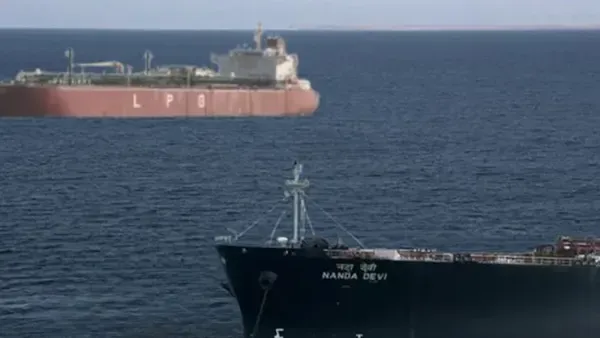
According to Opesh Kumar Sharma, there are currently 13 Indian-flagged vessels positioned within the Strait of Hormuz and the surrounding area. These include one LPG tanker, five crude oil tankers, one chemical or product tanker, three container ships, two bulk carriers, and one dredger.
Despite security risks, India has continued shipping operations along this route and remains one of the leading nations utilizing the Strait of Hormuz.
Among the India-linked vessels that have transited the Strait of Hormuz since February 28 are the Shivalik, Nanda Devi, Jag Ladki, Pine Gas, Jag Basant, BW Tyr, BW Elm, and Sabuj Sanvi.