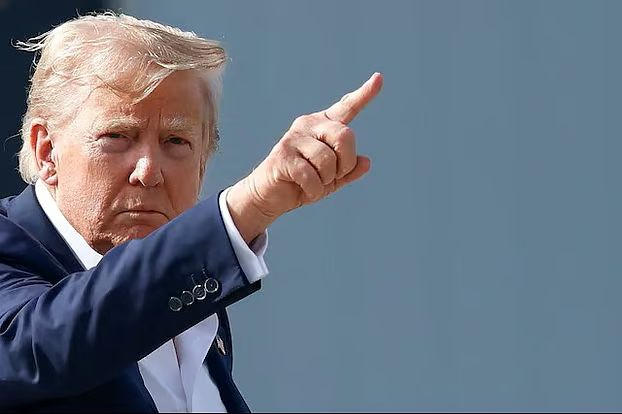
US President Donald Trump embarked on a campaign—tantamount to war—with the stated aim of achieving regime change in Iran. That hope of his went unfulfilled. Now, he is issuing a relentless series of threats against Cuba. He is even speaking of “taking over” the country. Amidst this, a US court has also indicted Cuba’s former President, Raúl Castro. Stephen Collinson, a senior reporter for CNN, explores why Trump—having failed to bring about the collapse of the regime in Iran—has now turned his attention toward Cuba.
US President Donald Trump is now seeking in Cuba what slipped through his grasp in Iran. What is that? The opportunity to declare himself a victor by orchestrating a regime change. However, should the US military—already under considerable strain—take any action in Cuba, it would entail significant political and military risks.
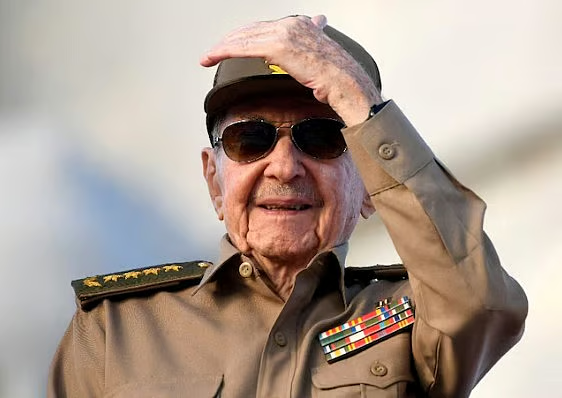
The history of conflict between the United States and the communist-ruled island nation of Cuba spans nearly 70 years. The relationship between the two nations has now taken a dramatic turn. Last Wednesday—on Cuba’s Independence Day—the United States indicted Cuba’s former President, 94-year-old Raúl Castro, on charges of murder and conspiracy to kill US citizens.
This indictment comes at a time when Cuba is facing a humanitarian crisis triggered by US oil sanctions. The country’s social fabric is on the verge of collapse. Concurrently, diplomatic pressure on the nation is also mounting. Recently, John Ratcliffe, the Director of the CIA, presented a set of demands to Havana.
For the past several weeks, President Donald Trump has been issuing a steady stream of threats against Cuba. He has asserted that he can do whatever he pleases with this impoverished nation. He has even remarked that the “glory of taking over” Cuba could be his. Most recently, on Wednesday, he declared that he is in the process of “liberating” Cuba.
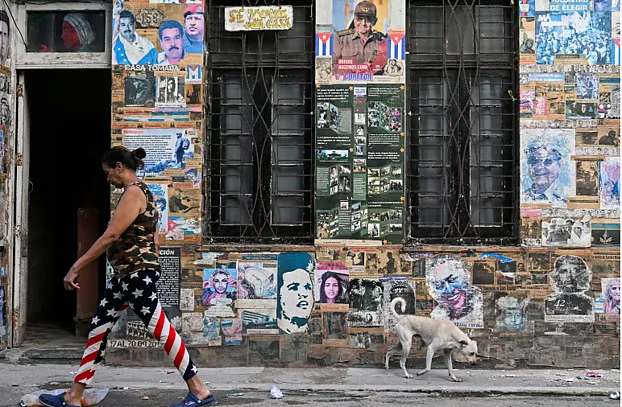
The indictment of Castro stems from an incident in 1996 involving the downing of two civilian aircraft. Four people were killed in that incident, three of whom were US citizens. The decision to indict Castro in connection with that event appears to be a calculated, two-pronged maneuver by the Trump administration. Trump likely hopes that this move will serve to further intensify the pressure on Cuba. Consequently, the country may agree to enter into negotiations. Conversely, this legal action could also serve as a pretext for a U.S. military intervention in Cuba. Last January, Venezuelan President Nicolás Maduro was similarly ousted from power.
Lee Schlenker, a researcher at the Quincy Institute for Responsible Statecraft, has issued a warning regarding this matter. He states that if the U.S. objective behind indicting Castro is to extract concessions from Cuba, it could prove counterproductive. Such a move would likely foster nationalist unity among the Cuban people, thereby hardening the stance of the country’s leadership.
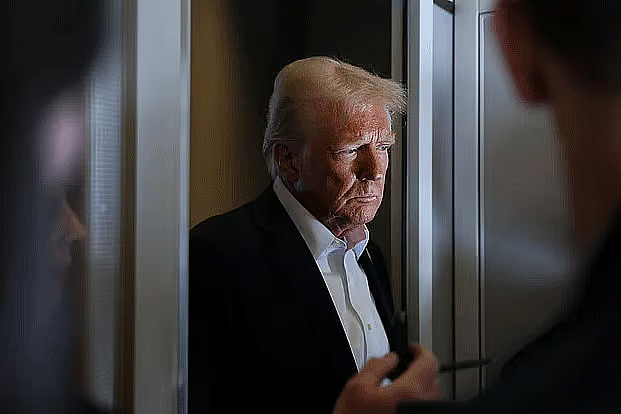
The maneuver currently being executed in Cuba represents the latest test of a specific strategy employed by the Trump administration. This strategy entails—on one hand—imposing sanctions to escalate economic pressure in an effort to force adversaries into submission, while—on the other—brandishing the threat of military force. This strategy proved effective in Venezuela, aiding in the identification and engagement of Delcy Rodríguez.
Delcy was a high-ranking official within the Venezuelan government; she subsequently became the country’s Acting President. Since then, she has maintained lines of communication with the Trump administration. However, the people of Venezuela have yet to see their aspirations for democracy realized. In the case of Iran, the U.S. employed a similar strategy—one that has failed so profoundly that President Trump may now find himself with no remaining option other than to initiate a new military conflict.
Lee Schlenker, Researcher at the Quincy Institute for Responsible Statecraft
Risks for the U.S. as Well
Prior to undertaking operations in Venezuela and Iran, the United States was observed engaging in extensive military preparations. Currently, no such indications are visible in the vicinity of Cuba. Nevertheless, a report by CNN notes an increase in the activity of U.S. military surveillance aircraft off the coast of Cuba. A similar surge in such activity was also observed prior to the attacks launched against Iran and Venezuela. However, due to the conflict with Iran, Trump’s popularity has hit rock bottom. This implies that his chances of garnering political support for any new military operation are extremely slim. Recent polls conducted by CNN, The New York Times, and other media outlets reveal that the majority of American citizens oppose a war with Iran. Many have even begun to directly link Trump’s policies to their own personal economic hardships. These polls further indicate that the majority of Americans also oppose Trump’s policy toward Cuba.
A direct conflict between the United States and Cuba would undoubtedly be popular among the anti-communist Cuban exile community in Florida, who constitute a significant political force. However, such a conflict would pose yet another formidable challenge for the Republicans in the upcoming midterm elections. The Republican Party is already under pressure, given the historic decline in Trump’s popularity.
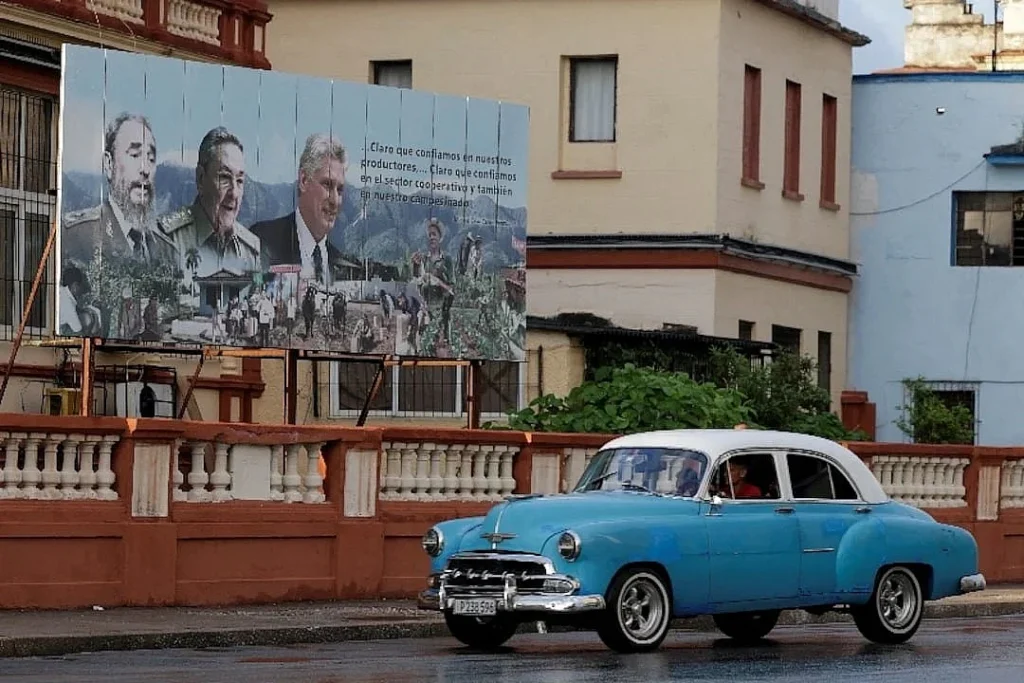
Amidst this climate, any new conflict would merely validate the Democrats’ assertion that President Trump is completely indifferent to the plight of the voters. Even if the U.S. foreign policy toward Cuba were to yield some measure of success, it would hold little value for American voters who are struggling to pay their rent and afford daily necessities.
Meanwhile, any U.S. military operation in Cuba could face far greater resistance than a sudden intervention in Venezuela. It would also entail a significant risk of casualties among U.S. troops. The Cuban military suffers from equipment shortages; indeed, much of its hardware is outdated. Nevertheless, they remain capable of inflicting damage upon U.S. forces.
Lee Schlenker, a researcher at the Quincy Institute for Responsible Statecraft, notes that Cuba adheres to a defensive doctrine requiring the entire population to mobilize in the event of foreign aggression. Should the United States launch an attack there, U.S. troops would undoubtedly suffer casualties. However, such an action would likely fail to bring about any fundamental change in the Cuban government. At best, the result would be an intensification of repression within the country, accompanied by only negligible progress toward democracy and a free-market economy.
Why the U.S. Sees an Opportunity for Victory in Cuba
Why is the Trump administration contemplating the creation of a new crisis in Cuba? In reality, Trump is in dire need of a foreign policy victory—one capable of revitalizing his diplomatic agenda. His administration claims that its policies have successfully restored America’s standing and prestige on the global stage; in practice, however, this foreign policy appears rather precarious. This is because Trump failed to end the conflict with Iran and proved unable to halt the war in Ukraine. Furthermore, he failed to advance the specific steps outlined in the proposed ceasefire plan for Gaza.
From John F. Kennedy onward, every U.S. president prior to Trump failed to dismantle the regime established by Cuba’s late ruler, Fidel Castro. Viewed through this lens, Trump is evidently enticed by the prospect of achieving historic recognition by bringing about the collapse of this long-standing regime. His Secretary of State, Marco Rubio, is the son of Cuban immigrants; for years, he has made the overthrow of the Cuban government the central objective of his political career.
Transforming Cuba from an adversary into a compliant state would serve to further bolster the “Monroe Doctrine.” The overarching objective of the Trump administration’s foreign policy is to assert control over the entire Western Hemisphere. In furtherance of this strategy—and alongside its interventions in Venezuela—the United States has provided financial assistance to the President of Argentina. Concurrently, the administration has actively supported right-wing populist candidates in various elections across the region. Certain aspects of Trump’s Cuba policy mirror those of previous U.S. administrations. U.S. governments have long been concerned about the manner in which adversaries—such as Russia and China—conduct espionage and surveillance off the American coast from their bases in Cuba. Were the Cuban regime to be overthrown, these major powers would lose their political allies in Havana.
For decades, Cuban civilians, too, have lived under a repressive and economically dire regime. If this regime were to collapse, they could look forward to political freedom and a better life. However, due to various past events, the Cuban people remain skeptical regarding the sincerity of the Trump administration.
There is no dispute that the Cuban government is brutal and repressive. The same can be said of Iran, where civilians have been subjected to oppression for years. Meanwhile, Trump’s sanctions are only exacerbating their suffering. Yet, in neither Cuba nor Iran has the regime collapsed thus far. Furthermore, the tactics Trump is employing to carve his name into history imply that any potential victory will come at a steep price.