








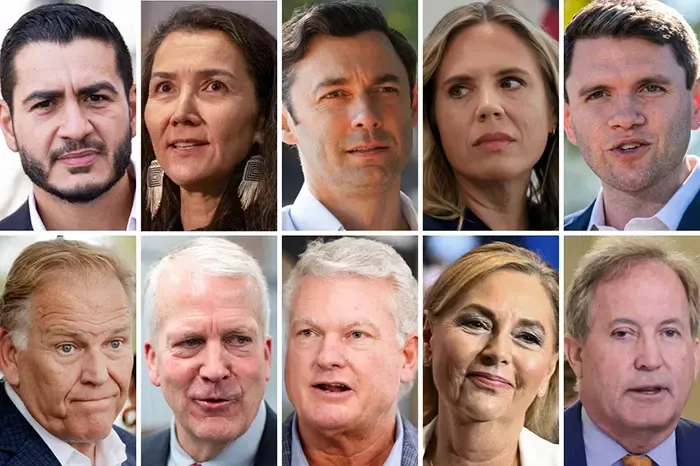
The world’s eyes are on today’s U.S. midterm elections. Heading into the vote, the Republicans held 53 seats in the Senate—a majority—but this could change once the results are in. While 35 of the 100 total Senate seats are up for election, it is not a given that the outcome will shift in every one of them; in America’s highly polarized political landscape, some seats consistently lean toward a specific party. However, this election could bring significant change. Analysts are closely watching 11 specific seats that could potentially switch parties, as these contests are expected to be fiercely competitive. Since these seats are currently held by Republicans, the final outcome could swing in either direction. A CNN report details the situation surrounding these 11 Senate seats.
According to the average of CNN’s “poll of polls,” President Donald Trump’s public approval rating currently stands at 34 percent. Voter frustration over issues such as the economy, the prospect of war with Iran, and corruption is working in favor of the Democrats. To secure a majority in the Senate this year, the Democrats would need to flip at least four Republican-held seats while successfully defending all the seats they currently hold. The outcomes in these 11 races could alter the trajectory of the Senate, with Democratic candidates showing potential for victory in each.
At the top of this list is North Carolina, where, according to opinion polls, Democratic candidate Roy Cooper leads his Republican opponent, Michael Whatley, by 14 points. If he wins, it would mark the first time the Democrats have secured a victory there since 2008. In Ohio, Democrat Sherrod Brown leads Republican Jon Husted by 5 points; Husted is currently under pressure due to allegations involving an energy scandal. In Texas, a fierce contest is shaping up between Democratic candidate James Talarico and Republican Ken Paxton. Elon Musk has spent over $168 million (approximately 20.83 billion BDT) in support of the Republicans in this election. In Maine, Democratic candidate Troy Jackson is leading against the incumbent Republican Senator, Susan Collins.
In Alaska, there is a tight race between Democrat Mary Peltola and Republican Dan Sullivan. In Kansas, Democrat Adam Hamilton is ahead of Republican Roger Marshall. In the agricultural state of Iowa, Democrat Josh Tureck and Republican Ashley Hinson are also locked in a close battle. In Michigan, although Democrat Abdul El-Sayed is leading, a controversy has emerged after his own party colleague, Haley Stevens, extended her support to the Republican candidate, Mike Rogers.
In New Hampshire, Democrat Chris Pappas holds a 12-point lead over Republican John Sununu in public opinion polls. South Carolina has appeared on this list for the first time, where a close contest is underway between Republican candidate Darlene Graham—sister of the late Lindsey Graham—and Democratic candidate Annie Andrews. In Georgia, it is expected that Democrat Jon Ossoff will easily defeat the Republican candidate, Mike Collins.