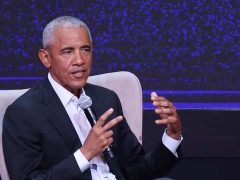



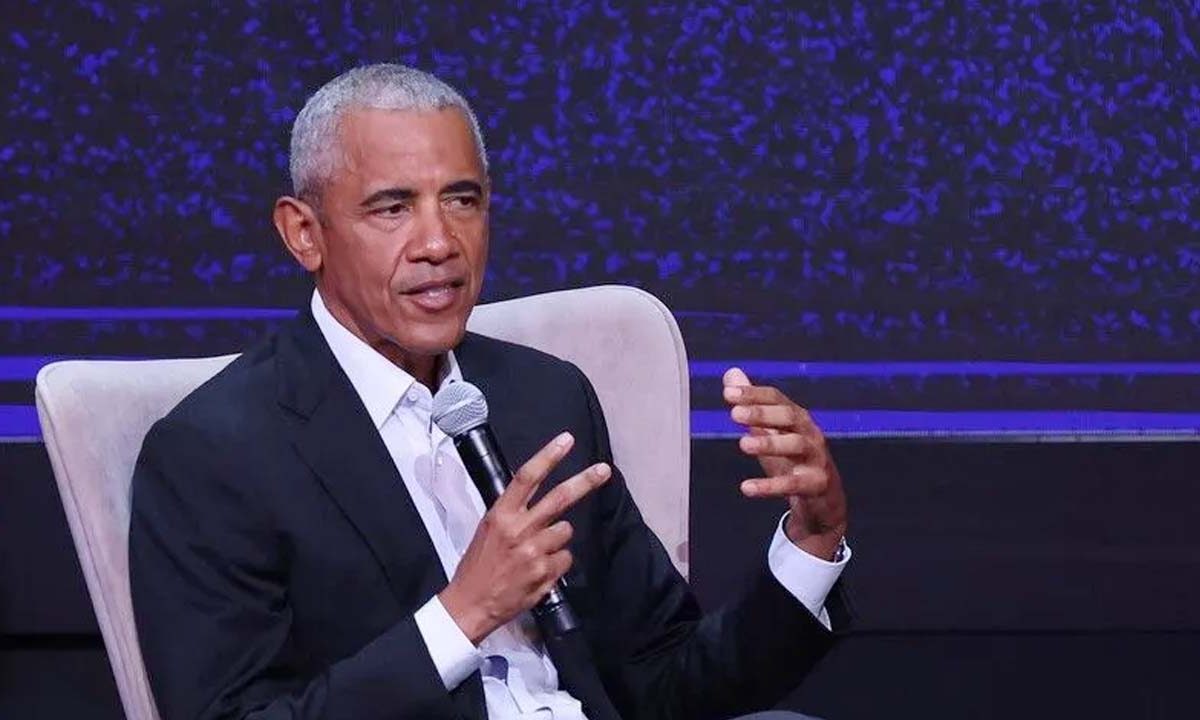
Among the positive remarks made by former U.S. President Barack Obama regarding Islam and the Muslim community, his speech at Cairo University in Egypt stands out as the most significant. In this address, titled “A New Beginning,” he called for the rebuilding of the relationship between the United States and the Muslim world—a relationship rooted in mutual interest, respect, and cooperation. The speech was more than just a diplomatic statement; it clearly articulated his views on the contributions of Islamic civilization, the religious freedom of Muslims, the tradition of tolerance within Islam, and the role of Muslim Americans.
Obama noted that while the history of the relationship between Islam and the West has seen conflict, it has also been marked by centuries of coexistence and cooperation. He argued that a fundamental clash between the United States and Islam is not inevitable. Instead, shared values—such as justice, progress, tolerance, and the inherent dignity of every human being—can serve as a common foundation. He emphasized that the relationship between the United States and the Muslim world should be built upon mutual interest and mutual respect.
In his Cairo address, Obama also shared personal and family experiences. He mentioned that his father came from a Kenyan family that had included Muslim members for generations. During his childhood in Indonesia, he grew accustomed to the sound of the *adhan* (call to prayer) at dawn and dusk. Later, while working in various neighborhoods in Chicago, he observed many people finding dignity and inner peace through their Muslim faith. These experiences provided him with a personal context for understanding Islam firsthand.
His remarks regarding the contributions of Islamic civilization were particularly significant. Obama stated that, as a student of history, he recognized that civilization is indebted to Islam. He pointed out that institutions like Al-Azhar have served as beacons of knowledge for centuries—a legacy that helped pave the way for the European Renaissance and the Enlightenment. He highlighted the contributions of Muslim society to the development of algebra, the magnetic compass and navigational tools, writing and printing technologies, and the study of the spread and treatment of diseases.
He further noted that Islamic culture has gifted the world with unique architectural masterpieces, timeless poetry, music, exquisite calligraphy, and spaces for spiritual tranquility. Throughout history, Islam has also demonstrated the potential for religious tolerance and racial equality. The core message of his remarks is that reducing Islam solely to contemporary security concerns or political debates obscures its long-standing historical contributions to global civilization.
Obama also addressed the relationship between Islam and American history, stating that Islam is not a new phenomenon in the American narrative. Morocco was the first nation to recognize the United States. Citing the 1796 Treaty of Tripoli, he quoted the second U.S. President, John Adams, who affirmed that the United States held no enmity toward the laws, religion, or peace of Muslims.
He noted that, since the nation’s founding, Muslim Americans have enriched American society. They have served in the military, held public office, participated in the civil rights movement, established businesses, taught at universities, excelled in sports, and even received Nobel Prizes. He also pointed out a significant historical detail: the Quran used by Keith Ellison—the first Muslim American elected to Congress—when taking his oath to uphold the Constitution, was similar to a copy of the Quran that had once been part of the personal collection of Thomas Jefferson, one of America’s founding fathers.
In his address, Obama challenged negative stereotypes and preconceived notions about Muslims. He argued that it is as incorrect to generalize about all Muslims as it is to portray the United States solely as a self-serving empire. He suggested that to overcome mutual misconceptions and distrust, both sides must strive to understand each other’s history, experiences, and aspirations.
Regarding the issue of religious freedom, Obama specifically highlighted the tradition of tolerance found within Islamic heritage. He stated that Islam possesses a glorious tradition of tolerance, exemplified by the history of Andalusia and Cordoba. Drawing on his childhood experiences in Indonesia, he noted that he had witnessed Christians worshipping freely in a Muslim-majority nation. In his view, every individual should have the freedom to choose and practice a religion in accordance with the dictates of their own conscience, mind, and soul.
In the same address, he spoke of the responsibility of Western nations to protect the religious freedom of Muslims. He remarked that the state should not dictate what attire a Muslim woman chooses to wear. He asserted that hostility or discrimination against any religion cannot be masked under the guise of liberalism. Noting that certain regulations regarding charitable funding in the United States were hindering Muslims from fulfilling their obligation of *zakat* (obligatory almsgiving), he pledged to work with American Muslims to ensure they could carry out their religious duties.
In his 2009 Ramadan message, Obama also praised the religious practices and values of Muslims. In the message, released on August 21, he extended his best wishes—”Ramadan Kareem”—to Muslims across the United States and around the world. He described Ramadan as a time for spiritual reflection, self-examination, and a renewed sense of responsibility toward others. During this month, Muslims fast during the day, perform *tarawih* prayers at night, and engage in the recitation of the Quran.
According to Obama, these religious practices serve as a reminder of shared values such as justice, progress, tolerance, and human dignity. He noted that the concept of fasting exists across various religions. In his own Christian faith, fasting not only brings a person closer to the Creator but also serves as a reminder of those who lack the certainty of their next meal. He also praised the Muslim tradition of charity and standing by those in need.
On August 14, 2010, during an Iftar event held at the White House, Obama took a clear stance in support of the religious freedom and civil rights of Muslim Americans. Addressing the controversy surrounding the construction of an Islamic center and mosque near the site of the 9/11 attacks in Lower Manhattan, New York, he stated that Muslims, like all other citizens, have an equal right to practice their religion. He emphasized that they should have the right to build places of worship and community centers on private property, in accordance with existing laws.
He asserted that the United States’ commitment to religious freedom must remain steadfast. The state cannot treat followers of any religion as separate or inferior citizens. During the same event, he highlighted the history of Muslim Americans, noting their contributions to the nation’s development as farmers, business owners, laborers, and entrepreneurs. He pointed out that mosques exist across various states, and that Muslims serve in diverse sectors, including the police, fire departments, emergency services, and the military.
In his remarks, he also highlighted the stance taken by Muslim religious leaders against terrorism and extremism. In his words, Islam teaches the preservation of human life, not its destruction. He further rejected the notion of holding the Muslim community as a whole responsible for the actions of terrorist groups.
On February 3, 2016, Obama visited the Islamic Society of Baltimore in the U.S. state of Maryland. This marked his first visit to a mosque in the United States during his presidency. At that time, there was growing concern regarding anti-Muslim sentiment, discrimination, and the tendency to target Muslims within political discourse in the United States. In his address at the mosque, he expressed his gratitude to Muslim Americans for their community service, support for their neighbors, and contributions toward preserving the nation’s unity.
He noted that many Americans have never visited a mosque. He encouraged them to view a mosque as a place of worship—much like a church, synagogue, or temple—where families gather to worship God, children receive an education, sports are played, social activities take place, and healthcare is provided to those in need. In other words, a mosque is not merely a place for prayer; it often serves as a hub for education, community service, and social cohesion.
In the same speech, he criticized the one-sided portrayals of Muslim Americans often found in the media. He observed that many people’s perceptions of Muslims are shaped primarily by news reports on terrorist attacks or distorted depictions in films and television—narratives that obscure the true diversity and contributions of the Muslim community. He emphasized that Muslims worldwide come from a wide array of ethnic and racial backgrounds—including Arabs, Africans, Latin Americans, and people from South and Southeast Asia—and cannot be confined to a single ethnic or cultural identity.
Touching upon the moral teachings of Islam, Obama remarked that for over a thousand years, people have been drawn to Islam’s message of peace. He noted that Islam—much like many other world religions—is rooted in a commitment to compassion, kindness, justice, and charity. He cited a core teaching of the Prophet Muhammad (PBUH): that one should treat others as one would wish to be treated oneself—a principle he also compared to the tenets of Christian morality.
In his Baltimore address, he highlighted that Muslim Americans are our neighbors, teachers, doctors, scientists, entrepreneurs, athletes, police officers, firefighters, and members of the armed forces. They contribute significantly to the nation’s security and development. Among them are those who have even given their lives for the country’s freedom and safety. He described Muslim Americans as one of the most patriotic and resilient segments of the nation’s population. Obama specifically stated that there is no conflict between a Muslim identity and American citizenship. In his view, one does not have to choose between being “Muslim” or “American”—one can be both a Muslim and an American. He addressed young Muslims, telling them that they need not believe they must choose between their religious identity and their patriotism; they are, in fact, full and valued members of American society and the nation.
Obama’s stance on extremism and terrorism also forms a significant part of his discourse regarding Islam. He noted that groups like the Islamic State (ISIL) and Al-Qaeda seek to position themselves as representatives of Islam, yet they are neither protecting the faith nor its followers. In reality, a vast number of the victims of their violence are innocent Muslim men, women, and children. He observed that these groups often distort select passages from religious texts to justify their acts of murder and terror.
Furthermore, he emphasized that Islam should not be framed as the root cause of the problem in the context of countering terrorism. Doing so only serves to alienate and marginalize Muslim Americans, while simultaneously strengthening the propaganda used by extremist groups. In his view, effectively combating terrorism requires delegitimizing the religious claims of these extremist organizations, while at the same time recognizing the civil rights, religious freedoms, and social contributions of Muslims.
On July 21, 2016, during an Eid al-Fitr celebration at the White House, Barack Obama reaffirmed the contributions of the American Muslim community. He highlighted gratitude, compassion, and generosity as core Islamic values. He noted that Muslim families—whether they have lived in the United States for generations or are recent immigrants—are an integral part of the nation’s social fabric.
At the same event, he emphasized that it is everyone’s responsibility to ensure that no American feels marginalized or like a second-class citizen. He called for the rejection of hatred, discrimination, and hateful rhetoric directed against people of all faiths, including Muslims. Addressing Muslim youth, he affirmed that they are a valued and recognized part of American society, possessing limitless potential.
A consistent line of thought runs through these remarks. Obama acknowledged the historical contributions of Islamic civilization while simultaneously highlighting the diversity and civic engagement of contemporary Muslim communities. He wove together themes of religious freedom, mutual respect, opposition to discrimination, and the need to prevent the exploitation of religion by extremists.
However, evaluating his statements requires considering the political realities of the time. Although he pledged a new relationship with the Muslim world in his Cairo speech, his presidency saw continued military operations in Afghanistan, drone strikes in Pakistan, NATO’s military intervention in Libya, and persistent conflicts across the Middle East. His administration also faced criticism from various quarters within the Muslim world regarding its stance and actual policies concerning the Palestinian issue. Consequently, his positive remarks about Islam and Muslims cannot be viewed as a reflection of all his administration’s policies.
It is also worth noting that Obama identified as a Christian. While he often referenced his Muslim family background, his childhood in Indonesia, and his experiences working with Muslim communities, these factors do not make him an expert in Islamic theology. His statements are, fundamentally, an expression of a U.S. President’s political, historical, and interfaith perspective. In summary, the key features of Barack Obama’s positive remarks regarding Islam and Muslims include his recognition of Islam as an integral part of the history of global civilization, his acknowledgment of the contributions of Muslims to American national life, his advocacy for religious freedom, and his rejection of the notion that terrorism defines the Muslim community as a whole. His statements reflect not only respect for Muslims and a firm stance against discrimination but also an emphasis on mutual responsibility, religious tolerance, and shared human values.
Sources: The White House Archives, U.S. Department of State, Library of Congress, and Al Jazeera