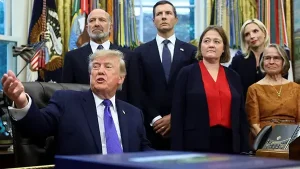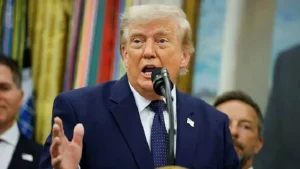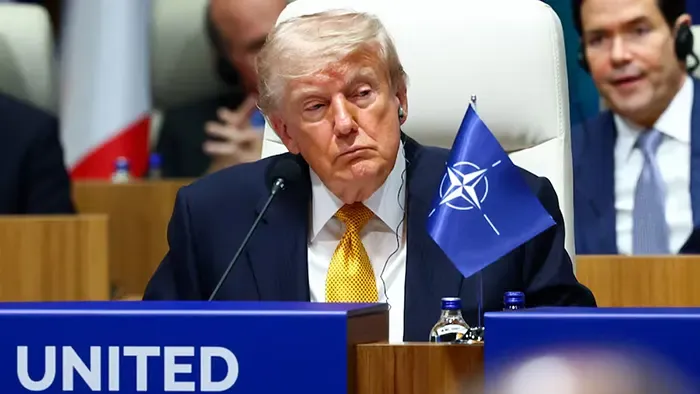
US President Donald Trump has once again voiced his long-standing dissatisfaction with Europe during a NATO summit held in Ankara, Turkey. On Wednesday (July 8), he made harsh remarks specifically targeting Spain, calling for a halt to all trade and travel between the US and the country.
Trump stated, “I do not want to have any relationship with Spain. Stop all trade with Spain, and even travel there.” He further claimed, “They are hopeless, bad people.”
However, questions have arisen regarding whether Trump’s threat will actually be implemented. In the past, he has announced tough stances against various nations and regions—including China, Iran, Greenland, and Oman—only to back down from those positions later in many instances.
Analysts point out that as a member of the European Union (EU), Spain’s foreign trade is governed by the EU’s common trade policy. Consequently, it is not easy for the US to take trade measures targeting Spain in isolation. A new trade agreement between the US and the EU was finalized just a few weeks ago.
Nevertheless, Trump has already warned via social media that he might impose 100 percent tariffs on countries that implement a digital services tax—a move that could conflict with that agreement.
In this regard, European Commission spokesperson Olof Gill stated that the EU expects the US to honor the commitments made in their joint statement, just as the EU has upheld its own promises.
He added that the European Commission would always fully safeguard the interests of the European Union and all its member states.
Jacob Funk Kirkegaard, a senior fellow at the Brussels-based think tank Bruegel, remarked that if Trump were to actually take action against Spain, it would effectively amount to action against the entire European Union, potentially triggering a major trade war.
However, he expressed skepticism about Trump’s authority to enforce such sweeping sanctions. In Kirkegaard’s view, this appears to be an aggressive reaction by Trump—an attempt to divert attention from the ongoing situation in the Middle East. But does he possess the legal grounds to implement the kind of legal changes he is proposing? In my opinion, the answer to this is very clear—no.