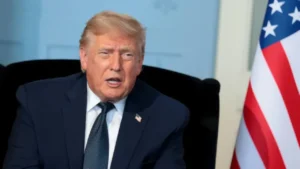
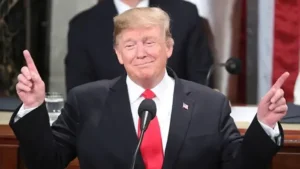
US President Donald Trump has remarked that he loves inflation. The US experienced its highest inflation rate in three years during the month of May. Trump’s comment sparked fresh controversy after the prices of essential commodities in the country rose at their fastest pace in three years. Recent data from the US Bureau of Labor Statistics (BLS) showed that commodity prices in the American market rose by 4.2 percent in May compared to the previous year, up from 3.8 percent in April. The BBC reported this news. The primary causes were not domestic crises, but rather the ongoing conflict with Iran and rising fuel oil prices. Speaking to reporters at the White House, Trump said, “I love it. These numbers are great. You know what I really like? I love inflation.” However, Trump claimed that once the war ends, these elevated prices would “drop like a rock.” Shortly after this remark, the US military launched fresh airstrikes on Iran. International News.
Iranian Oil and Trump’s Assurance: While discussing inflation statistics, Trump claimed that US forces had seized “millions of barrels” of oil from Iran during a special night-time operation, causing global oil prices to dip slightly. Trump stated that once the conflict concludes, oil prices would return to their previous levels. Recalling a visit to Iowa in early 2026, he mentioned seeing petrol selling for $1.85 per gallon and asserted that America would soon return to that state. However, global media reports indicated a rise in fuel prices by up to 2 percent. Later, in an interview with the New York Post, Trump claimed his remarks had been misrepresented; he had meant to convey that inflation was “much lower” than expected, despite the conflict with Iran. Public Distress and Political Pressure: The Consumer Price Index (CPI) in the US has been on the rise for three consecutive months. The war involving Iran has placed severe financial strain on average American households. Trump, however, dismisses this as merely ‘temporary.’ Currently, the average price of regular gasoline in the country stands at $4.15 per gallon, up from just $2.98 in February before the conflict began. In response to the war, the strategically vital Strait of Hormuz has been closed; this route facilitates the supply of approximately one-fifth of the world’s total oil and gas. With the supply chain completely disrupted, there is turmoil in global energy markets. Economists warn that even if the war ends quickly, it could take until 2027 for supply flows through the Strait of Hormuz to return to normal.
Opposition Backlash: With US midterm elections approaching, economic hardship is the primary concern for voters. The opposition has seized upon Trump’s remarks in this context. Senate Democratic Leader Chuck Schumer wrote on the social media platform X that there are no bounds to Trump’s disdain and mockery of the public. Previously, Trump remarked that the financial struggles of the American people do not influence him ‘in the slightest’ when it comes to ensuring Iran does not develop nuclear weapons. Meanwhile, this runaway inflation poses a major test for Kevin Warsh, the new Governor of the US central bank, the Federal Reserve (Fed). Typically, when inflation rises, the Fed raises interest rates to curb the money supply. This makes borrowing more difficult and reduces spending, indirectly helping to lower commodity prices. Trump had previously pressured outgoing Fed Chair Jerome Powell to cut interest rates; however, many leading economists believe the Fed may now be compelled to raise rates further.