News agency Reuters has reported that the US military is conducting a covert operation to maintain fuel exports from the Gulf region amidst a de facto blockade of the Strait of Hormuz by Iran. Supported by drones, helicopters, and aerial and maritime surveillance systems, this operation ensures that oil tankers reach their designated destinations. Reuters’ investigative report reveals that at least 92 vessels have participated in this initiative since early May of this year. Reuters confirmed these details by analyzing shipping data, satellite imagery, and statements from 11 sources familiar with the operation.
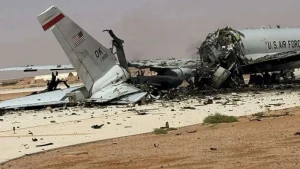
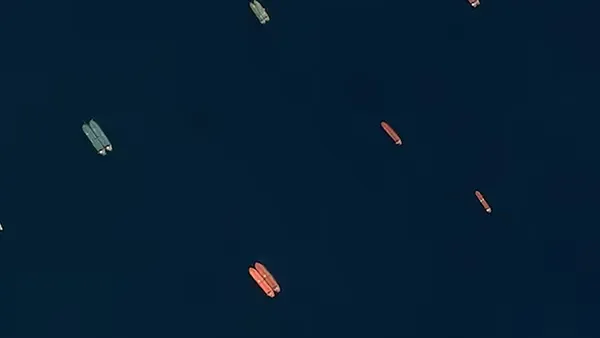
The report identifies two specific locations where oil transfers are taking place: one near the coast of Fujairah in the United Arab Emirates and the other just off the port of Sohar in Oman. As recently as June 11, seventeen pairs of vessels were observed simultaneously engaged in oil transfer activities across these two areas. Sources indicate that this US method closely mirrors the strategy Iran has long employed to export oil while evading international sanctions. The Reuters report further notes that an Apache helicopter—which was shot down by Iran on June 9—was also linked to this mission. The US launched retaliatory airstrikes following that incident; however, the exact role the Apache helicopter played in this specific operation could not be confirmed.
However, a US defense official told Reuters that no Central Command forces are participating in offshore ship-to-ship oil transfer operations. Under normal circumstances, approximately one-fifth of the world’s total oil consumption is transported through the Strait of Hormuz. Yet, if Iran were to effectively close the strait in response to a US-Israel conflict, it would cause major disruptions to global fuel supplies and drive up inflation worldwide. In this context, the US-led ship-to-ship oil transfer system is being viewed as an interim solution by the Trump administration. Although this method is risky and relatively inefficient, it plays a vital role in transporting oil from Gulf nations to international markets. Sources familiar with the process indicate that oil tankers first gather at a designated location before entering the strait.
They then proceed in stages, maintaining a distance of 3,000 to 4,000 meters between vessels. For security reasons, ship transponders are often switched off, and the use of lights is kept to a minimum. After clearing the Strait of Hormuz, the smaller vessels transfer their oil to Very Large Crude Carriers (VLCCs) waiting just outside Iranian-controlled waters. This transfer process typically takes between 24 and 40 hours. Subsequently, the emptied vessels return through the strait, while the fully loaded VLCCs set sail for international destinations. A Reuters analysis reveals that multiple such transfers took place between May 2 and June 11, involving state-owned Gulf tanker fleets and international shipping operators.
Based on satellite imagery and shipping data, the agency estimates that at least 90 million barrels of crude oil and petroleum products may have been transferred via this network since the beginning of May. For context, an average of approximately 20 million barrels of oil used to pass through the Strait of Hormuz daily prior to the conflict. According to Reuters, operators wishing to participate in this operation must undergo rigorous vetting. They are required to submit details regarding vessel ownership, cargo documentation, geographical movement history, and—where necessary—authorization for cargo inspection. Upon approval, they are cleared to sail according to a specific schedule and maintain contact with the relevant US Navy office in Bahrain throughout the voyage. Reuters notes that while this covert oil transfer system offers a temporary solution to the current crisis, it is not sustainable in the long run.