





With only a few weeks left until the U.S. midterm elections, 71 percent of American adults believe the country is heading in the wrong direction—the highest figure recorded during President Donald Trump’s term. This public sentiment poses a major concern for the Republican Party ahead of the November 3rd elections.
These findings come from a new public opinion poll conducted by the NBC News Decision Desk, with assistance from SurveyMonkey.
Participants in the survey expressed deep dissatisfaction with the nation’s economic situation and a lack of confidence in both major U.S. political parties. However, the brunt of this discontent is directed at President Trump and the Republican Party. For the first time during his term, the percentage of people who believe the country is on the right track has fallen below 30 percent.
A majority of the Americans surveyed view the Trump administration as more corrupt than any other, though they also harbor suspicions of corruption within both parties. Furthermore, they believe Trump has failed to improve their personal financial situations.
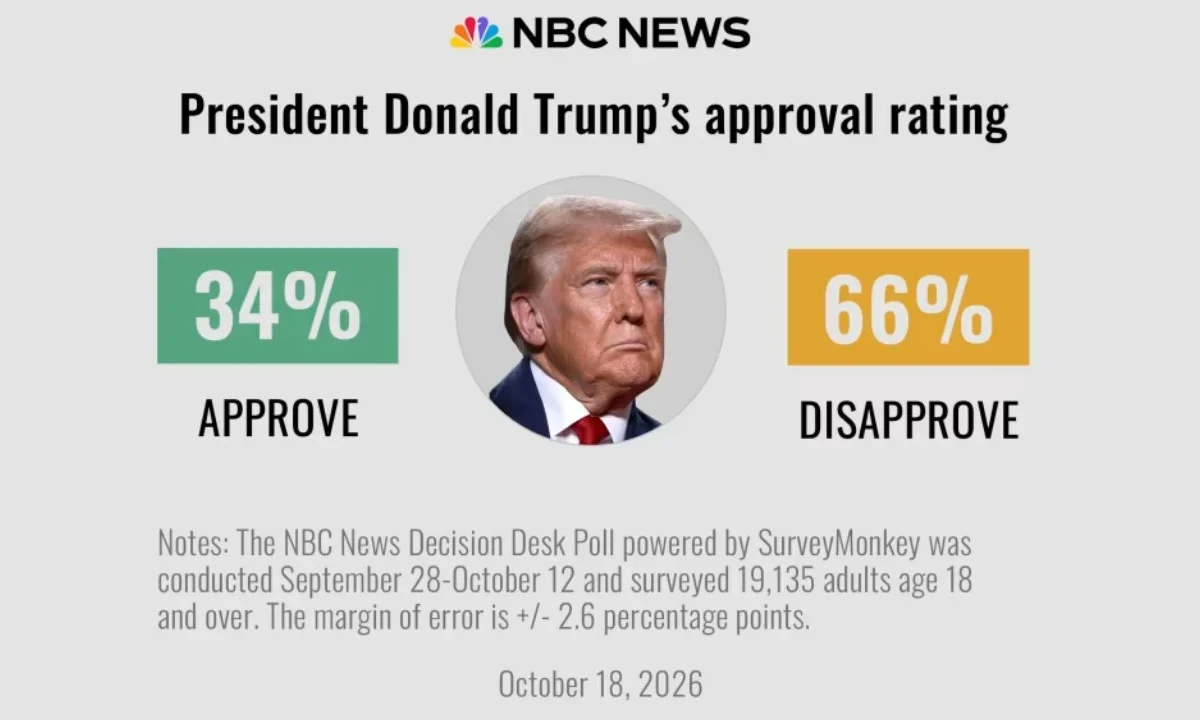
According to the poll, support for Trump has dropped to 34 percent—the lowest level recorded during his term—while 66 percent of respondents expressed dissatisfaction with his performance. Even more concerning is that 51 percent of respondents are “strongly dissatisfied” with his actions, marking another record high during his term.
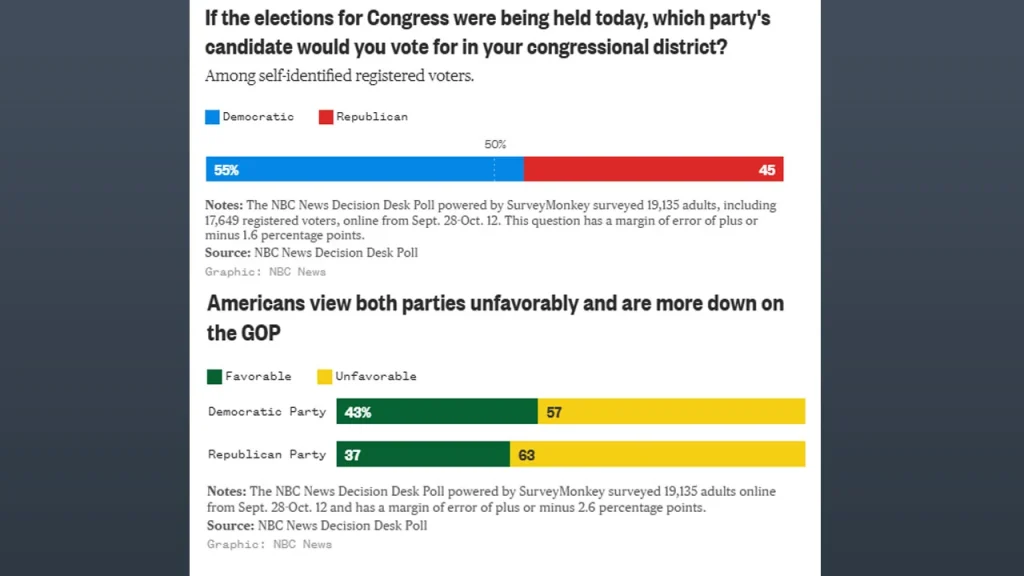
Among registered voters, support for Trump is slightly higher at 39 percent, yet 61 percent remain dissatisfied. When asked which party should control Congress, 55 percent of registered voters favored the Democrats, while 45 percent supported the Republicans. This gap raises the prospect that the Republican Party could lose its majority in both the House of Representatives and the Senate in the upcoming elections. However, despite dissatisfaction with the ruling party, Americans do not hold a positive view of the Democrats either. In the survey, 43 percent of adults expressed a positive opinion of the Democratic Party, while 57 percent held a negative view. For the Republican Party, 37 percent expressed a positive opinion, compared to 63 percent who held a negative view.
Among Republicans, support for Trump has fallen to 76 percent. This decline in popularity within his own party is driven, in particular, by a drop in support from those Republicans who identify more as supporters of the Republican Party itself than as adherents of the “MAGA” movement.
Among independent voters, support for Trump stands at just 21 percent. Among men under the age of 30—a demographic that supported Trump by a one-percentage-point margin in the 2024 election—his current support level is 28 percent. Among the Latino population, whose support also leaned toward Trump in 2024, his popularity now stands at 31 percent.
Fifty-eight percent of Americans surveyed believe that Trump’s policies are harming the country. Conversely, 28 percent believe these policies are benefiting the nation, while the remaining 14 percent believe they have little to no impact.
Evaluations of Trump’s actions across various issues also reflect a negative trend. He receives only 27 percent support for his handling of the cost of living, 29 percent for his approach to a potential conflict with Iran, and 33 percent for his stance on artificial intelligence (AI). His support is relatively higher—at 43 percent—regarding border security and immigration policy.
The primary driver of dissatisfaction with the overall state of the country is the economy; 31 percent of survey respondents identified the economy as the most critical issue facing the nation. Regarding their personal financial situations, 18 percent of respondents stated that they are better off than they were a year ago, while 38 percent reported no significant change. Meanwhile, 44 percent indicated that their financial situation has worsened compared to a year ago. Survey results indicate that declining support for Trump and public dissatisfaction with the economy could pose a major challenge for Republican candidates in the upcoming midterm elections. They must, on one hand, draw Trump’s supporters to the polls, while on the other, avoid further alienating those who oppose his administration.