Although U.S. President Donald Trump’s administration has publicly claimed that Iran’s military power has been “decimated,” classified U.S. intelligence assessments reveal a completely different picture. According to classified assessments from earlier this month, Iran has regained effective access to most of its missile bases, mobile launchers, and underground facilities. These details were reported in an article in The New York Times, written by journalists Adam Entous, Maggie Haberman, and Jonathan Swan.
The report further notes that one of the most concerning issues for U.S. officials is that 30 of Iran’s 33 missile bases situated near the Strait of Hormuz have once again become operational. There are fears that Iran could use these bases to target U.S. warships and oil tankers.
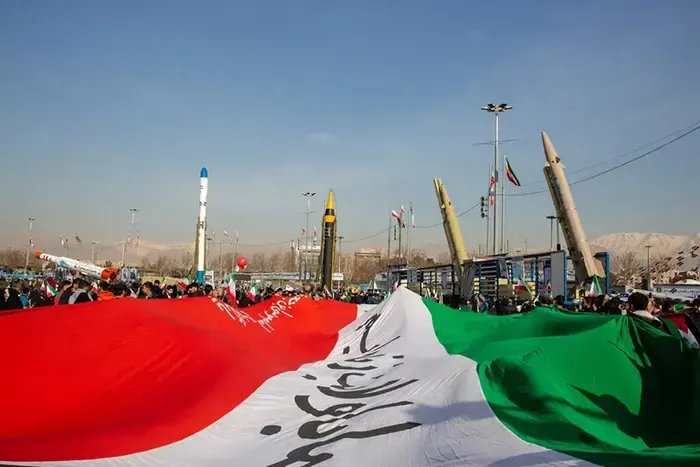
The intelligence assessments indicate that Iran is able to relocate missiles by utilizing mobile launchers housed within the damaged bases. In some instances, the country also retains the capability to launch missiles directly from those very bases. The report notes that only three bases remain completely non-operational. The assessments state that Iran still retains approximately 70 percent of its mobile launchers, and about 70 percent of its pre-conflict missile stockpile remains intact. This arsenal includes ballistic missiles capable of targeting regional nations, as well as a comparatively smaller number of cruise missiles suitable for engaging short-range targets on both land and sea.
Based on various surveillance data—including satellite imagery—U.S. military intelligence agencies have reported that Iran has regained access to approximately 90 percent of its underground missile storage and launch facilities. These installations are now assessed to be either partially or fully operational. These findings stand in direct contradiction to public statements made by U.S. President Donald Trump and Secretary of Defense Pete Hegseth.
In March, Trump asserted that Iran’s missile capabilities had been destroyed, claiming that “there is nothing left” of the country’s military assets. On the other hand, in April, Pete Hegseth described ‘Operation Epic Fury’ as a campaign that had rendered Iran’s military capabilities ‘incapable of waging war for many years.’ However, new intelligence assessments suggest that the actual situation is far more complex.
White House spokesperson Olivia Wells reiterated President Trump’s claims, stating that Iran’s military power has been ‘shattered.’ She further asserted that anyone who believes Iran has reconstituted its military capabilities is either misinformed or acting as a spokesperson for the Islamic Revolutionary Guard Corps. Joel Valdez, the Acting Pentagon Spokesperson, criticized the media, remarking that certain outlets are behaving like ‘public relations representatives’ for Iran.
The report notes that the United States utilized a massive quantity of weaponry during the conflict with Iran. This arsenal included approximately 1,100 long-range stealth cruise missiles, over 1,000 Tomahawk missiles, and more than 1,300 Patriot interceptor missiles. It is noted that replenishing this stockpile could take several years.
Should the current fragile ceasefire collapse and full-scale hostilities resume, the United States may be compelled to draw even more heavily upon its existing weapons stockpiles. This could potentially compromise U.S. military readiness—particularly in the event of a potential conflict with China or North Korea.
Nevertheless, Dan Kaine, Chairman of the Joint Chiefs of Staff, told Congress on Tuesday that the U.S. possesses sufficient weaponry to fulfill its current operational requirements. Concurrently, Sean Parnell, the Pentagon’s Chief Spokesperson, asserted that the U.S. military retains all the necessary capabilities to safeguard both its national interests and its people.