




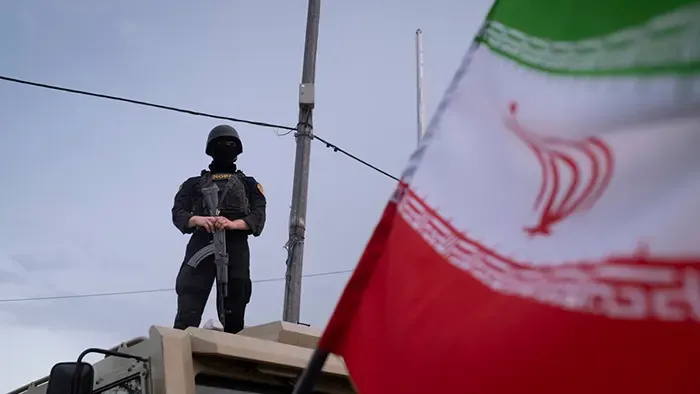
There is a glimmer of hope for a temporary de-escalation in the ongoing conflict involving Iran, the United States, and Israel. However, a massive military buildup in the Middle East has heightened fears of a new, broader conflict. Against this backdrop, mediators from Qatar and Pakistan have intensified efforts to reach an agreement between the warring parties.
U.S. President Donald Trump has decided, for the time being, to refrain from launching new attacks. Several factors contribute to this, one of which is Iran’s demonstrated ability to anticipate incoming strikes and execute precise counter-attacks. It is believed that Iran has acquired this capability with the assistance of Russian-supplied, military-grade geospatial and signals intelligence.
Project “Aurora” has spent the last eight months investigating how Russia provides intelligence to Iran via satellites. The project monitors the trajectories of Russian intelligence satellites, having identified at least 20 spacecraft from the “Kosmos-2600” series—18 of which are currently being tracked.
These satellites are particularly significant, as they include some of Russia’s most advanced military intelligence assets, capable of highly agile orbital maneuvering. They are used to gather geospatial data on military installations and terrain, capture optical imagery, conduct radar surveillance, and collect signals intelligence—including the monitoring of radar emissions, radio waves, and military communications.
The satellites tracked by Project “Aurora” pass over a vast region spanning Syria, Lebanon, Israel, Jordan, Saudi Arabia, the broader Arabian Peninsula, Iraq, and Iran—a zone that also encompasses the Bab el-Mandeb and the Strait of Hormuz. These satellites orbit the Earth approximately once every 95 minutes. Depending on their orbit and observation position, these satellites pass over this critical region three to four times a day.
Renewed attacks targeting Mecca and Riyadh.
Aurora has observed that certain Russian satellites—specifically those capable of maneuvering—have been repositioned to pass directly, or nearly directly, over military and infrastructural targets in this region. Not the entire satellite constellation has been moved; rather, the positions of specific spacecraft have been adjusted. This is intended to increase the duration of surveillance over key targets and improve the quality of data collected.
Brexit is not working; Burnham seeks a new agreement with the EU.
These Russian satellites have been observed passing over specific targets both before and after an attack. It is likely that the subsequent passes were conducted to assess the extent of the damage caused by the strikes. Similar patterns of activity were repeatedly observed both before and after attacks carried out by Iran.
Given the precision with which Iran has been able to strike U.S. and Gulf-region military and civilian targets, the Aurora project concludes that Russia has provided the Iranian military with the geospatial intelligence necessary to execute these operations.
The challenge for the United States is that such intelligence capabilities can be used not only for target identification but also for monitoring military preparations and troop deployments.
Every move—such as the repositioning of U.S. combat aircraft in the Middle East, the realignment of naval forces, or the reinforcement of military infrastructure—can be monitored via Russian satellites. Furthermore, the intensity of military communications can also be detected.
It is possible to ascertain the origins of these communications, identify when activity intensifies, and track shifts in the nature of the communications themselves.
Some intelligence satellites are even capable of intercepting military communications, although it is unlikely that they are able to capture every single message. If the intelligence gathered is relayed to Iranian intelligence agencies, the country’s leaders could take steps to protect their troops, maintain the functionality of their command structures, and prepare counter-responses before a conflict even begins.
Consequently, granting Iran access to data collected by Russian satellites would not only enable them to better defend against counter-attacks but also complicate U.S. efforts by facilitating Iran’s own offensive military preparations. One potential solution would be to relocate U.S. forces and military units beyond the range of Iranian weaponry, thereby reducing the risk of immediate strikes. Simultaneously, it would be necessary to alter the current configuration—which Tehran is actively monitoring—of U.S. military deployments.
Russian assistance could also provide Iran with early warnings regarding attacks originating from outside the Middle East. During “Operation Midnight Hammer” in June 2025, B-2 Spirit bombers—flying all the way from the U.S. mainland—struck Iranian nuclear facilities.
Tehran is well aware that another such strike against its deeply buried underground facilities is possible. Therefore, Iran might leverage the capabilities of Russian satellites to detect early signs of any such impending attack.
It is reasonable to assume that intelligence data obtained from Russian satellites plays a crucial role not only in preparing to counter attacks but also in planning retaliatory strikes within the region.
Iranian leaders have already warned that potential targets for their counter-strikes could include oil refineries, oil export terminals, seawater desalination plants, and power stations.
In other words, should Trump reverse his decision and opt to launch an attack, Iran would not only be prepared to counter U.S. military actions but could also possess the capability to deliver devastating blows across the entire region.
Such attacks would disrupt water and electricity supplies for civilians, while simultaneously sending shockwaves through the international energy market. As the world’s largest exporter of crude oil, Saudi Arabia possesses oil export infrastructure that is vital to the global economy.
Neighboring Arab Gulf states would also face the consequences, regardless of whether or not they played a role in the decision to reignite the conflict.
It is also important to note that by providing Iran with such space-based intelligence capabilities, Russia retains significant leverage.
Without directly participating in the conflict, Moscow can empower Tehran—or, conversely, limit its capabilities—by controlling access to this intelligence.
The decision to share data collected from Russian satellites will inevitably impact how the United States conducts future military operations. The U.S. military must now assume that the movement of large forces and equipment, military build-ups, and electronic communications can be monitored by the adversary, with the information relayed to them almost instantly. This diminishes the element of surprise, necessitating the dispersal of troops and equipment, stricter control over electronic signals, and the ability to rapidly shift positions.
The implications extend beyond this specific conflict. Last month, a Russian Kosmos-series satellite maneuvered into close proximity to a commercial satellite belonging to Finland.
It is speculated that this may have been a rehearsal for a potential attack. This incident suggests that conflicts originating on Earth could extend into space. Such a development risks disrupting both civilian and military satellite infrastructure.
The possibility that conflicts in current and future wars could spread into space cannot be ruled out.