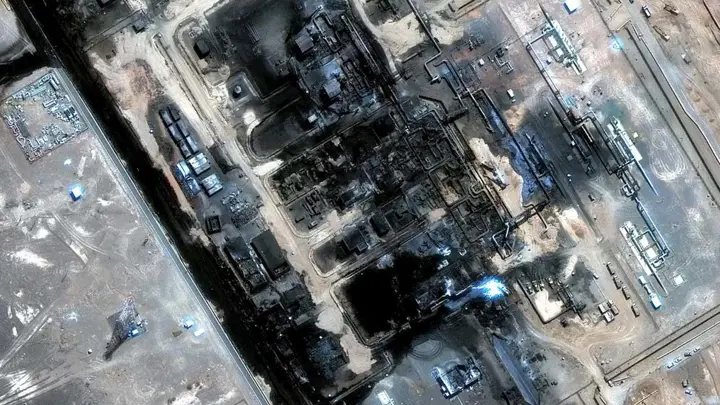
Despite repeated attacks by Yemen’s Houthi rebels targeting Saudi Arabia’s energy infrastructure and civilian facilities, the newly formed defense alliance comprising Turkey, Pakistan, and Saudi Arabia has yet to mount a joint military response. Since the signing of the defense pact in Mecca last month, questions have arisen regarding the alliance’s actual effectiveness.
Ever since the day after the agreement was signed, some experts have questioned whether Turkey and Pakistan would immediately step in to provide military support to Riyadh in the event of Houthi attacks on Saudi territory. Reports over the weekend that Houthi forces had seized control of parts of the Yemeni coast near the Bab al-Mandab Strait, followed by an attack on Saudi Arabia’s East-West Pipeline, have further intensified this debate. The attack on this pipeline—which transports approximately 4 percent of the global oil supply—has also heightened the gravity of the situation.
However, the absence of a joint military operation immediately following the agreement cannot simply be dismissed by claiming the alliance has failed. At least three distinct factors are involved: whether the defense obligations have actually come into effect, whether the necessary institutions and military structures for their implementation have been established, and whether the member nations are demonstrating sufficient political solidarity.
Defense Obligations Not Yet in Effect
Speaking to Middle East Eye on condition of anonymity, a senior Turkish official stated that criticism portraying the Mecca agreement as a failure is “malicious” and an attempt to undermine the alliance’s significance.
He asserted that the defense obligations outlined in the agreement have not yet legally come into force. These obligations will only become effective once the internal approval processes in all three countries are concluded.
The official indicated that Turkey would soon present the agreement to its parliament. The parliamentary approval process could potentially begin in October, following the release of the agreement’s text. Under the Turkish constitution, the President cannot ratify a security agreement without parliamentary approval.
Pakistan, too, is required to seek parliamentary approval for the agreement. However, the official noted that Saudi Arabia could ratify it through a royal decree. Consequently, he considers the claim that Turkey failed to provide military assistance to Saudi Arabia prior to the agreement’s implementation to be legally questionable.
Beyond the Agreement: Military Preparedness is Also Essential
According to the Turkish official, the Makkah Agreement is not merely a security pact; it is an initiative to establish the framework for an international organization in the long run.
He noted that even after the agreement comes into effect, the three nations must assess threats, engage in mutual consultations, and determine the modalities for military assistance. Simultaneously, there will be a need for defense and preparedness planning, ensuring force interoperability, and building long-term deterrence capabilities.
The three countries have already begun work on establishing the alliance’s institutional framework. During a meeting held in Istanbul on August 31, a decision was made to set up a secretariat in Saudi Arabia. Initially, a Pakistani Secretary-General will lead this secretariat for a three-year term.
Furthermore, the countries have agreed to conduct joint operations to enhance military capabilities and cooperation.
The Turkish official stated that the decisions to establish a secretariat, appoint a Secretary-General, and hold regular defense discussions demonstrate progress toward institutionalizing the alliance. However, he noted that the process could take “several years” to complete.
Resembles NATO but No ‘Automatic War’
The Makkah Agreement is being compared to NATO’s Article 5 because it includes a pledge to treat an attack on one member as an attack on all. According to the Turkish official, the NATO treaty served as a key source of inspiration during the drafting of this agreement.
However, even NATO’s Article 5 does not mandate an automatic military counter-attack the moment a member is attacked. While allies are obligated to provide assistance if a member is attacked, each country determines the nature of its own response; such assistance does not necessarily entail the direct use of military force.
The Turkish official indicated that a similar process would be followed under the Makkah Agreement. Should a member come under attack, the affected nation would first formally request assistance; subsequently, the member states would convene to review the situation and determine the appropriate course of action. In other words, the agreement does not imply that the Turkish or Pakistani militaries would automatically launch a counter-attack in response to a single Houthi strike on Saudi Arabia.
Political Support from Turkey and Pakistan
Both Turkey and Pakistan condemned the recent Houthi attacks on Saudi Arabia. Pakistan further stated that, despite having an existing bilateral defense agreement with Riyadh, Saudi Arabia has not yet requested any military intervention.
A Turkish official also cited the example of NATO’s experience. In November 2015, Turkey shot down a Russian warplane, claiming it had violated Turkish airspace, and subsequently called for an emergency NATO meeting. NATO provided support by bolstering Turkey’s air defenses and deploying additional air and naval capabilities.
However, the official noted that on subsequent occasions—when Russian drones intruded into the airspace of NATO member states—military counter-measures were not taken each time.
The Goal: Long-term Deterrence, Not Immediate War
According to a Turkish official, the primary objective of the Mecca Defense Pact is not to provide an immediate military solution to any ongoing conflict. Rather, the aim is to build long-term deterrence capabilities among the three nations, compelling potential adversaries to think twice before launching an attack.
He acknowledges that scenarios such as a potential India-Pakistan conflict or Houthi attacks on Saudi Arabia represent the ultimate test for the new alliance. However, he maintains that the pact’s main goal is to establish the alliance’s long-term credibility and deterrence capacity, rather than merely reacting instantly to such situations.
Therefore, the absence of a joint Turkish-Pakistani military operation following Houthi attacks on Saudi Arabia cannot simply be viewed as a failure of the Mecca Defense Alliance. Time is still required for the pact’s legal ratification, institutional framework, military coordination, and mutual defense planning to fully materialize.