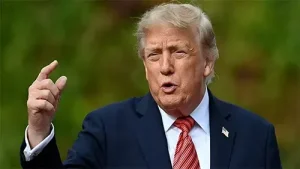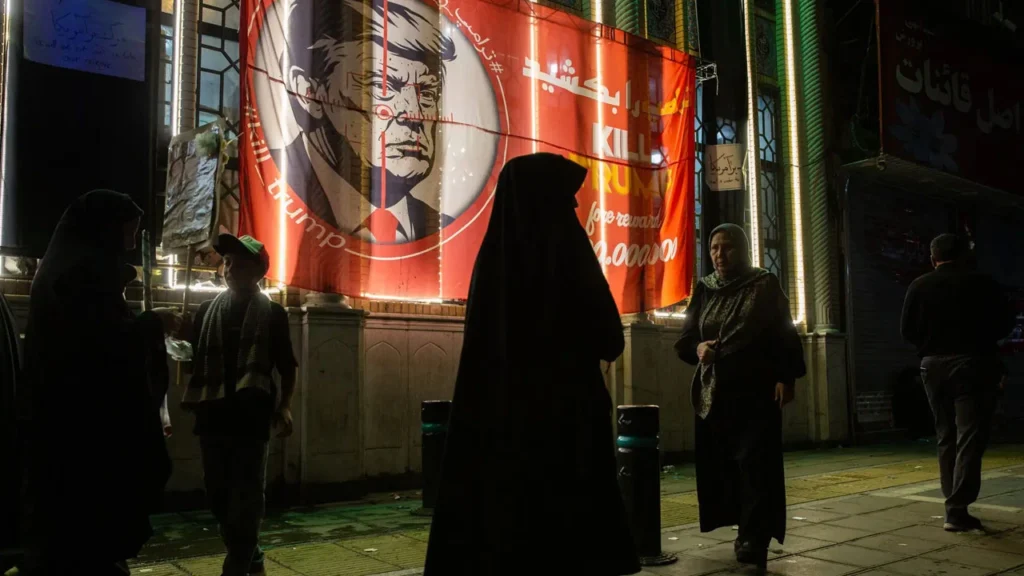
On the 136th day of the conflict with Iran, US President Donald Trump unveiled a novel plan: he would levy a hefty “toll” or fee on ships passing through the Strait of Hormuz in exchange for protecting them from Iranian forces. However, that plan lasted only a few hours. By the 137th day, he had made a completely different decision—no, ultimately, no toll would be charged!
Faced with fierce protests from Arab allies, Trump’s 180-degree U-turn on Tuesday highlighted just how directionless the White House has become in its handling of the conflict with Iran. What was initially envisioned as a “clean operation”—an easy victory lasting just four to six weeks—has now dragged into its 20th week, becoming a chaotic and protracted affair. Clearly, Trump’s impulsive, emotion-driven strategy is yielding no results.
Trump, who has made a habit of flexing his muscles on the global stage during his second term, has now encountered an adversary in Iran that refuses to easily yield. Iran is proving that geopolitical battles cannot be won simply by posting harsh messages on social media or issuing threats of tariffs.
Vali Nasr, a professor at Johns Hopkins University’s School of Advanced International Studies and a former government advisor on the Middle East, observes, “Trump is now facing a country that refuses to play by his rules. Trump’s rules dictate that one must first kneel and sing his praises, and then be content with whatever meager concessions he deigns to grant.”
Suzanne Maloney, Director of the Foreign Policy program at the Brookings Institution, notes, “Trump’s aggressive diplomacy during his second term relied partly on luck and on opportunities where his adversaries chose to back down.” However, an analysis of the last 47 years of history should have made it clear to Trump that Tehran would not so easily fall into an American trap.
John Hannah—a senior fellow at the American think tank JINSA and former national security advisor to Vice President Dick Cheney—had previously advocated for the use of limited military force to halt Iran’s nuclear program. Yet, he believes Trump made a grave error by attempting to shatter the Iranian regime in a single blow. He underestimated the robust religious and political structure Iran has built since the 1979 Islamic Revolution and placed excessive reliance on US military might.
Hannah states bluntly, “In hindsight, it is evident that this conflict was predicated on entirely flawed and erroneous assumptions. Trump believed that US airstrikes combined with harsh posts on Truth Social would cause Iran’s revolutionary government to collapse like a house of cards. There could be no more damaging misconception than that.”
He adds, “The error was compounded by the absence of a strong national security team around the President—advisors with the courage to speak the truth. Instead of leveraging the expertise of seasoned diplomats and defense and intelligence officials, the President’s misguided decisions were accepted without question.”
The recently collapsed ceasefire agreement was never a long-term solution. It was merely a temporary, 60-day arrangement intended to allow both sides to de-escalate and come to the negotiating table to discuss complex issues like Iran’s nuclear program. Yet, given that even this interim agreement failed to hold, the prospect of a permanent peace treaty now seems exceedingly remote.
Trump is currently wavering on how to handle the situation. He has reverted to a military approach, ordering a naval blockade in the Strait of Hormuz. He has also threatened to deliver a “massive and overwhelming blow” against the fortified “Pickaxe Mountain,” located near a key Iranian nuclear facility. However, with American public opinion largely opposed to the war, he no longer dares to engage in the kind of reckless, heavy bombing campaigns he employed at the conflict’s outset. Aaron David Miller, a senior fellow at the Carnegie Endowment for International Peace and a former Middle East peace negotiator, said, “Trump is now trapped in a cage. He is facing a ruthless and stubborn adversary that has effectively held him hostage in its bid to maintain control over the Strait of Hormuz and dominance in the Persian Gulf.”
Meanwhile, Trump’s sudden about-face regarding the imposition of tolls or tariffs demonstrates that he is running the country without any long-term plan. When he announced on Monday that a 20 percent tariff would be levied on cargo ships for security in the Strait of Hormuz, he was effectively violating his own administration’s stance on international law. Yet, by Tuesday, he reversed the decision following a single phone call from Arab Gulf leaders.
Abbas Milani, Director of Iranian Studies at Stanford University, said, “I do not think Trump has a specific strategy regarding Iran. That is the real problem. He is operating entirely on instinct, driven by two contradictory goals.”
Criticizing Trump, Milani stated bluntly, “He never understood the true nature of this regime, and he still doesn’t. Iran is not like other countries. They constantly make unpredictable moves and will go to any lengths to preserve their power.”
Source: The New York Times