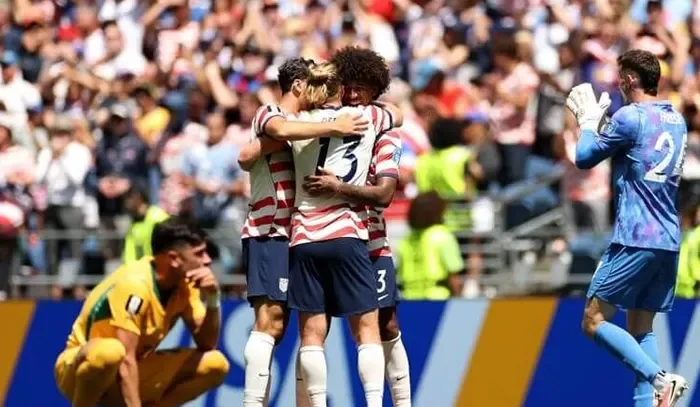
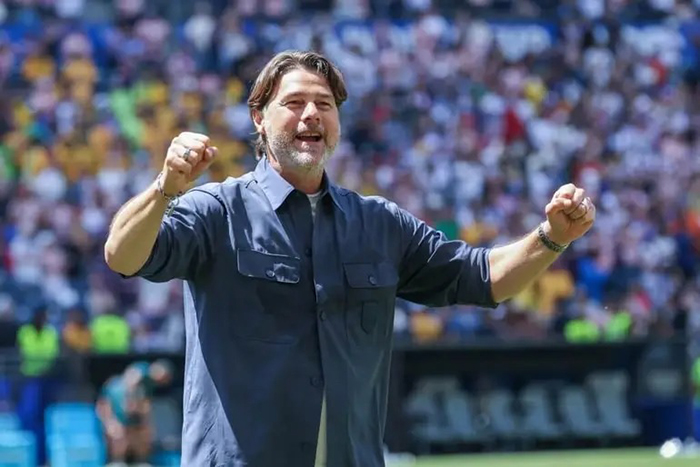
Minutes after the United States secured a 2-0 victory over Australia in the World Cup, Coach Mauricio Pochettino Lumen walked toward the tunnel leading off the field. A festive atmosphere surrounded him, and he was savoring the moment deeply. Some fans in the stadium wore red, white, and blue overalls; others arrived in tricorn hats and Revolutionary War-era attire. Some sported the current team’s red-and-white striped jerseys, while others wore denim-blue outfits reminiscent of the 1994 World Cup. Together, they sang John Denver’s famous song, “Take Me Home, Country Roads,” celebrating an achievement no U.S. team had managed since 1930.
Pochettino paused after taking a few more steps. He waved to the crowd and raised a clenched fist in celebration. Then, he joined the fans in chanting “U-S-A!”—a chant the crowd echoed in unison.
This is a fanbase—not just those in the stadium on Friday, but millions across the country—that is slowly beginning to believe. There is ample reason for optimism. For the first time in nearly a century, the United States has won two consecutive matches in the World Cup group stage. Players long hailed as a “Golden Generation” are finally delivering performances that match their potential. And people are now daring to dream big about the very team that has always claimed it was capable of achieving something special.
After the match, Pochettino said, “We must maintain our belief and embrace each day just as we have since day one—believing that we can win. We know we have to work hard. But at the same time, we must enjoy the time spent together and build our journey day by day. My dream hasn’t changed much. Everything becomes easier when you play well and win matches. But, above all, we must keep the faith.” We used to say: one match, three points. Now it is two matches, six points. And we must play our next match with the goal of winning as well.
Of course, it is easy to get carried away after two victories. The reality of football is that the World Cup title is usually confined to a handful of elite nations—a club to which the United States has not yet been invited. Yet, it is difficult to convey this to the fans in Seattle or the millions of casual viewers who realize just how thrilling it is to host the World Cup on home soil.
After the match, when former Swedish star striker Zlatan Ibrahimović was asked on Fox Television if the United States could win the World Cup, he answered with a single word: “Yes.”
Just think about that statement for a moment. Then shake your head and consider it again.
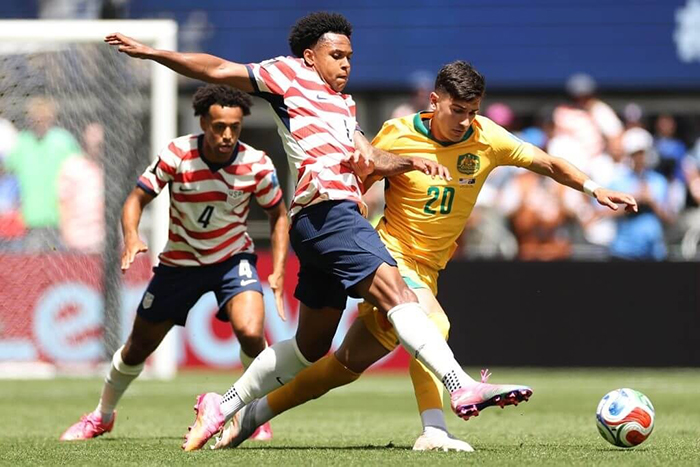
It feels as though the United States is on the verge of achieving something special. They have defeated the two opponents they were expected to beat. First, they easily overcame Paraguay; then, against Australia, they asserted control in a match where the opposition—despite putting up a physical fight—failed to pose a significant footballing challenge.
Yes, these are just two wins. Yet, they now hold a three-point lead in the group. This is not something to be taken lightly. If they finish as group champions, they can play their Round of 16 match on the West Coast and once again benefit from the formidable home-field advantage in Seattle.
Everything feels different. It feels momentous. This is because it is all happening in front of their own fans—supporters who want to see American football reach new heights and have rallied behind the team to turn that dream into reality. The players, too, say they can feel that support. It is not a one-way street; there is an emotional exchange between the spectators and the players. That is why Tim Ream—a captain usually known for his composure—was moved to tears while standing in the team huddle after the match.
“To be honest, I don’t even know what came over me,” Ream said. “It was probably the culmination of everything. The realization that we had secured our spot in the Round of 32 just hit me all at once.” Perhaps it was the sight of family members watching from the stands, or the realization of how hard we had all worked and were now reaping the rewards—all these thoughts converged to overwhelm me with emotion. I am not usually an emotional person, but this time, the emotion simply swept over me.
For Ream, the team he captained, the spectators in the stadium, and the millions watching on television, Friday night felt like a moment of release after a long period of pressure. A poor result against Australia would have stalled the momentum built by the victory over Paraguay; instead, this U.S. squad further bolstered its confidence with another win. This was made possible by the support of that memorable sea of fans, who thrilled the players by singing the national anthem before kickoff and belting out John Denver’s songs after the final whistle.
Defender Auston Trusty said, “It fills you with a deep sense of national pride and reminds you exactly who you are playing for. You play for yourself, for your family, and for the people around you, but at the same time, you are playing for the entire country and for American soccer.”
The reaction to the first two World Cup matches was overwhelmingly supportive and positive; Zlatan’s one-word prediction was just another headline amidst that excitement. Positivity, celebration, and optimism have been rare commodities surrounding the US men’s soccer team over the past four years. Consequently, the players have embraced talk of winning the World Cup with a smile, even though such discussions began prematurely—especially considering that formidable opponents like Belgium, Spain, and France could await them in the knockout stages. Winning the World Cup is an incredibly difficult feat; only eight nations in history have achieved it.
Even Lionel Messi, one of the greatest players of all time, had to make five attempts before winning his first World Cup. In the modern era, the US team’s best achievement is reaching the quarter-finals—which also marks their only knockout-stage victory since 1930. To match that record this time around, they would need to win yet another knockout match.
Yet, why shouldn’t this moment be savored?
And why shouldn’t one believe that something special is possible?
Midfielder Weston McKennie says, “America was built on belief. That is what we expect of ourselves. What outsiders say doesn’t matter much. We will always believe in ourselves and in each other.”
Pochettino stated that the most important task now is to avoid complacency—to ensure they don’t get carried away by the wave of praise and drift away from hard work. He added, “We must enjoy ourselves, work hard, remain disciplined, and uphold rigorous standards to keep improving.”
Creating a lasting legacy has been the team’s goal from the very beginning. It wasn’t just about getting people to say they could win the World Cup, but about giving them genuine reasons to believe it.
That belief was further strengthened after another victory in Seattle on Friday. However, the players know there is still much work to be done. They have rallied the entire nation behind them and inspired dreams of World Cup glory. Yet, this US team aims to make history, not merely become a topic of fleeting conversation. And history isn’t written in group-stage victories; it is written in the tournament’s later stages. Forward Folarin Balogun said, “I learned from a young age that history remembers the winners. I know the whole country is supporting us and is proud of us in every match. We are certainly doing something significant. But I have only one goal—winning the trophy.”