




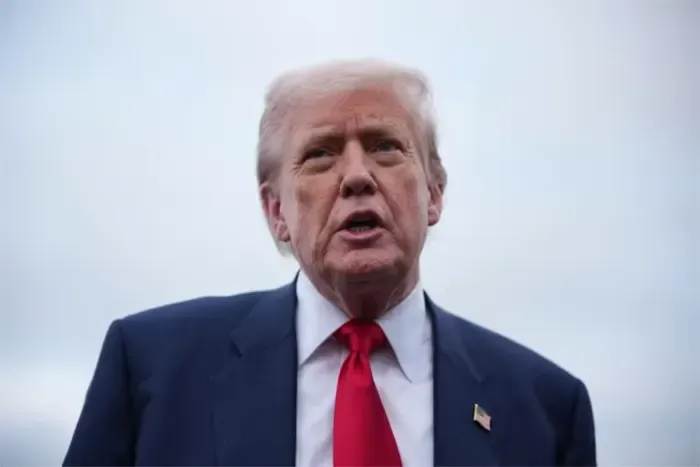
US President Donald Trump has announced the imposition of new tariffs on 14 trading partners, including Bangladesh. On Wednesday, the Office of the United States Trade Representative (USTR) unveiled these tariff rates following an eight-month-long investigation. The proposal includes tariffs of up to 18% on goods from Bangladesh. Additionally, decisions have been made to impose tariffs ranging from a minimum of 10% to 25% on various other trading partners. According to analysts, Trump has taken these stringent measures to shift global trade away from China’s grip and to demonstrate his own authority following his party’s significant losses in the midterm elections.
Primary Target: China – By exerting pressure on other nations, Washington seeks to penalize China, often referred to as the “world’s factory.” This move increases bargaining pressure ahead of a high-level meeting between Trump and Chinese President Xi Jinping in Miami, Florida, next month, and before the expiration of a trade truce on January 10. The Trump administration has stated that an additional 20% tariff will be imposed on Chinese goods, on top of the 25% tariff already in place. Should the trade agreement collapse, this cumulative tariff rate would reach 40%. Washington alleges that while China’s trade surplus is on track to exceed $1 trillion, its allies are failing to take sufficient measures to curb the influx of Chinese goods and investments. Although Beijing has rejected these accusations, it has not yet threatened retaliatory tariffs. Singapore-based researcher Chen Bo suggests that both nations remain interested in reaching an agreement. However, Victor Shvets, an analyst at Macquarie Capital, believes that if the US raises tariffs, China’s trade surplus with other nations will likely grow—which, in turn, may compel regions like the European Union to also increase tariffs and quotas against China. India’s Advantage Over Competitors: Under this new tariff structure, India stands to benefit from lower tariff rates in the U.S. market compared to competing nations like Bangladesh and China. While a 25 percent tariff has been proposed for Indian goods, this could be reduced to 17 percent upon the finalization of a pending trade agreement. At this 17 percent rate—contingent on the agreement—India would face lower tariffs than Bangladesh, Cambodia, or Indonesia, thereby granting Indian exporters a competitive edge. Meanwhile, for Vietnam, the proposed tariff is 20 percent if an agreement is reached, or 35 percent if it fails. Tariffs for Japan, South Korea, Taiwan, the EU, and Switzerland have been set at 15 percent, while the rate for Singapore is 10 percent. India’s Ministry of Commerce has stated that it is reviewing the U.S. notification and maintains that there is no overcapacity in any of its industrial sectors.
Trump Remains Unyielding, Asserting His Authority: Despite the Republican Party’s significant defeat in the midterm elections three weeks ago—driven in part by public frustration over inflation—Trump continues to double down on his tariff policy. With the Democrats in control of Congress, he is utilizing tariffs as an economic weapon that can be deployed without legislative approval. This new move follows a ruling by the U.S. Supreme Court last February that declared his previous global tariffs unlawful. An SSRS poll indicates that two-thirds of voters believe these tariffs have harmed the economy; according to data from Yale University, they have increased annual expenses for U.S. households by $900 (approximately 111,582 BDT). Democratic leader Katherine Clark and Ron Wyden—the likely incoming chair of the Senate Finance Committee—have called for the repeal of these tariffs. While the United Steelworkers International has welcomed the move, Republican Representative Don Bacon has characterized it as an additional tax on American consumers. An exit poll conducted by SSRS reveals that two-thirds of voters believe Trump’s tariff policies have harmed the economy, while only 21 percent believe they have been beneficial. Trump himself has not made any public comments regarding the new tariffs. Just days earlier, Trump’s unprecedented intervention to reinstate Jensen Huang as CEO of chipmaker Nvidia had caused volatility in the stock market.
Katherine Clark, a potential leader of the majority in the House of Representatives, wrote on X that the Republicans have failed to learn any lessons. Ron Wyden, the incoming chair of the U.S. Senate Finance Committee, has announced plans to take every possible step to overturn these tariff policies. Meanwhile, White House spokesperson Matthew Middleton stated that Trump’s primary objective is to protect American workers and businesses from unfair trade agreements. While Roxanne Brown, president of the United Steelworkers International—which endorsed Democratic candidate Kamala Harris in 2024—welcomed the move, outgoing Republican Representative Don Bacon described it as an additional tax on American consumers and called for the authority to set tariffs to be returned to lawmakers.