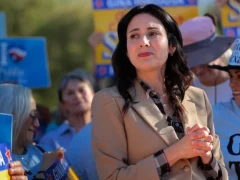





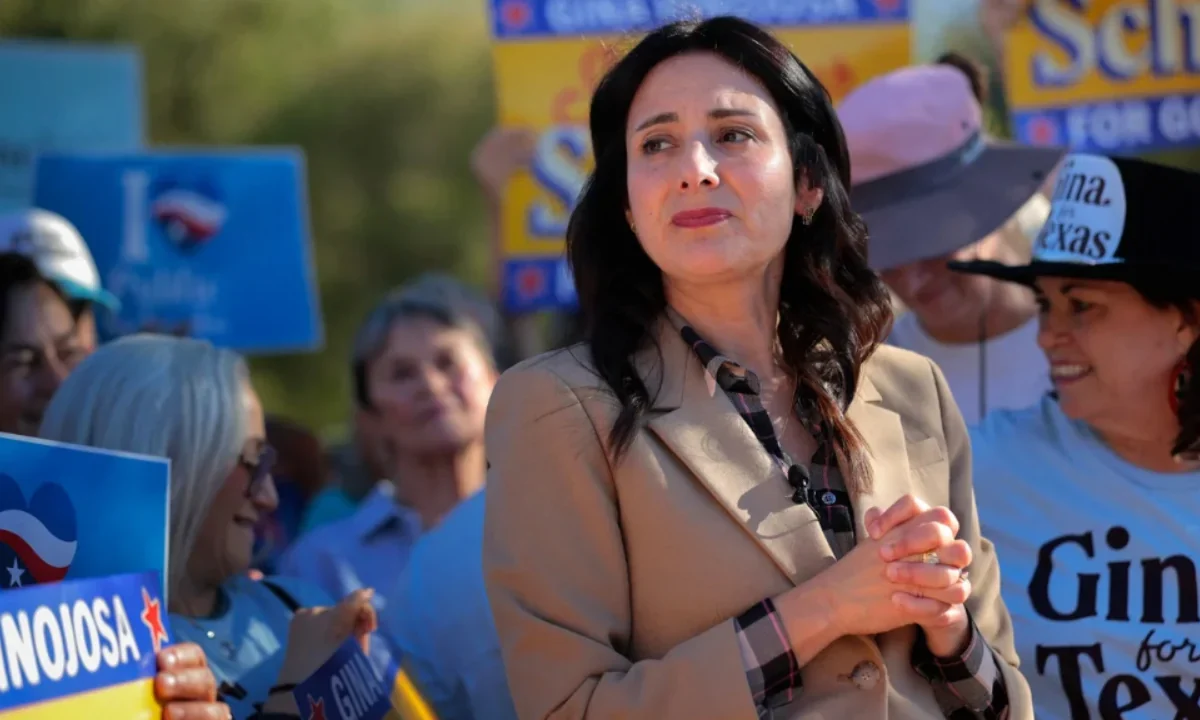
In the US state of Texas, newly elected Governor Gina Hinojosa has announced that she will revoke the “terrorist organization” designation applied to the Council on American-Islamic Relations (CAIR)—one of the largest Muslim civil rights organizations in the country. She stated that she would implement this decision immediately upon taking office.
In a recent interview with The Washington Post, the Democratic leader said she intends to rescind an executive order issued by the outgoing Republican Governor, Greg Abbott. She argued that the authority and funds allocated for public safety should be used to ensure genuine security.
“Public safety measures must be used for public safety,” Hinojosa said. She views the actions taken by Abbott as an abuse of power under the guise of public safety.
Last November, Abbott designated both CAIR and the Muslim Brotherhood as “foreign terrorist organizations” and “transnational criminal organizations” under Texas law. This order prohibited these groups from purchasing or acquiring land in Texas and empowered the state’s Attorney General to take legal action against them.
Following Abbott’s decision, then-Attorney General Ken Paxton moved to ban CAIR, filing a lawsuit against the organization in February of this year. The suit alleged that CAIR had ties to the Muslim Brotherhood and sought to have the organization officially classified as a foreign terrorist and transnational criminal entity. CAIR has consistently denied these allegations.
Meanwhile, Hinojosa’s announcement has been welcomed by various civil rights organizations. Sam Robles, executive director of the Texas Nonprofit Protection Network, stated that Abbott used his office to incite anti-Muslim sentiment and attempted to intimidate organizations dedicated to protecting civil rights. He further stated that labeling CAIR as a “terrorist organization” for political purposes was part of a broader campaign aimed at framing the civic engagement and rights-advocacy efforts of Muslims as a threat to public safety.
This development carries particular significance in light of recent political shifts in Texas. In this month’s midterm elections, three-term Governor Greg Abbott was defeated by the Democrats. In the same election, Ken Paxton—who had the backing of President Donald Trump—also lost his race. Consequently, a major transition is underway within the state’s administration. Hinojosa is set to be sworn in as governor this coming January.
Meanwhile, following the election, Paxton’s office withdrew the lawsuit that sought to ban CAIR. However, the announcement regarding the revocation of Abbott’s executive order has yet to be implemented; Hinojosa is expected to take action on this matter once he assumes office.
Separately, CAIR is facing a similar legal challenge in the U.S. state of Florida. There, after a court denied an urgent petition to remove the “terrorist” designation, the organization was forced to cease its operations in the state. CAIR has indicated that it intends to appeal this decision.
CAIR is one of the largest organizations in the United States dedicated to protecting the civil rights and freedoms of Muslims. It provides legal and social support in cases involving workplace discrimination, religious bigotry, attacks on mosques, and various forms of harassment directed at Muslims.
Sources: The Washington Post, Middle East Eye, The Texas Tribune, and CAIR