


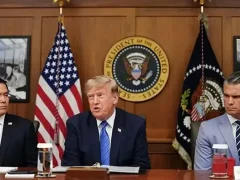


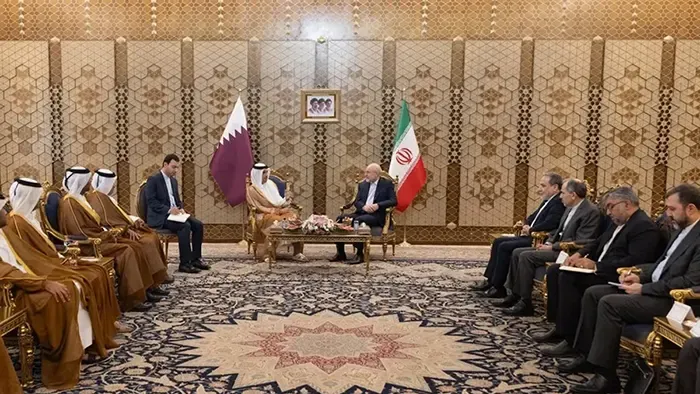
Diplomatic efforts have intensified once again to prevent a new military conflict between the United States and Iran. As part of this, a high-level Qatari delegation arrived in Tehran, the Iranian capital, on Friday.
Iranian state media reported that the delegation traveled to Tehran to hold discussions with senior Iranian officials.
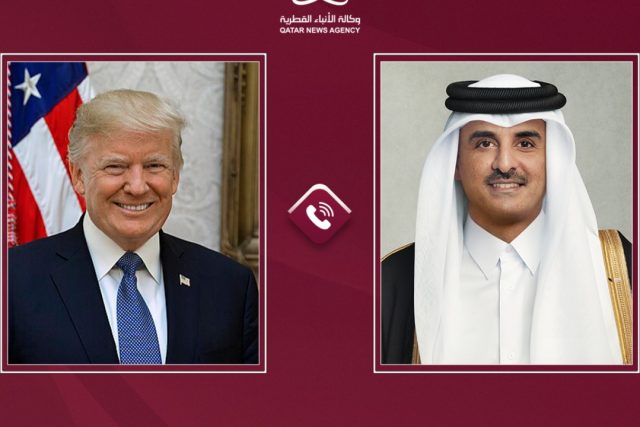
Concerns are mounting over the potential for a new war between the US and Iran. There is growing apprehension that President Donald Trump may be preparing for an attack on Iran following the US midterm elections on November 3. Against this backdrop, Qatar is working to bring both nations back to the negotiating table.
The delegation, which has arrived in Iran, is led by a senior advisor to Qatari Prime Minister Mohammed bin Abdulrahman Al Thani.
Qatar has consistently played the role of a key mediator in de-escalating tensions between the US and Iran.
On Wednesday, The Wall Street Journal reported that US Vice President-elect JD Vance had sent a letter to Mohsen Rezaei, a senior Iranian security official, in an effort to revive stalled negotiations.
On Thursday, a senior Iranian official told the semi-official news agency Fars that Tehran had received the message but had not yet provided a response.
According to a report by The New York Times, the letter was delivered to Rezaei on Sunday through Qatari mediators. It proposes direct talks under the leadership of Vance.
The agenda for these proposed discussions includes Iran’s nuclear program. The primary objective of this initiative is to prevent a new military strike.
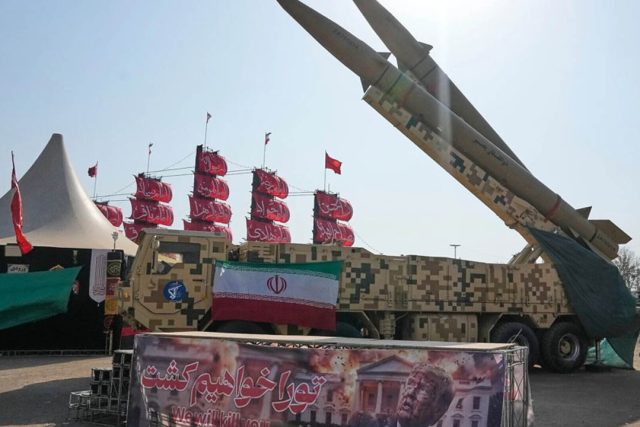
Over the past week, conflicting signals have emerged from Washington and Tehran. There is significant uncertainty as to whether the ongoing eight-month-long conflict will escalate into a full-scale military confrontation or move toward a peace agreement.
On Thursday, Admiral Brad Cooper, head of US Central Command, briefed President Donald Trump on potential options for a new military strike against Iran. The Wall Street Journal has reported that the United States has increased its stockpiles of air defense systems and ammunition in the Middle East. Additionally, troops have been withdrawn from several military bases that were at risk of potential retaliatory strikes by Iran.
Israel’s state broadcaster, Kan, reported that 10 U.S. military cargo planes landed on Thursday at the Ovda and Nevatim airbases in Israel’s Negev region. Furthermore, additional military aircraft have been deployed to Jordan, Saudi Arabia, and Qatar.
U.S. Democratic Senator Chris Murphy stated that he had been briefed on these military plans. He described the plans as “insane” and expressed concern that they could trigger a catastrophic, widespread conflict.
Meanwhile, in an interview with Fox News on Thursday, Vice President-elect JD Vance stated that Trump would never allow this conflict to turn into an “endless war.”
In an interview with Al Jazeera last September, Iranian President Masoud Pezeshkian remarked that Tehran could no longer trust negotiations with Washington, noting that Iran had previously been subjected to attacks even while various stages of talks were underway.
Nader Hashemi, a professor of Middle East politics at Georgetown University, believes that a similar scenario is playing out once again.
He fears that the United States may be preparing for a massive bombing campaign against Iran—an operation that, he suggests, could lead to war crimes on a scale not previously witnessed.
It remains to be seen whether this new diplomatic initiative by Qatar will succeed in bringing the two nations back to the negotiating table, or if the Middle East is headed toward a major new military conflict.