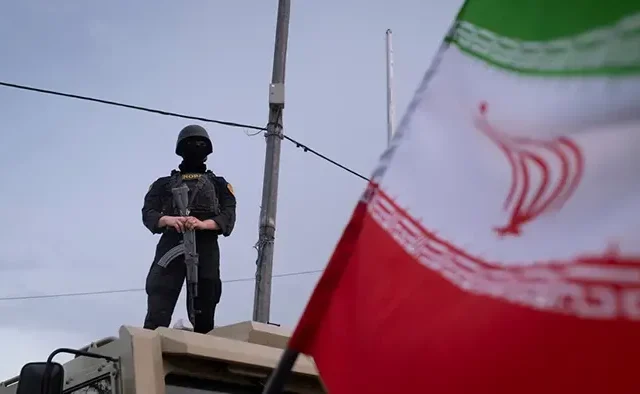





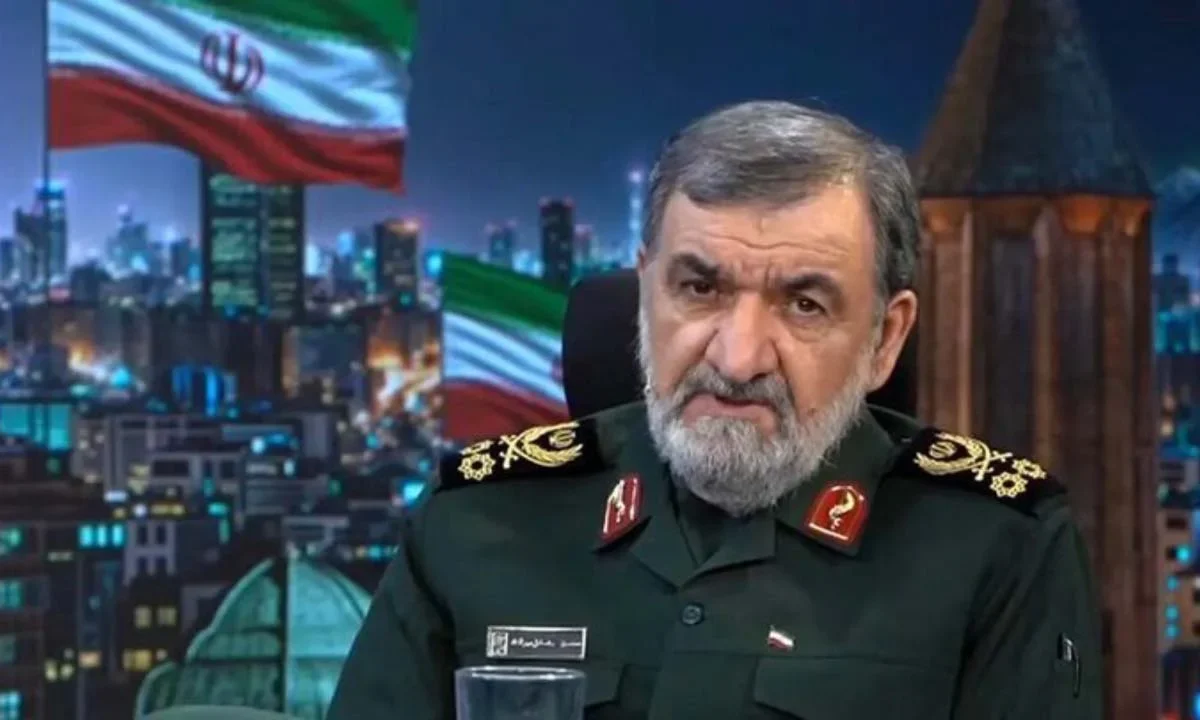
Mohsen Rezaei, Secretary of Iran’s National Security Council, has warned that if the United States and Israel launch new attacks, Iran will target oil facilities, undersea communication cables, data centers, and artificial intelligence infrastructure across seven countries in the Persian Gulf region.
Mehdi Mohammadi—an advisor to hardline politician and Parliament Speaker Mohammad Bagher Ghalibaf, who has been involved in discussions regarding the conflict with the U.S.—stated that U.S. President Donald Trump and Israeli Prime Minister Benjamin Netanyahu have reached an agreement in principle to launch fresh attacks. However, he noted that the success of such an operation is far from guaranteed.
“We view the next potential conflict as an existential threat,” Mohammadi said. “A third war within two years would pose an existential danger to us. Our strategy is to recognize no boundaries.”
Mohammadi added, “We will shatter conventional limits—both in terms of the timing and the geographical scope of the conflict. The war will last longer than the enemy anticipates and will spread across a much wider geographical area.”
Iran’s capacity to carry out such retaliatory operations—and whether it might receive any informal support from China or Russia—will be a critical factor in Washington’s decision-making regarding the initiation of any conflict.
Rezaei stated, “Should a war break out, communication cables, data centers, and artificial intelligence facilities could also become targets. We have more comprehensive plans in place should the conflict resume.”
He further remarked, “It is unacceptable for Iran’s economic lifelines to be subjected to attacks while the very infrastructure that facilitates such strikes remains safe and beyond the reach of retaliation.”
According to recent reports in the U.S. media, American military advisors have compiled a detailed list of targets for a potential joint strike on Iran, intended to be carried out following the U.S. midterm elections on November 3. Meanwhile, foreign ministers from three European nations, along with representatives from Turkey, Saudi Arabia, Pakistan, and Egypt, are set to meet in Istanbul on Friday to formulate a coordinated policy regarding the crises in Iran, Yemen, and Palestine. There is growing concern that both Tehran and Washington are preparing for a new conflict.
On Wednesday, the navy of Iran’s Islamic Revolutionary Guard Corps (IRGC) claimed to have simultaneously attacked four commercial vessels attempting to transit the Strait of Hormuz. It was alleged that oil was being transferred from these vessels to other ships.
The IRGC further claimed that three additional vessels were damaged by mine explosions within the Strait. However, it has not been possible to independently verify the number of attacks or the details of these incidents.
Meanwhile, the prospect of a joint U.S.-Israeli strike on Iran has driven up oil prices in the international market. The price of Brent crude has reached $113.40 per barrel—one of its highest levels in recent times.
Over the past four months, former President Trump—or the U.S. administration—has stepped back from launching new attacks on Iran on seven separate occasions. However, with diplomatic talks at a standstill, U.S. officials are now discussing potential new military operations. Such operations could target Iran’s missile facilities, oil infrastructure, and nuclear sites.
Alongside the exchange of threats between the two nations, the U.S. and Israel are conducting joint military exercises, including drills that involve flights through Iraqi airspace. According to the news outlet Axios, dozens of Israeli fighter jets flew near the Iranian border earlier this week.
Additionally, a major fire broke out at an aluminum plant in the city of Arak, in central Iran, raising concerns about the possibility of acts of sabotage taking place within the country.
On Monday, Israeli Prime Minister Benjamin Netanyahu met with U.S. Secretary of Defense Pete Hegseth in Israel. During the meeting, they discussed the timing and objectives of a potential joint strike. It is reported that discussions also took place regarding how this attack might affect the prospects of Netanyahu’s re-election.
According to reports, Netanyahu would prefer for Iran to strike first; he reportedly conveyed this stance to Hegseth during a meeting on Monday.
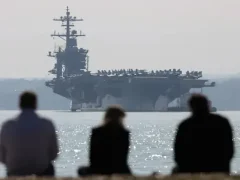
Under Trump’s plan, three aircraft carriers, thousands of Marines, combat aircraft, and special operations forces are to be deployed to the Middle East by November.
Reza Nasri, an expert in international law with close ties to the Iranian Foreign Ministry, has warned that if a third phase of the conflict begins, it will not remain confined to any specific area.
He stated, “Power grids, desalination plants, oil refineries, and ports across the entire region will go up in flames. Millions of people will be left without water or electricity. A massive influx of refugees from Arab nations will head toward Europe.”
Nasri added, “The Strait of Hormuz will be completely shut down, oil prices will skyrocket, and the global economy will fall into a recession. Israel’s economy—already under strain from military deployments and missile strikes—will be unable to withstand the toll of a prolonged, attritional war. Meanwhile, Trump will find himself ensnared in a crisis that consumes the remainder of his presidency and leaves nothing but ruin for the subsequent administration.”
Fars, a news agency close to the IRGC, has reported that Iran has issued directives to its various military and operational units. It states that in the event of a major new conflict—particularly one involving the killing of Iranian officials or the loss of civilian lives—Iran’s retaliation will not be limited to military targets; political targets will also be subject to attack.
Meanwhile, mediators from Iran and Pakistan held further discussions this week in an effort to find a path toward a ceasefire. The talks involve a reconsideration of several previous proposals, including lifting the blockade of the Strait of Hormuz, granting UN arms inspectors access to Iranian nuclear facilities that have been subjected to aerial bombardment, and the release of billions of dollars in frozen Iranian assets in exchange for the transfer of the country’s stockpile of highly enriched uranium to a third nation.