



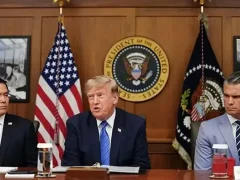
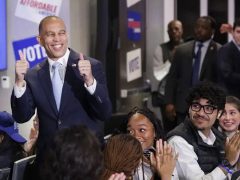


With only three weeks remaining until the US midterm elections, the Republican Party faces the prospect of a major disaster due to President Donald Trump’s declining popularity. Contests have become difficult even in seats once considered safe, creating a risk of losing control over both chambers of Congress—the House of Representatives and the Senate. To manage the situation, party leaders are increasing campaign spending to protect seats in their strongholds. Some Republicans are even considering keeping Trump away from campaign events in areas where his presence might trigger a negative reaction among voters.
A Republican member of the House of Representatives, who is running for re-election, remarked on Trump’s popularity: “Trump is sinking the party.”
Opinion polls released over the past few weeks indicate that Republicans are on track to lose their majority in the House of Representatives. This situation has arisen due to voter anger over the Iran conflict and the rising cost of living. Simultaneously, the party is struggling to retain its majority in the Senate.
The plans of Republican leaders have become complicated as the number of competitive seats has increased. They had intended to tilt the electoral landscape in their favor by spending hundreds of millions of dollars on last-minute campaigning. Despite having substantial funds—including money from the pro-Trump Super PAC “MAGA Inc.”—this spending has yet to significantly alter their electoral prospects. Instead, funds are having to be diverted to defend seats where easy victories were previously expected.
The Senate Leadership Fund, a top Super PAC supporting Republicans in Senate races, has suspended its advertising allocation for North Carolina. At the same time, the group has spent at least $10 million in Kansas—a state that has not elected a Democratic senator since 1932. Republicans are growing increasingly concerned about South Carolina as well. The Senate Leadership Fund recently spent $5 million to support incumbent Senator Darlene Graham, as some Republicans fear she is trailing Democratic challenger Annie Andrews in the state.
In Texas, the same fund has spent over $100 million to support Republican candidate Ken Paxton. Following a bitter primary battle, Paxton is now struggling to retain his party’s support against Democratic challenger James Talarico. Trump has visited Texas three times in a single month to rally voters for him.
A Trump advisor remarked, “We all hoped the battle would be over by now, but that hasn’t happened. We weren’t supposed to be facing a real contest in a place like Texas, yet here we are, having to fight for it.”
Republican leaders are also recalibrating their spending plans for the House of Representatives elections. According to several individuals familiar with the matter, the party intends to increase spending in the coming days on seats where they see a strong chance of victory, while potentially reducing allocations for candidates whose prospects are fading. The goal is to concentrate financial and campaign resources on candidates who can either retain their seats or secure victories in Democratic strongholds.
An assessment released on Friday by the Cook Political Report has further heightened Republican anxiety. The report shifted the electoral outlook for 18 House seats in favor of the Democrats; among these, five seats—located in Iowa, Pennsylvania, and Washington—have been identified as highly competitive toss-ups.
The analysis suggests that Democratic candidates now hold the advantage in these races.
The situation regarding the Senate is offering Republicans little comfort, either. Leaked audio from a private fundraiser held by Paxton in Texas is creating a series of embarrassing situations for him. Many Republican leaders were already dissatisfied with his campaign strategy. Democrats are leading in opinion polls in battleground states like Georgia and North Carolina. They are mounting strong challenges even in Republican strongholds like Alaska and Kansas.
Jason Roe, a Republican strategist from Michigan, said, “I don’t know how the situation could get any worse. If we lose this election, it means there was never any chance of winning.” He is advising the campaign of House member Tom Barrett; the race between Barrett and Democratic candidate Will Lawrence is currently neck-and-neck.
There is an awareness within the White House of the harsh reality of the situation. Sources familiar with the matter indicate that Trump and his top advisors believe retaining control of the House could prove difficult. The risk of losing the Senate majority is also rising.
However, Republicans remain hopeful that a major disaster can be averted. They anticipate that the gaps in opinion polls for contested seats will narrow in the final days of the election. The situation could shift as campaign advertising intensifies and Republican voters—who have been less active until now—engage in the electoral contest.
Another Republican House member seeking re-election said, “I’m not saying we’re guaranteed to win or that everything will be great. No, I’m not saying that. But will we be completely wiped out? No, that won’t happen.”
Republican leaders argue that the party’s strong candidates can narrow the gap by which Democrats currently lead in overall opinion polls. They also anticipate that some far-left Democratic candidates will underperform expectations.
In their view, a shift of just a few votes in certain districts could determine whether Republicans lose their majority in the House of Representatives or expand it.
House Speaker Mike Johnson has pledged to do everything possible to retain the majority. Ahead of the election, he is campaigning in more than 40 districts across 20 states. Greg Steube, his political communications director, stated that Speaker Johnson is actively campaigning to ensure necessary resources reach every district that will determine the majority.
Despite some Republican concerns regarding Trump’s campaigning, officials believe his presence can energize the party’s base. Although Trump has recently avoided some highly competitive districts, his advisors are capitalizing on his eagerness to return to the campaign trail; they are sending him to areas where his presence can help drive Republican voters to the polls.
A White House official remarked that discussions about keeping Trump off the campaign trail due to a decline in his popularity are illogical.
Ultimately, the outcome will depend on which party can successfully get less active voters to the polls. Trump is being sent to various regions specifically to energize supporters.
White House spokesperson Davis Ingle described Trump in a statement as the Republican Party’s “undisputed leader, most effective messenger, and unparalleled motivator.” Meanwhile, Mike Marinella, spokesperson for the National Republican Congressional Committee, highlighted the advantages Republicans hold in the House elections: a favorable district map, strong grassroots campaigning, historic advantages in fundraising and spending, and experienced incumbent members. He alleges that Democrats are trying to elect candidates who are socialists and lack the qualifications for office.
A senior official with the Republican National Committee believes that pollsters and political strategists are too hastily dismissing the party’s prospects in the midterm elections. “The people who are quick to call and weigh in at times like this aren’t actually in the fight,” the official said. “Instead of objectively assessing the situation, they prefer to claim that no one knows anything and that it’s all over.”
A White House official and other sources indicate that Trump’s recent campaign rallies have boosted his own morale and optimism regarding Republican chances of victory. After visiting Texas on Thursday, Trump campaigned in upstate New York on Friday for gubernatorial candidate Bruce Blakeman.
However, Trump has indirectly acknowledged that his presence might not always benefit the party, given widespread dissatisfaction with economic policies and opposition to a potential war with Iran.
According to a White House official, Trump has refrained from publicly rebuking Republican candidates who disagree with him on war and tariff policies, recognizing that they “have to run their own campaigns.” These candidates typically inform the White House of their stances before making them public.
He has also stayed away from the districts of certain vulnerable Republican candidates who are trying to distance themselves politically from him—such as Senator Susan Collins of Maine. Sources say there are no plans for Trump to visit Maine before the midterms, though they caution that his schedule could change.
Nevertheless, few Republican candidates expect to fully break free from Trump’s influence. Since returning to the White House, Trump has consistently emphasized party unity. Now, his advisors are suggesting that candidates focus on making their own cases to voters during the final stretch of the election. They are being asked to highlight why they deserve to be re-elected to Congress and what steps they would take to address voter dissatisfaction if elected.
A Trump advisor said, “Right now, we are each fighting our own battles. The situation is difficult for both sides. Ultimately, it will come down to a head-to-head contest.”