Sensational Report Leaked /
Iran-Saudi ‘Secret Deal’: Pakistan’s Army Chief Behind It?
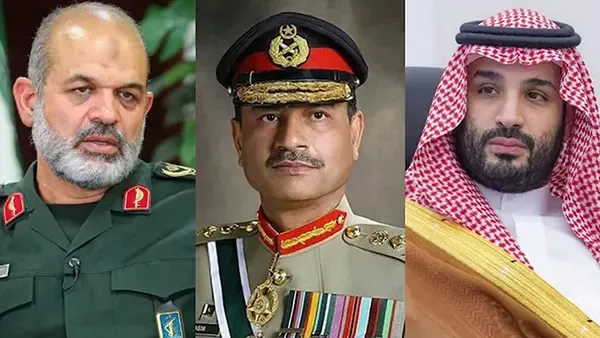
Pakistan has brokered a secret, truce-like agreement between Tehran and Riyadh to shield Saudi Arabia from Iranian missile attacks. The Israel-based news outlet The Times of Israel made this sensational claim in a report.
The report states that, in exchange for this agreement, assistance was provided to maintain the covert export of Iranian oil to Pakistan. According to the report, the deal was brokered by Pakistan’s Army Chief, General Asim Munir, in late March—a time when the initial phase of the conflict involving Iran, the US, and Israel was underway.
Mediation Leveraged Through a Joint Oil Transport Initiative
Citing three officials familiar with the matter, The Times of Israel reported that Asim Munir brokered the deal by highlighting the continuation of a joint oil transport initiative involving Ahmad Vahidi, a commander of Iran’s Islamic Revolutionary Guard Corps (IRGC).
The report claims that oil has been quietly transported from Iran to Pakistan through this joint venture since late last year. The company involved is linked to the two military officials and has generated significant financial benefits for them, even amidst the US blockade of Iranian ports.
Attacks on Saudi Arabia Subsided After the Deal
During the first month of the conflict, Saudi Arabia and several other Gulf nations faced repeated attacks from Iran. However, following the agreement, attacks on Saudi Arabia virtually ceased. This information was provided by a Middle Eastern diplomat, an intelligence official, and another official familiar with the situation.
Yet, the report claims that after nearly three months without any significant attacks, Iran fired a missile toward Saudi Arabia last weekend.
It is reported that Asim Munir subsequently sent a warning to IRGC commander Ahmad Vahidi. Citing sources, the report states that Munir warned that continued attacks could jeopardize their joint oil transport operations. Since then, no further missiles have been fired by Iran toward Saudi Arabia.
Why Was Pakistan Active? According to the report, Pakistan is acting as a mediator between Iran and the United States amidst the ongoing conflict. Concurrently, Pakistan holds a mutual defense pact with Saudi Arabia, which stipulates that an act of aggression against either nation will be treated as an attack on both.
The report further claims that Pakistan sought to strengthen ties with Saudi Arabia and make Riyadh more reliant on Islamabad for its security needs; this motivated Asim Munir to play an active role in the mediation process.
Agreement Draws Criticism
A Middle Eastern diplomat criticized the agreement, arguing that it effectively sets a precedent legitimizing—as a form of “ransom”—the money or concessions Iran demands from regional nations in exchange for sparing them from attacks during the ongoing conflict.
However, there has been no official comment so far from Pakistan, Saudi Arabia, or Iran regarding this secret agreement.
Pakistan has brokered a secret, truce-like agreement between Tehran and Riyadh to shield Saudi Arabia from Iranian missile attacks. The Israel-based news outlet The Times of Israel made this sensational claim in a report.
The report states that, in exchange for this agreement, assistance was provided to maintain the covert export of Iranian oil to Pakistan. According to the report, the deal was brokered by Pakistan’s Army Chief, General Asim Munir, in late March—a time when the initial phase of the conflict involving Iran, the US, and Israel was underway.
Mediation Leveraged Through a Joint Oil Transport Initiative
Citing three officials familiar with the matter, The Times of Israel reported that Asim Munir brokered the deal by highlighting the continuation of a joint oil transport initiative involving Ahmad Vahidi, a commander of Iran’s Islamic Revolutionary Guard Corps (IRGC).
The report claims that oil has been quietly transported from Iran to Pakistan through this joint venture since late last year. The company involved is linked to the two military officials and has generated significant financial benefits for them, even amidst the US blockade of Iranian ports.
Attacks on Saudi Arabia Subsided After the Deal
During the first month of the conflict, Saudi Arabia and several other Gulf nations faced repeated attacks from Iran. However, following the agreement, attacks on Saudi Arabia virtually ceased. This information was provided by a Middle Eastern diplomat, an intelligence official, and another official familiar with the situation.
Yet, the report claims that after nearly three months without any significant attacks, Iran fired a missile toward Saudi Arabia last weekend.
It is reported that Asim Munir subsequently sent a warning to IRGC commander Ahmad Vahidi. Citing sources, the report states that Munir warned that continued attacks could jeopardize their joint oil transport operations. Since then, no further missiles have been fired by Iran toward Saudi Arabia.
Why Was Pakistan Active? According to the report, Pakistan is acting as a mediator between Iran and the United States amidst the ongoing conflict. Concurrently, Pakistan holds a mutual defense pact with Saudi Arabia, which stipulates that an act of aggression against either nation will be treated as an attack on both.
The report further claims that Pakistan sought to strengthen ties with Saudi Arabia and make Riyadh more reliant on Islamabad for its security needs; this motivated Asim Munir to play an active role in the mediation process.
Agreement Draws Criticism
A Middle Eastern diplomat criticized the agreement, arguing that it effectively sets a precedent legitimizing—as a form of “ransom”—the money or concessions Iran demands from regional nations in exchange for sparing them from attacks during the ongoing conflict.
However, there has been no official comment so far from Pakistan, Saudi Arabia, or Iran regarding this secret agreement.