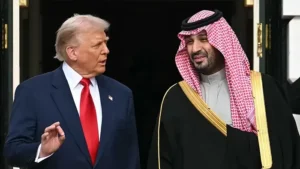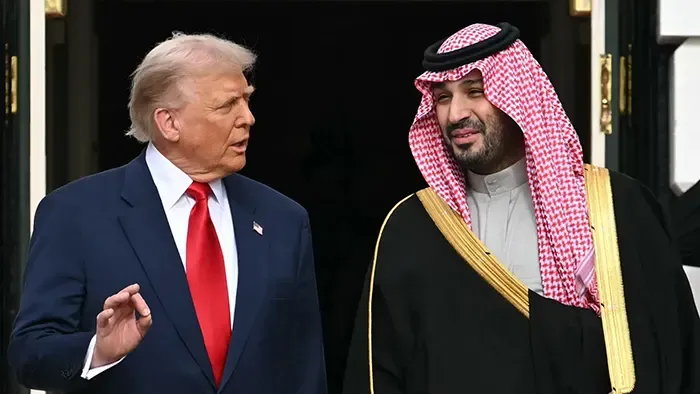
US President Donald Trump has approved an agreement that could pave the way for Saudi Arabia to develop uranium enrichment capabilities for its civilian nuclear program. This information was confirmed by two individuals familiar with the matter. Although the decision has not yet been officially announced, these sources indicated that it could be made public by Wednesday. Under this 30-year agreement, US companies are expected to participate in the development of the country’s nuclear program. Following a joint review by the US and Saudi Arabia, the deal could also authorize the construction of a uranium enrichment facility within the Kingdom. This report was published by the international news agency Associated Press (AP).
Terms of the Deal and US Congressional Concerns: If the agreement is submitted to the US Congress for review, it may face opposition from lawmakers. Many legislators fear that assisting Saudi Arabia in fulfilling its long-standing ambition to enrich its own uranium could trigger a new wave of nuclear proliferation and an arms race in the region. Saudi Arabia is a member state of the International Atomic Energy Agency (IAEA). Based in Vienna, Austria, the agency promotes the peaceful use of nuclear energy and conducts inspections to verify whether countries are harboring secret nuclear weapons programs. However, one of the sources noted that the agreement does not include the IAEA’s “Additional Protocol,” a measure that would have granted the agency greater powers of surveillance, inspection, and verification.
Regional Powers and the Impact of Ongoing Conflict: News of this potential agreement emerged shortly after the US and Israel launched a joint offensive against Iran. That operation was reportedly aimed at dismantling Iran’s capacity to produce nuclear weapons, although Tehran has consistently maintained that its uranium enrichment program is entirely peaceful. Requests for comment regarding the situation, directed at the White House and Saudi officials in Riyadh, did not elicit an immediate response. Previously, both Trump and former President Joe Biden attempted to reach a nuclear agreement with Saudi Arabia involving the sharing of U.S. technology. However, nuclear non-proliferation experts have warned that if centrifuges begin spinning on Saudi soil, it could open the door for the country to develop nuclear weapons. The nation’s influential Crown Prince, Mohammed bin Salman, had previously hinted that if Tehran were to develop a nuclear bomb, he might follow suit. Last year, shortly before Trump’s visit to Saudi Arabia, U.S. Energy Secretary Chris Wright visited the country to discuss the development of a nuclear energy industry. Meanwhile, Saudi Arabia and nuclear-armed Pakistan have signed a joint defense agreement following Israeli strikes targeting Hamas leaders based in Qatar.
Pakistan’s Defense Minister stated at the time that his country’s nuclear program would be made available to Saudi Arabia if necessary—a move viewed as a message to Israel, the only nuclear-armed state in the Middle East. Uranium enrichment is not the sole prerequisite for manufacturing a nuclear weapon; other complex technologies are also involved. Nevertheless, it paves the way for weapon development. Although the United Arab Emirates—Saudi Arabia’s neighbor—entered into a similar agreement, it refrained from uranium enrichment, a stance international analysts regard as the benchmark for the peaceful use of nuclear energy.