
A roar rises from thousands of voices in the stands; the atmosphere is electric with excitement. Twenty-two footballers are racing across the pitch, chasing a single ball. To an outsider, it might appear to be merely a game—a battle of speed, strategy, skill, and mental fortitude.
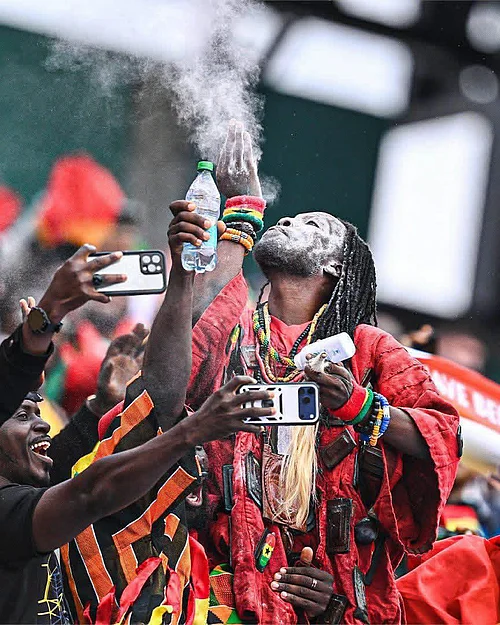
Some call it *Juju*, others call it sorcery; some say it is the blessing of ancestors.
However, within Ghanaian football culture, many believe that the eleven players on the field are not the only ones present. There are other invisible, indescribable, and mysterious forces at play. Some call it *Juju*, others call it sorcery; some say it is the blessing of ancestors. Yet, others whisper that not all forces bring blessings—some can also invite curses.
Stories of *Juju* or occult practices are nothing new in the history of Ghanaian football; indeed, for years, it has been a subject of discussion, curiosity, and even controversy. In many African nations, spirituality is an integral part of daily life. An invisible realm of belief permeates everything—birth, death, marriage, and illness. In Ghana, this belief has become intertwined with football. Recently, Ghana’s formidable defensive performance against England reignited this conversation. It wasn’t just the match result that grabbed attention; the prediction made by a self-proclaimed Ghanaian spiritual guru before the game also stunned everyone.

Kane was not in his usual rhythm.
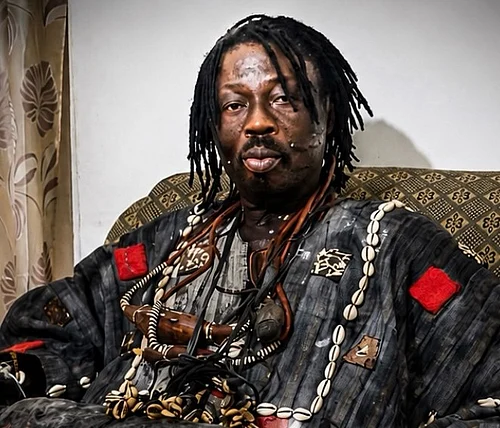
Before the match, Nana Kwaku Bonsam, a traditional Ghanaian priest, had declared that he knew exactly how to stop England captain Harry Kane.
Before the match, Nana Kwaku Bonsam, a traditional Ghanaian priest, had declared that he knew exactly how to stop England captain Harry Kane.
Before the match, Nana Kwaku Bonsam, a traditional Ghanaian priest, had declared that he knew exactly how to stop England captain Harry Kane. He claimed to have demonstrated his spiritual powers in the past and vowed to use that same power for the sake of his country this time around. However, this would cause no physical harm to the opponent; it would merely diminish their effectiveness. Although it sounded like a tall tale, the events on the field a few hours later seemed to echo those very words. England, one of the World Cup’s powerhouses, failed to score. Ghana held them to a goalless draw. England’s attacks were repeatedly thwarted by Ghana’s organized defense. Kane, too, was off-rhythm; he failed to capitalize on the few chances that came his way. Then, the chatter began. Many on social media jokingly suggested that ‘Juju’ might actually be at work.
The mystery deepened when videos circulated showing Ghanaian fans in the stands sprinkling white powder and performing specific rituals. Many remarked that this was not merely a display of support but was driven by a spiritual purpose. This belief system is known as ‘Juju’.
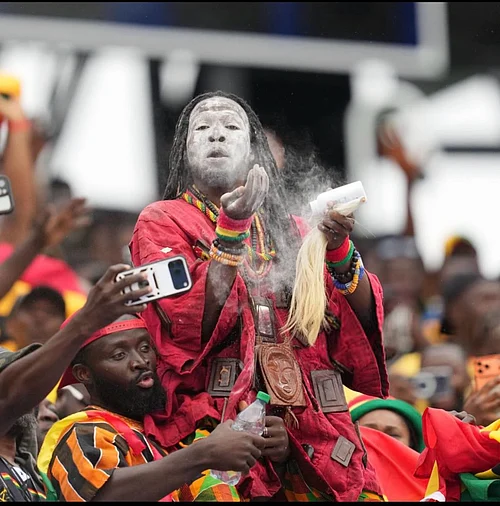
Ghanaian fans in the stands sprinkling white powder.

Ghanaian shaman Bonsam claimed he had lifted the spell from Harry Kane and that the striker would score.
Before the subsequent match, Ghanaian shaman Bonsam declared that he had lifted the spell from Harry Kane and predicted he would score. Bizarre as it may seem, Harry Kane delivered a magnificent performance and scored—not just once, but multiple times.
Meanwhile, Portugal secured a victory yesterday in a rather peculiar fashion, with Ronaldo finding the net. Shaman Bonsam had previously predicted that CR7’s Portugal would win the World Cup; they have now taken a fortunate step in that direction.

Portugal won in a rather peculiar fashion; Ronaldo scored.
Is this merely a case of blind luck, or does this shaman truly possess supernatural power? If the latter is true, his next prediction could spell trouble for Argentina. He has prophesied that Cape Verde will halt Argentina’s winning streak and knock them out of the World Cup. Having three consecutive predictions come true is no small feat. Thus, this Ghanaian shaman is indeed casting the shadow of ‘Juju’ over Argentina.
What exactly is ‘Juju’?
In West African culture, ‘Juju’ does not simply equate to black magic. It is a complex blend of beliefs, rituals, amulets, incantations, and unseen forces. It encompasses the use of special herbs and mysterious objects, the invocation of ancestral spirits, and even practices for spiritual protection. Many players, fans, and club officials in Ghana believe that—
‘Juju’ can shield a player from injury.
It can sap the opponent’s morale.
It can tilt fortune in one’s favor.
It can even seemingly seal the goalposts by invisible means.
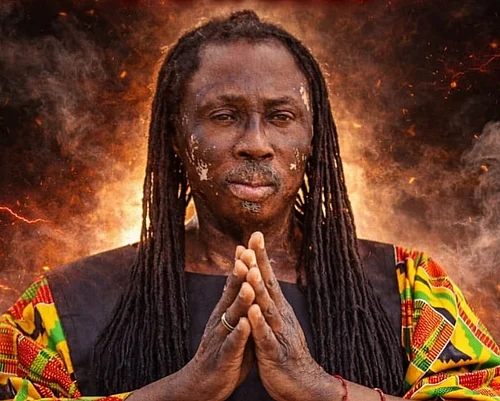
In West African culture, ‘Juju’ does not simply equate to black magic.
Strange as it may sound, these beliefs run deep in Ghanaian local football. It is said that before big matches, some visit secret shrines. Others sprinkle mysterious liquids on the goalposts before entering the field, or hide amulets in the dressing room. There are even more eerie tales—stories of rituals performed in secluded spots the night before a match, where drums beat, mantras are chanted, and unseen forces are summoned. Verifying the truth of these stories is difficult, yet the power of belief is undeniable.
The question remains: does Juju actually work? Science offers no proof, but the human mind is a curious thing. If a player believes an amulet is granting them strength, their self-confidence may soar—and self-confidence can often alter the outcome of a game. So, what is it that truly works? The amulet, the ritual, or the belief itself?
Perhaps the answer isn’t so simple. The World Cup is not merely a ninety-minute game; it is a battle of culture, identity, belief, and mental fortitude.
On the scoreboard, we see only numbers. Yet, off the pitch, there remain stories of prayers, fears, beliefs, amulets, incantations, and superstitions. Perhaps that is why Ghanaian football is so enigmatic—because sometimes, the ball rolls not just with the feet, but with belief.
Source: The Indian Express, Ghana Weekend
Photo: Instagram