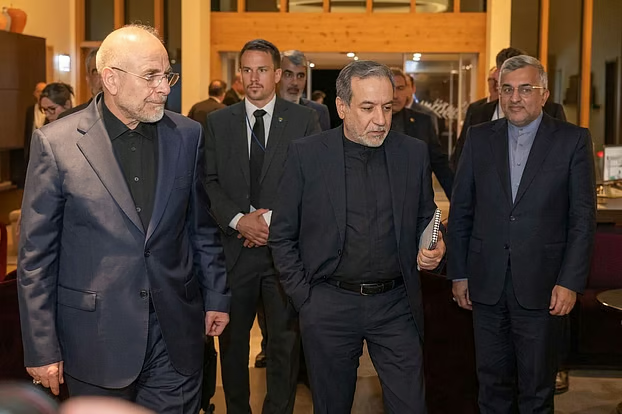
Israel may have plotted to assassinate Iran’s top negotiators while Washington was engaged in talks this spring aimed at reaching an interim peace agreement with Tehran. Current and former US officials hold this view.
Assassinating Iran’s top leaders had been part of Israel’s strategy since the war began. However, concerns within the US spiked dramatically regarding the potential Israeli assassination of two specific Iranian officials—Foreign Minister Abbas Araghchi and Parliament Speaker Mohammad Bagher Ghalibaf—during the sensitive ceasefire negotiations that commenced last April.
According to several officials, the US urged other nations in the region to warn about the security of these two Iranian officials, fearing that an Israeli plot to kill them would derail the negotiations.
US officials acknowledged that, given the war’s peak intensity, Araghchi and Ghalibaf could have been considered “legitimate” targets for Israel, as Israel’s objective was to topple Iran’s hardline government. Yet, when crucial talks began in April, US officials feared that any attempt to assassinate Iranian leaders would scuttle the negotiations and reignite the conflict.
The war had begun on February 28 with an Israeli offensive against Iran, based partly on US intelligence. Several top officials, including Supreme Leader Ayatollah Ali Khamenei, were killed in attacks carried out by the US and Israel.
While US strikes targeted Iran’s navy and missile stockpiles, Israel prioritized eliminating Tehran’s leadership during the early stages of the war. Their aim was to kill as many high-ranking officials as possible.
This included the assassination of relatively pragmatic leaders with whom the Trump administration had hoped to engage in dialogue—such as Iran’s top national security official Ali Larijani and former Foreign Minister Kamal Kharrazi. These two individuals were actively involved in negotiations with the United States at the time they were killed in an Israeli airstrike.
The Trump administration’s suspicions regarding a potential Israeli plot to assassinate Iran’s top two negotiators illustrate how quickly the war objectives of the US and Israel diverged, despite initially aligning at the start of the conflict. While the US sought a peace agreement as early as April, Israel remained skeptical of the matter from the very beginning of the initial ceasefire.
The ceasefire during the first two weeks of April garnered only reluctant support from Israeli officials and sparked widespread anxiety among the Israeli public that the US was ending the war too quickly. Instead of being ousted from power, the Iranian government became even more hardline. Iran’s Islamic Revolutionary Guard Corps (IRGC) further consolidated its control over the country.
Araghchi and Ghalibaf were the two key senior officials negotiating with various regional nations to secure a ceasefire and, subsequently, a more lasting peace with the United States. Last June, the US and Iran reached a framework agreement that paved the way for reopening the Strait of Hormuz and created opportunities for future discussions regarding Tehran’s nuclear program.
Israeli officials and analysts viewed this preliminary agreement as a disaster, as it failed to achieve any of their country’s war objectives—such as regime change, the destruction of Iran’s proxy forces, and inflicting severe damage on its missile program.
Israeli officials also feared that the agreement would provide Iran with billions of dollars, enabling rapid post-war reconstruction without significantly curbing its nuclear ambitions.
A spokesperson for the Israeli embassy in Washington declined to comment when asked about these matters.
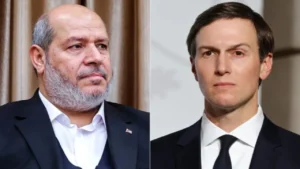
When asked about the alleged Israeli plot and the warning issued to Iran, a US official stated that negotiations between the US and Iran are ongoing. President Donald Trump’s special envoy, Steve Witkoff, and his son-in-law, Jared Kushner, have held productive meetings in Qatar. The official added that President Trump wants the peace process to “continue.” The Wall Street Journal reported last March that Araghchi and Ghalibaf were on Israel’s list of targets for assassination. However, they were temporarily removed from the list after the United States discussed initiating talks with Iran.
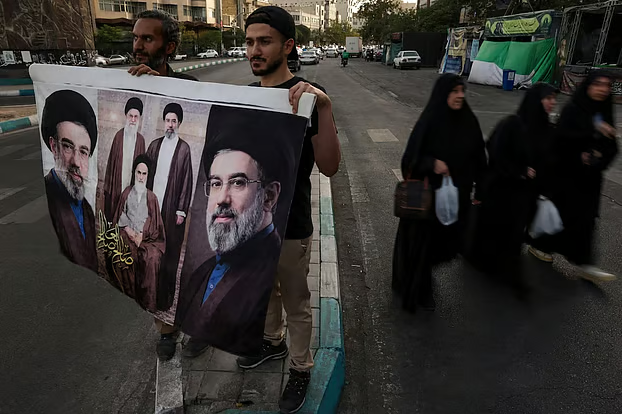
Two U.S. and Middle Eastern officials stated that the Trump administration was aware at the time that Ghalibaf, at the very least, was on Israel’s assassination list; they had urged Israel to refrain from such action.
Comments from three senior Iranian officials reveal that Ghalibaf narrowly escaped death on two occasions—once during a 12-day conflict and again during the war earlier this year. Israel had targeted a meeting of high-ranking officials held in an underground bunker. Officials reported that Ghalibaf was pulled from the rubble in both instances.
Following a meeting in Islamabad, Pakistan, in late April, Iranian MP Mohsen Zanganeh stated, “Today, Ghalibaf, Araghchi, and other members of the negotiating team risked their lives despite being aware of serious security threats. This cannot be dismissed as political maneuvering; rather, it is a genuine act of self-sacrifice.”
Iran had taken precautionary measures to protect its top officials from potential Israeli attacks during the talks.
Officials noted that Ghalibaf was scheduled to travel to Islamabad last April to meet with US Vice President JD Vance. However, Iranian security officials were concerned that Israel might exploit the opportunity to assassinate Ghalibaf or Araghchi in order to derail the negotiations.
Iran is preparing for the burial of Ayatollah Ali Khamenei, who was killed in an attack by the US and Israel; a massive turnout of the general public is expected.
Iran is preparing for the burial of Ayatollah Ali Khamenei, who was killed in an attack by the US and Israel; a massive turnout of the general public is expected. Photo: Reuters
Officials stated that Iranian authorities had sought assurances from the US—through mediators in Pakistan and Qatar—that Israel would not carry out any covert assassination attempts against the Iranian delegation.
Pakistani fighter jets provided an escort for the Iranian aircraft—carrying a delegation of over 70 people—from the Iranian border to Islamabad and back again after the session concluded.
However, a security threat from Israel emerged during the return flight to Tehran.
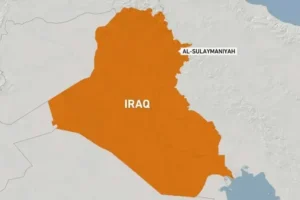
Two officials reported that Iranian security forces alerted the plane carrying Ghalibaf back to Tehran, informing the crew that intelligence indicated an Israeli plot to attack the aircraft. Two Israeli fighter jets had entered Iranian airspace near the western border, close to Iraq.
Mahdi Mohammadi, a senior advisor who accompanied Ghalibaf to Islamabad, confirmed the incident on social media. The aircraft made an emergency landing in the Iranian city of Mashhad, the airport closest to the Pakistani border. Mohammadi and the two officials stated that the Iranian delegation returned to Tehran after an approximately eight-hour overland journey.
Nevertheless, these senior Iranian officials continued their travels.
In late May, Ghalibaf and Araghchi traveled to Qatar for discussions. Subsequently, they visited Switzerland last June for a second round of direct meetings with US Vice President JD Vance and the US delegation.