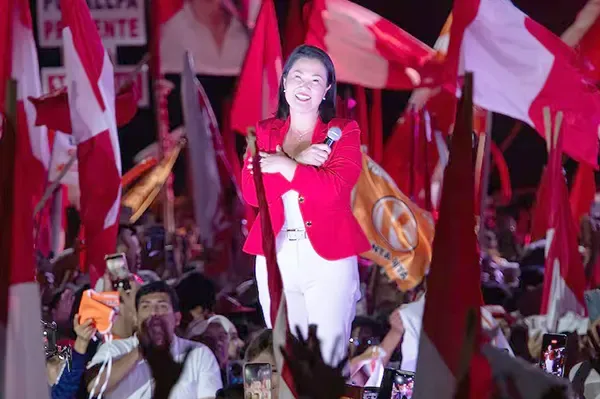
Keiko Fujimori has secured a decisive victory in the presidential election of the Latin American nation of Peru. Seventeen days after the polls closed, with 99.8% of the votes counted, right-wing politician Fujimori emerged with an insurmountable lead, securing 50.1% of the vote. Her closest rival, leftist coalition candidate Roberto Sánchez, received 49.8%. Her victory was confirmed because the margin of her lead (43,386 votes) exceeded the number of remaining uncounted votes (40,213).
This report comes from El País. Fujimori is set to become the first elected female president in Peru’s history. This marked the fourth presidential bid for the 51-year-old daughter of former Peruvian dictator Alberto Fujimori, following three consecutive defeats. As with recent elections in Peru, the margin of victory was less than one percent. Votes from the Peruvian diaspora played a pivotal role in this win, with a significant number of votes from the United States going to Fujimori. However, leftist leader Roberto Sánchez has alleged electoral fraud from the outset and refused to accept the validity of the results. Sánchez has already called for a new protest movement, posing fresh challenges to Peru’s fragile political institutions and social stability.
Keiko Fujimori campaigned under the slogan “The return of Fujimori, the return of order,” focusing primarily on promises to ensure internal security and combat crime. She pledged to implement strict measures—such as deploying the army to the streets to curb extortion targeting small business owners and transport drivers, immediately deporting criminal immigrants, and mandating that prisoners perform labor to cover the cost of their own food—to tackle rising homicide rates. During the campaign, she highlighted her father’s counter-terrorism operations from the 1990s as a model for addressing current crime issues. However, her father’s political legacy remains a source of deep division within Peruvian society. Alberto Fujimori’s tenure is praised for controlling inflation and curbing terrorism, yet criticized for human rights violations, corruption, and atrocities such as the forced sterilization of indigenous women. With this victory, Peru is set to have a new head of state for the ninth time in the past decade.
Although Fujimori’s party, Popular Force, is the single largest bloc in parliament, she will need to form alliances with other political parties to pass new reform proposals. The new female president’s primary challenge will be to govern while winning the trust of impoverished rural areas—where the majority voted against her—and appeasing the grievances of the leftist opposition and fierce anti-Fujimori social movements.