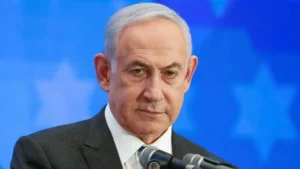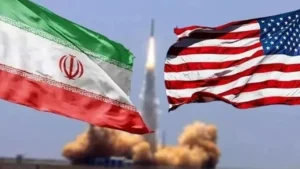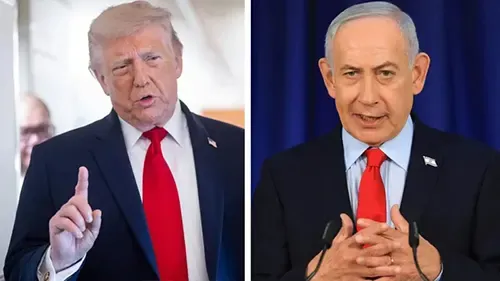
US President Donald Trump and Israeli Prime Minister Benjamin Netanyahu believed that defeating Iran would allow them to redraw the map of the Middle East to their liking. That map is indeed changing, but not in the way they expected. Iran has not been defeated; instead, the current situation has created the risk of a protracted and debilitating crisis. The situation could escalate into full-scale war at any moment.
It is now evident that the regime in Tehran is far more resilient than Trump and Netanyahu had imagined. Their calculations were flawed, and they have lost control over the consequences. The latest proof of this is the downing of a US Apache helicopter in the Strait of Hormuz. This serves as another stern message to Washington that Tehran’s rulers still possess the capability to strike at America.
At the same time, they are prepared to go to any lengths to survive this conflict. For Iran, victory means preserving its own existence and maintaining pressure on the enemy by keeping control over the Strait of Hormuz—the Persian Gulf’s most strategic waterway. Since February, commercial traffic through this vital shipping lane has come to a complete standstill. Following the loss of the helicopter in the Strait—the latest development in the conflict—the US President and his generals are grappling with the setback while seeking a response that demonstrates American strength without abandoning the slow, albeit fruitless, diplomatic path. The helicopter’s crew narrowly survived the incident; had they been killed, the US response would have been far more severe.
Trump is essentially keen on striking a deal with Iran—one that would reopen the Strait of Hormuz and pave the way for long-term negotiations regarding Iran’s uranium enrichment and nuclear program. The conflict has lost popularity within the United States itself. Trump is now searching for a solution that he can present as a “victory” to his domestic audience, yet achieving this is proving to be anything but easy. Trump and Netanyahu are now confronting that age-old historical truth of warfare: while starting a war is easy, concluding it with a decisive victory is incredibly difficult. When they declared war against Iran on the last day of February, their respective video messages exuded confidence in an impending historic shift. They operated under the assumption that the Iranian regime, in power since 1979, was on the verge of collapse. Speaking from his Mar-a-Lago resort in Florida, Trump urged the Iranian people to stay indoors, declaring that the moment of their liberation was at hand.
The following morning, from the roof of the Ministry of Defense in Tel Aviv, Netanyahu announced that a dream he had harbored for forty years was finally coming true. Throughout his political career, Netanyahu had argued that Israel’s true adversary was not the Palestinians or the Arab world, but Iran. While he had failed to convince previous US presidents, he succeeded with Trump. Following the Hamas attack on October 7, 2023, Netanyahu assured Israelis that, backed by American support, their military might would annihilate their enemies and secure a safe future. Military force—not diplomacy—was his sole solution. Yet, the reality today is starkly different. Last Monday, when Trump ordered him to scrap plans for an attack on Beirut, Netanyahu appeared—in the words of Israeli columnist Ben Caspit—like a “deflated balloon.” The strategy Netanyahu adopted to bend the entire region to his will through military might has clearly failed.
Trump had anticipated a swift victory. He believed the same formula used to capture Venezuelan President Nicolás Maduro—imprisoning him in New York and installing a hand-picked successor in Caracas—would work for Iran. However, despite possessing the world’s most powerful military and being a Middle Eastern superpower, America and Israel are now left wondering where things went wrong. They had assumed that Iran—plagued by sanctions, corruption, and economic crisis—would crumble from within. They had considered Iran isolated, especially after the fall of its allies—Hamas, Hezbollah, and the Bashar al-Assad government in Syria. However, they underestimated the resilience and ruthlessness of this Islamic regime.
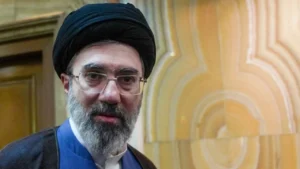
They believed that assassinating the Supreme Leader and his top aides would cause the system to collapse. Trump and Netanyahu failed to grasp the depth of Iran’s preparedness—honed over fifty years of constant threats—and the wall of national security they had constructed based on their religious and ideological convictions. The shockwaves of this conflict have also impacted America’s oil-rich allies in the Persian Gulf. It is not merely a matter of economic loss; the current war has turned the stability and the multi-billion-dollar commercial paradise they sought to build into a mere mirage. Tehran believes that its capacity to hold the global economy hostage by closing the Strait of Hormuz will provide long-term protection against the US and Israel. The new leadership that has replaced the veteran figures killed in Israeli and American strikes is even more ideologically driven and prepared to take any risk. Iran’s current strategy involves linking the conflict in Lebanon to the crisis in the Persian Gulf. Tehran has sent a clear message to Trump: no agreement is possible unless Israel halts its bombing of Lebanon and stops attempting to destroy Hezbollah. When Trump asked Netanyahu to stop the attacks on Beirut, he was implicitly acknowledging this interconnection between Lebanon and the Gulf region—even though Netanyahu dismissed the link as “unacceptable.”
Ultimately, however, Trump will prioritize his own political interests and his desire to end the war over Netanyahu’s stubborn insistence on prolonging it. When the Strait of Hormuz was closed last March, warnings were issued that the global economy would collapse if it did not reopen by June. Yet, even now, that vital waterway remains closed. Barring a major diplomatic miracle, there are currently no signs that this crisis will be resolved in the near future.