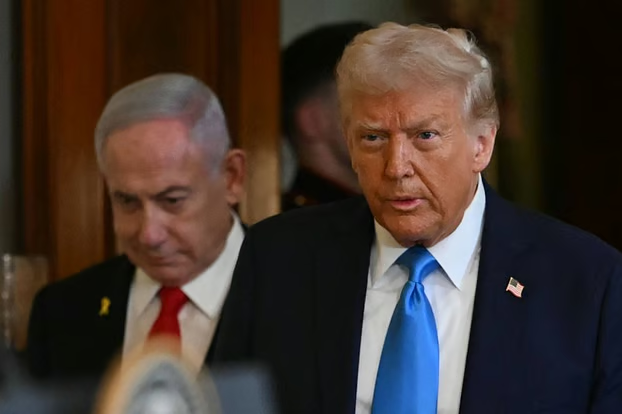
US President Donald Trump has warned Israeli Prime Minister Benjamin Netanyahu that he might have to fight entirely on his own if he launches another attack on Iran.
Trump delivered this stern message during a phone call with Netanyahu on Monday and in a subsequent interview with Axios, following a fresh exchange of attacks between Iran and Israel that began on Sunday night.
Israel and Iran had agreed to temporarily halt hostilities following this major confrontation—which lasted from Sunday night until Monday morning and marked the most significant clash since the ceasefire in April. Trump’s comments came immediately after this development.
According to media reports, Trump’s dissatisfaction with Netanyahu is steadily growing. In a post on his social media platform, Truth Social, Trump ordered both sides to immediately stop the “shooting.” He stated that “final talks” aimed at establishing peace would proceed, provided that “ignorance or stupidity” did not stand in the way.
Various media outlets reported that Trump called the Israeli Prime Minister and urged him to halt the attacks.
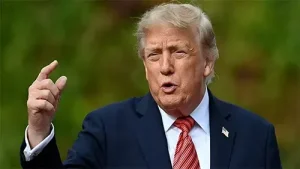
In an interview with the US news outlet Axios, Trump confirmed that he had warned Netanyahu about the consequences of continuing the conflict.
Trump said, “I told Bibi, you’d better be careful, or else you’ll be all alone very soon [you’ll have to fight alone].”
This latest round of tensions—involving attacks between Iran and Israel—was triggered on Sunday by a deadly Israeli airstrike on Beirut, the capital of Lebanon. Amid the ongoing attacks in Lebanon, Iran fired a barrage of missiles targeting northern Israel, and Israel retaliated with strikes on Iran.
Tehran has long maintained that any peace agreement with the United States is partially contingent upon ending the war in Lebanon. Reports indicate that on Sunday evening, Trump called Israeli Prime Minister Netanyahu and urged him not to retaliate against the attack. However, ignoring that request, Israel launched an attack on Iran early yesterday morning.
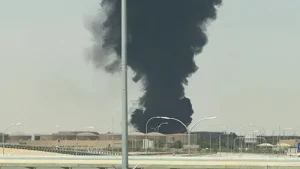
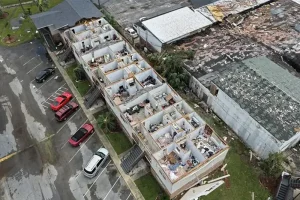
Israeli forces struck Iran’s air defense systems and a petrochemical plant. Subsequently, Iran targeted a similar facility in Haifa and two airbases in Israel. Israel claimed, however, that a large portion of the missiles fired by Iran were destroyed in the skies over the occupied West Bank.
Israel attempts to downplay tensions with the US
This exchange of retaliatory strikes between the two nations has complicated Donald Trump’s efforts to halt the conflict. Trump has been working to end the “Iran war” that began between the US and Israel on February 28. Although the conflict was temporarily paused following a ceasefire announcement on April 8, sporadic tensions and clashes have persisted in the Gulf region.
In a televised statement, Israeli Prime Minister Benjamin Netanyahu said he had informed Trump that “Israel has the full right to self-defense, and we are exercising that right as necessary.”
Netanyahu added, “At this moment, the fires of the battlefield are under control, because after we struck Tehran’s ‘terrorist’ government, they ceased their attacks on us.” He also issued a warning: “If Iran makes the mistake of attacking us again, we will respond with full force.”
Meanwhile, Yechiel Leiter, Israel’s ambassador to Washington, is downplaying reports of tension between US and Israeli leaders. Speaking to the US media outlet Fox News, he remarked, “Sometimes, even loved ones have minor squabbles.”
Leiter noted that while Netanyahu did decide to “de-escalate the situation” at Trump’s request, the US President also understands “very well” that Israel cannot simply sit back and tolerate ballistic missile strikes on its own soil without responding. Iran Blames Washington for Tensions
Esmaeil Baghaei, spokesperson for the Iranian Foreign Ministry, directly blamed Washington for the escalation in tensions, stating, “The United States is directly responsible for this. They are a key party to the ceasefire negotiations. Therefore, if the ceasefire is violated—whether through the seizure of a ship in the Strait of Hormuz, Israel’s attacks in southern Lebanon, or any other incident—the United States will bear direct responsibility for the resulting rise in regional tensions.”
Meanwhile, Iran’s First Vice President Mohammad Reza Aref stated that the operation launched against Israel was named ‘Nasr’ (Victory). He noted that the operation demonstrated “a new level of resistance capability for a powerful Iran” and claimed that, as a result, Israel was “forced once again to beg for a ceasefire.”