A powerful earthquake has struck the southern Philippine island of Mindanao. While the German Research Centre for Geosciences (GFZ) initially reported a magnitude of 8.2 at a depth of 10 kilometers (6.2 miles), they later revised the magnitude to 7.8. The US Geological Survey (USGS) also confirmed the magnitude as 7.8. Following the quake, tsunami warnings were issued for several Asian countries, including the Philippines, Indonesia, and Japan. The tremors were felt at 7:40 AM local time on Monday.
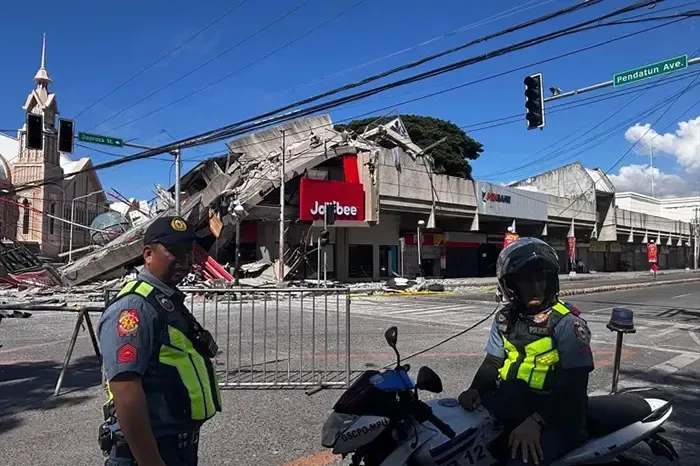
A series of aftershocks continued for more than an hour after the initial earthquake. The Philippine Institute of Volcanology and Seismology (PHIVOLCS) reported the collapse of a three-story building in General Santos City, Mindanao; videos circulating on social media captured the moment the building crumbled. Additionally, windows shattered and roofs collapsed in numerous other buildings.
Local police have confirmed one fatality and four injuries in General Santos City so far, though the casualty count may rise as rescue operations continue. Immediately following the disaster, Philippine President Ferdinand Marcos Jr. ordered the mobilization of all emergency agencies. Schools and colleges in the affected areas have been closed. Addressing residents in coastal areas, he urged them to seek shelter on higher ground immediately, emphasizing that their lives are far more valuable than material possessions. The Pacific Tsunami Warning Center stated that tsunami waves reaching up to 3 meters (9.8 feet) could hit the Philippine coast, while waves up to 1 meter high could strike parts of Indonesia and Malaysia. Waves measuring 1 meter in height have already been observed in the Sultan Kudarat and Sarangani provinces of the Philippines. Meanwhile, Indonesia’s disaster management agency has ordered residents of North Sulawesi, Gorontalo, and the Sangihe Islands to immediately evacuate to safer locations. The Japan Meteorological Agency (JMA) has also issued a tsunami warning for the country’s southern coast, including Okinawa. The Malaysian Meteorological Department has issued an alert for the state of Sabah. It is worth noting that the Philippines and Indonesia are located along the “Pacific Ring of Fire”—one of the world’s most seismically active regions—making them prone to frequent powerful earthquakes and volcanic eruptions. Previously, in October, at least eight people were killed by two strong earthquakes in the Mindanao region.