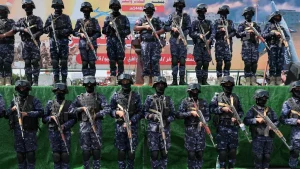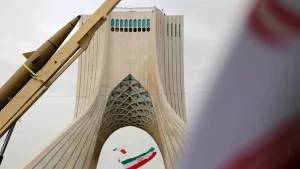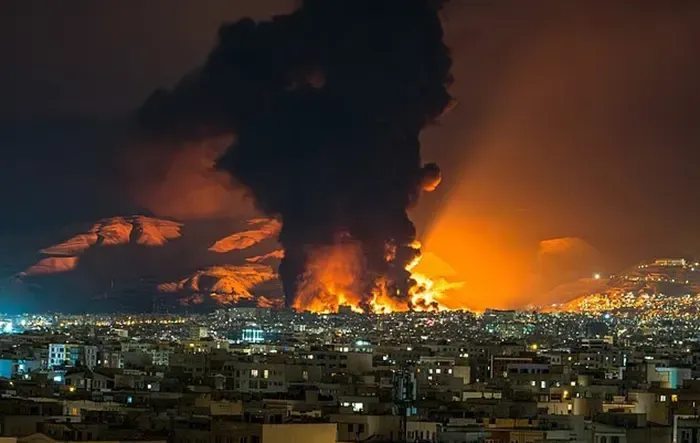
With the ceasefire now in effect—and a peace treaty hanging in the balance—the Daily Mail’s ‘Battle Board’ has attempted to analyze which country has benefited the most from the Iran war thus far. Foreign Affairs Correspondent Chris Pleasance compared the current situation against the stated objectives of the United States, Israel, and Iran at the outbreak of hostilities on February 28, 2026. By tallying casualties, damage to military assets, and strategic gains, Pleasance argues that, under current circumstances, Israel clearly stands out as the war’s primary beneficiary.
According to him, while the United States entered the conflict with a vague objective such as “regime change”—and Iran’s primary goal was simply survival—Israel’s calculated participation has yielded tangible, and likely long-term, geopolitical advantages. Pleasance writes that, from the very beginning, Israel’s objective was to inflict maximum destruction upon Iran, its proxy allies, and its capacity for post-war reconstruction. He further notes that their strategy was to sustain the conflict as intensely, and for as long, as possible.
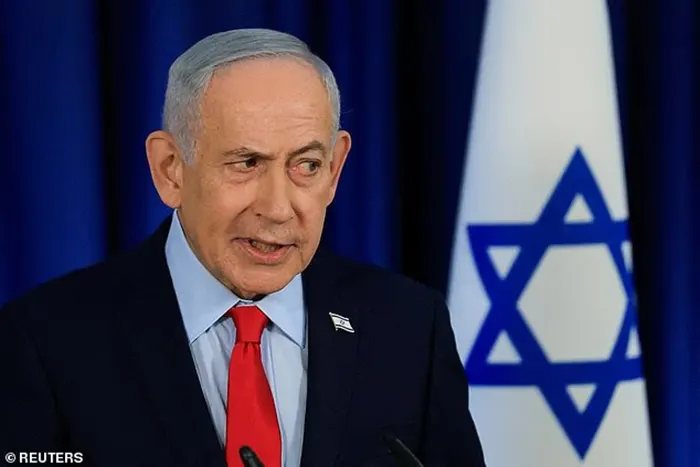
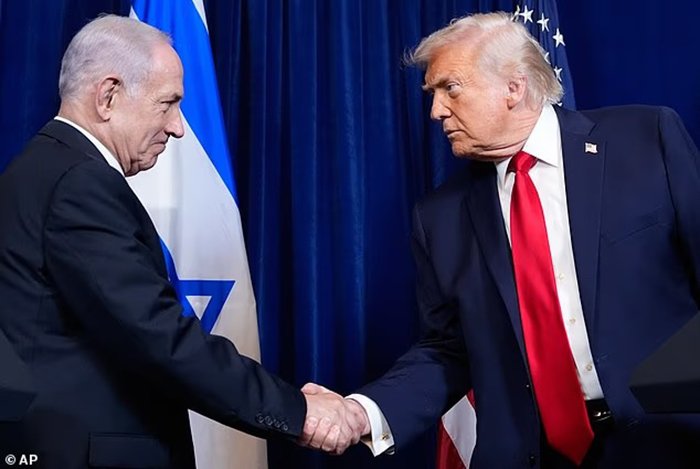
According to Pleasance, this objective placed Israel at odds with the position of its closest ally, the United States. This is because Donald Trump had pledged to the American public that the war would end swiftly, whereas Benjamin Netanyahu required the conflict to be prolonged. Nevertheless, even as the war entered its fourth month, Israel managed to preserve its vital alliance with Washington. During this period—according to U.S. military intelligence—Iran has been severely debilitated. It is claimed that the majority of the country’s air defense systems, naval assets, and missile production facilities have been destroyed. Furthermore, reports indicate that every single one of its drone manufacturing centers has also been obliterated.
While the United States has borne the brunt of the diplomatic pressure and the financial costs of the war, Israel has been quietly eliminating many of its most dangerous adversaries.
Pleasance writes that Israel is leveraging a powerful combination of intelligence gathered by the Mossad, data hacked by its elite cyber unit—’Unit 8200’—and advanced artificial intelligence capabilities. He states that, by consolidating this information, they are compiling a regularly updated list of targets for attacks by the Israeli Defense Forces. Subsequently, warplanes are conducting operations in Iran, while ground forces are carrying out missions in Lebanon. According to the report, on the very first day of the war, Iran’s Supreme Leader, Ayatollah Ali Khamenei, was killed in a joint U.S.-Israeli strike. Several other high-ranking officials of the country were killed at the same time; among them were Security Chief Ali Larijani and the Commander of the Islamic Revolutionary Guard Corps (IRGC) Navy, Alireza Tangsiri.
Pleasance further notes that, unlike the United States, Israel does not bear the arduous responsibility of establishing a lasting peace with Tehran. The task of extracting any concessions regarding Iran’s nuclear program will likely fall upon U.S. negotiators. Simultaneously, Washington is also striving to reopen the Strait of Hormuz. Consequently, it is Trump—not Netanyahu—who will have to face the diplomatic repercussions. Pleasance observes that Israel’s objective is to prolong the war and inflict maximum destruction upon Iran. They have largely achieved that goal. He further writes that the war ultimately lasted somewhat longer than Trump’s projected timeline—spanning over five weeks. The Israelis likely desired even more time, and by prolonging the conflict in Lebanon, they did indeed secure some additional time. Conversely, the United States’ objective was to end the war as swiftly as possible while securing significant concessions. It appears that Trump has achieved the first objective, but at the cost of failing to achieve the second.
He states that the United States now faces a daunting challenge: having failed to achieve its aims through the use of force, it must now persuade Iran to abandon its nuclear program, surrender its enriched uranium, and reopen the Strait of Hormuz. Moreover, these negotiations must be conducted amidst the existing power vacuum within the country.
In conclusion, Pleasance poses the question: Who is the victor of the Iran War?
His answer: Israel appears to be the clearest winner. Its primary adversary lies in shambles. Israel has achieved most of its objectives while sustaining comparatively minimal losses in return.