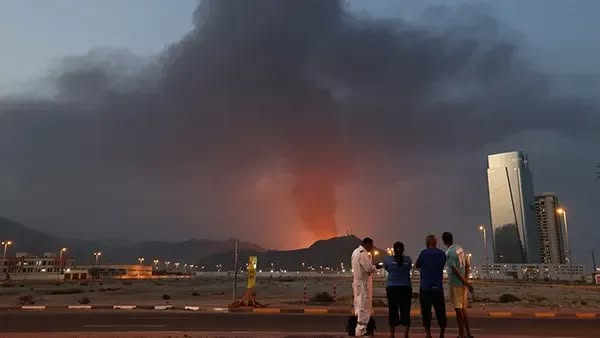
The United Arab Emirates also joined Israel and the United States in the conflict against Iran. A report published by The Wall Street Journal on Friday confirmed that the country carried out dozens of airstrikes within Iran. Citing individuals familiar with the matter, The Wall Street Journal stated that the UAE began launching attacks on Iran from the very first days of the war.
Subsequently—even after a ceasefire between Iran and the United States went into effect on April 8—the UAE continued to carry out attacks on Tehran. The report suggests that Abu Dhabi was not merely a silent supporter; rather, alongside the United States and Israel, it effectively played the role of a third active participant in the conflict.
The UAE’s attacks on Iran were conducted in coordination with the United States and Israel. Washington and Tel Aviv provided intelligence and surveillance support for these operations. The UAE targeted several strategic and energy-related facilities across the Persian Gulf and the Strait of Hormuz. These targets included Qeshm Island, Abu Musa Island, Bandar Abbas, the Lavan Island oil refinery, and the Assaluyeh petrochemical complex. According to the report, several of the UAE’s attacks were aimed directly at Iran’s energy infrastructure.
Among these, the attack on the Assaluyeh petrochemical complex drew particular attention. Reports indicate that this strike—carried out in coordination with Israel—sparked widespread concern and criticism within the international community. This is because the Assaluyeh region serves as one of the primary hubs for Iran’s gas and petrochemical industries and holds significant links to the global energy supply chain.
Prior to the conflict, the Gulf nations had publicly asserted that they would not permit their territories or airspace to be used for military actions against Iran. However, the report reveals that Abu Dhabi abandoned this stance at the very outset of the war.