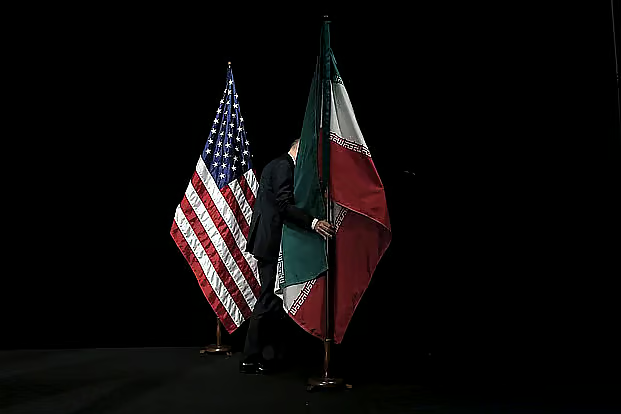
The United States and Iran have reached a consensus to extend the ceasefire and to normalize shipping traffic through the Strait of Hormuz. If the new agreement is finalized, the ceasefire will be extended by an additional 60 days. Reliable sources have conveyed this information to Reuters. However, US President Donald Trump has not yet approved the deal. Iran’s state media has reported that the agreement has not yet been finalized.
According to four sources familiar with the matter, if the new agreement is signed, the ceasefire will be extended by another 60 days. This would allow for the resumption of normal shipping operations through this vital waterway. During this period, negotiators from both nations would have the opportunity to attempt to resolve complex issues, such as Iran’s nuclear program.
If the top leadership in Washington and Tehran endorse this agreement, it would mark the most significant step toward peace since the outbreak of hostilities on February 28. Although the ceasefire went into effect in early April, tit-for-tat attacks between the two nations continued as recently as this week. News of this potential agreement has emerged amidst this backdrop of tension.
The sources indicated that President Trump has not yet signed or formally approved the agreement. Iran, for its part, has not yet issued an official statement regarding the matter. Citing a source close to the Iranian negotiating team, the country’s Tasnim News Agency reported that the draft of the agreement has not yet been finalized.
Speaking to reporters in Washington, US Vice President J.D. Vance stated, “We have not yet reached the finish line. However, we are very close. We will continue our efforts in this regard.”
Vance added, “I cannot offer a 100 percent guarantee that the agreement will definitely materialize. However, judging by the current situation, we remain quite optimistic.”
Previously, the Trump administration had claimed on several occasions that a deal to halt the fighting was nearly finalized. However, each time, Iran either denied those claims or downplayed their significance.
If this agreement proves successful, shipping traffic through the Strait of Hormuz would resume as normal. In exchange, the United States would lift its sanctions on Iranian ports.
Additionally, the US would lift certain sanctions currently imposed on Iran’s oil sales.
Approximately 20 percent of the world’s total energy supply is transported through the Strait of Hormuz. News of the potential reopening of this waterway has led to a decline in global oil prices. Earlier, U.S. Central Command reported that its forces had shot down five Iranian drones. Additionally, they launched an attack on a drone control center in the Iranian city of Bandar Abbas. Shortly thereafter, Kuwaiti forces intercepted and destroyed a ballistic missile that was heading toward Kuwait. A major U.S. military base is located in Kuwait.
Iran’s state television claimed to have shot down a U.S. aircraft near Bushehr; however, a U.S. official dismissed this claim.
These minor skirmishes underscore just how difficult it is to bring an end to this three-month-long conflict. Negotiations aimed at transforming this fragile ceasefire into a lasting peace remain in a highly precarious state.
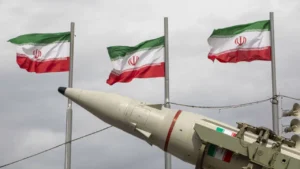
According to the Tasnim News Agency, Iran’s Islamic Revolutionary Guard Corps (IRGC) stated that, in retaliation for the attack in Bandar Abbas, they launched a counter-attack targeting the aforementioned U.S. base. They issued a warning that any further such actions would be met with an even “harsher response.”
Pakistan, acting as a mediator in this crisis, announced that its Foreign Minister, Ishaq Dar, is scheduled to meet with U.S. Secretary of State Marco Rubio in Washington on Friday. However, the specific significance of this visit remains unclear.
Warning to Oman
The United States has warned Oman against engaging in any discussions with Iran regarding the imposition of new tariffs on shipping traffic through the Strait of Hormuz. Despite the long-standing economic and military ties between the two nations, President Trump went so far as to issue a threat of bombing Oman on Wednesday.
U.S. Treasury Secretary Scott Bessent stated that the Omani Ambassador had assured him that there are no plans to implement such tariffs.
Oman clarified that it had merely held general discussions with Iran regarding the freedom of navigation for vessels in international waters. Following these threats from U.S. officials, Iran has publicly declared its solidarity with Oman.