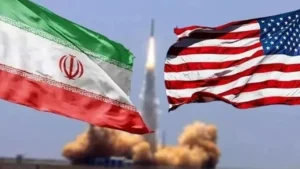
The US military has carried out several airstrikes near Iran’s Strait of Hormuz ahead of talks in Qatar. Meanwhile, a delegation of top Iranian officials has traveled to Qatar to discuss a ceasefire with the US and Israel.
US Central Command (CENTCOM) claimed that it carried out the attack in “self-defense.” It took this step to prevent Iranian forces from threatening US troops. However, CENTCOM did not provide details or the exact location of the attack.
Meanwhile, Iranian media reported an explosion in Bandar Abbas, a city in southern Iran located about 70 kilometers (42 miles) from the Strait of Hormuz.
A ceasefire brokered by Pakistan took effect on April 8. The new attack came amid hopes of a deal to end the war, but it has also triggered a global energy crisis.
On Monday, Iranian Foreign Ministry spokesman Esmail Baghai said they had resolved “a large part” of their differences with the United States. But no deal was imminent.
What the US said about the latest attack
CENTCOM spokesman Navy Captain Tim Hawkins gave a statement to Al Jazeera late Monday night. He claimed that “the target of the attack was a missile launch site. We also targeted Iranian boats that were trying to lay mines.”
The statement also said that “US Central Command is exercising maximum restraint during the ongoing ceasefire. At the same time, they are working to protect their forces.” However, they did not provide any further details on this matter.
US Secretary of State Marco Rubio is currently visiting India. He also said that the attack targeted boats that were trying to lay mines and missile launch sites. Washington is blaming Iran’s military for laying mines near the Strait of Hormuz, through which one-fifth of the world’s oil and gas passes under normal circumstances.
Rubio spoke to reporters on a plane in the western Indian city of Jaipur. He said that one of the world’s major energy routes is currently under an undeclared blockade by Iran. The Strait of Hormuz must be opened “at any cost.”
Speaking on the diplomatic front, Rubio said that reaching a deal with Iran “could take a few more days.” His words have somewhat dampened hopes of a quick end to the conflict. US President Donald Trump made a long post on the social media platform Truth Social on Monday.
Trump wrote in it that talks with Iran are going “very well.” However, he warned of more attacks if the talks fail. He wrote, “There has to be a great deal for everyone. Otherwise, there will be no deal.’
Just a few days ago, Trump said that a memorandum of understanding (MOU) with Iran was ‘almost final’. This war has destabilized the world market. Oil prices have also skyrocketed. Therefore, Trump’s announcement created hopes for a quick end to the war. This tension increased again immediately after that.
What Iran says about the attack
Iranian state media reported that Iran’s Islamic Revolutionary Guard Corps (IRGC) claimed on Tuesday that it had shot down a US drone. It fired at a warplane and another drone that entered Iranian airspace. However, it did not specify when the incident occurred.
The IRGC said that Iran has the ‘legitimate and certain’ right to retaliate against any US ceasefire violation.
Iran’s Foreign Ministry said in a statement on Tuesday that the US had violated the ceasefire by attacking Hormuzgarh province in southern Iran. The US administration will be held responsible for all the consequences of this aggressive and unjust action.
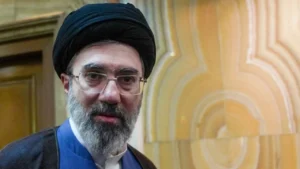
In a message on the occasion of the Hajj on Tuesday, Iran’s Supreme Leader Mojtaba Ali Khamenei also threatened that the Middle East would no longer serve as a shield for US bases. There would be no safe haven for evil forces in the Middle East.

Iranian news agencies published a report on Monday. They said that Iran had shot down a stealth drone of the “enemy” with the help of a new air defense system. However, they did not specify where the drone came from.
Several Iranian sources gave Al Jazeera information. They said that the Islamic Revolutionary Guard Corps (IRGC) had targeted a ship at sea before this latest US attack.
According to the sources, several IRGC members were killed in the attack.
Iran’s Foreign Ministry said on Monday that Washington and Tehran had made significant progress in talks. But they have ruled out any major solution coming soon.
Ministry spokesman Baghai said, “We have agreed on a large part of the issues under discussion. It would be absolutely correct to say that. But that does not mean that an agreement is on the verge of being signed. No one can claim that.”
At a press conference in Tehran, Baghai added that “at this moment” neither side is discussing Iran’s nuclear program. Their main goal for now is to stop the war.
What’s happening in the diplomatic arena
The US and Iran agreed to a ceasefire on April 8. But a lasting peace has not yet been established. However, negotiations and efforts to reduce tensions are still ongoing.
Pakistani Prime Minister Shahbaz Sharif is on a four-day visit to China, where he and Army Chief Field Marshal Asim Munir met with Chinese President Xi Jinping and Premier Li Keqiang.
It is important to convince Iran to open the Strait of Hormuz. For this, the Trump administration has been pressuring China to take a more active role for several weeks. However, ahead of this summit, they said that they no longer need Beijing’s help.
Earlier on Monday, a high-level Iranian delegation arrived in the Qatari capital Doha. They went there to discuss the obstacles to a permanent peace agreement. It is known that the delegation includes Iranian Foreign Minister Abbas Araghchi. Also included is Parliament Speaker and Chief Negotiator Mohammad Bagher Ghalibaf.
Trump said the peace talks were “going very well.” But he made it clear that he would not accept anything less than a solid deal. The delegation visiting Doha also includes Iran’s Central Bank Governor Abdol Nasser Hemmati.
On his social media account Truth Social, Trump wrote, “There has to be a great deal for everyone. Otherwise, there will be no deal. We will be back in the war zone, the shooting will continue. This time the attack will be bigger and stronger than ever before. No one wants that.”
Trump is trying to cover another issue with the peace talks. He wants Saudi Arabia, Qatar and Pakistan to commit to signing the Abraham Accords. He is essentially making the agreement conditional on normalizing relations with Israel.
Trump also wrote, “It may be that one or two countries have a reason not to do it. That will be accepted. But most countries should be ready, willing and able to make this deal with Iran a historic one.’
The Abraham Accords were signed in 2020 during Trump’s first term. Through it, the United Arab Emirates, Bahrain, Morocco and Sudan normalized relations with Israel. However, the Arab countries have said that they will establish diplomatic relations with Israel only after the establishment of an independent Palestinian state under the ‘two-state solution’.
So what is the future of peace talks?
Al Jazeera’s Alan Fisher reports from Washington, DC. He says Trump is eager to reach an agreement. But the attack risks derailing ongoing talks to end the war.
Fischer said, “There have been several other small clashes, especially right after the ceasefire began. But Trump said at the time that he did not consider these to be ceasefire violations.”
Fisher added, “There is very little information coming from the US side. “We don’t know the exact scale of this operation. So it’s hard to say whether this attack is truly an unusual incident or not.”