As tensions between the United States and Iran escalate once again, Pakistan is making strenuous efforts to keep diplomatic channels open between the two nations. However, the increasingly hardline stances adopted by both sides—coupled with indications from Washington that it may launch fresh attacks—have rendered Islamabad’s mediation attempts extremely difficult.
On February 28, the United States and Israel jointly carried out an act of aggression against Iran. Although attacks and counter-attacks ceased following a ceasefire between the two sides on April 8, the situation has once again become volatile.
Against this backdrop, Pakistan’s Interior Minister, Mohsin Naqvi, arrived in Tehran last Saturday for a two-day visit. While there, he held meetings with Iranian President Masoud Pezeshkian, Interior Minister Eskandar Momeni, and Parliament Speaker Mohammad Bagher Ghalibaf.
It is believed that Islamabad is undertaking this diplomatic initiative specifically to ensure that the ongoing discussions regarding the ceasefire do not collapse entirely.
Mohammad Bagher Ghalibaf also serves as Iran’s chief negotiator in the ongoing peace talks with the United States.
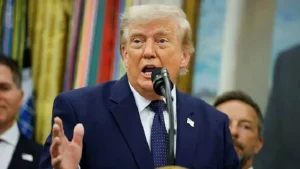
However, while Mohsin Naqvi was meeting with Iranian officials last Sunday, US President Donald Trump issued a stern message via his social media platform, Truth Social. He wrote: “Iran’s time is running out. They must act quickly, or they will be left with nothing. Time is of the essence.”
Over the weekend, Trump also held a meeting with top officials from his national security team. Attendees included Vice President J.D. Vance, Secretary of State Marco Rubio, CIA Director John Ratcliffe, Secretary of Defense Pete Hegseth, and Special Envoy Steve Witkoff.
Nevertheless, Tehran’s narrative regarding the situation stands in stark contrast to Washington’s position.
Yesterday, Monday, during a regular weekly press briefing, Iranian Foreign Ministry Spokesperson Ismail Baghai stated that although Trump had publicly characterized Iran’s response as “completely unacceptable” last week, the United States has nonetheless conveyed a set of revised proposals and views through Pakistani mediators.
Baghai noted that Iran has reviewed these proposals and has responded through the same channel. He added that the diplomatic process, facilitated by Pakistan, remains ongoing. Subsequently, Iran’s state-run news agency, Tasnim, reported that Tehran had submitted a 14-point proposal to Pakistan for onward transmission to the United States.
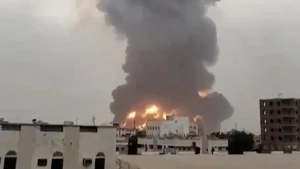
However, tensions have continued to escalate despite these efforts. Over the weekend, a drone attack targeted a power generator outside the Barakah nuclear power plant in the United Arab Emirates. Meanwhile, Saudi Arabia announced that it had shot down three drones launched from Iraqi airspace.
Yesterday, Pakistan’s Ministry of Foreign Affairs condemned the attack on the Barakah power plant, terming it a grave violation of international law and urging all parties to exercise maximum restraint.
Recent events clearly underscore the extent to which the diplomatic situation has deteriorated since the ceasefire went into effect 40 days ago.
According to analysts, both sides have exchanged various proposals; however, they have rejected each other’s demands and are increasingly issuing threats of military strikes. Consequently, the specter of a renewed conflict is now becoming a tangible reality.
Where the Proposals Have Stalled
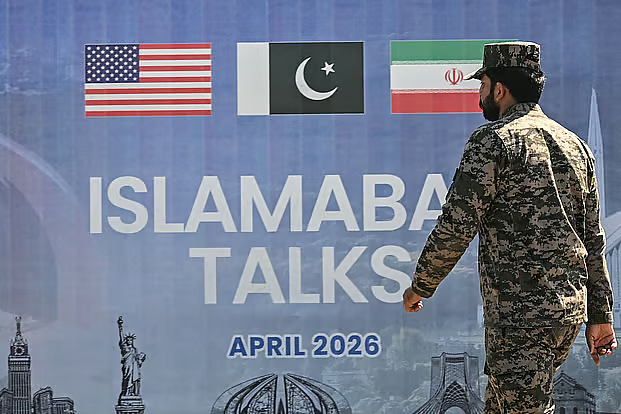
Even after the ceasefire took effect on April 8—and following the failure of talks held in Islamabad on April 11–12—Washington and Tehran continued to exchange proposals through Pakistan’s mediation.
On April 28, Iran submitted a 14-point counter-proposal. This proposal demanded a permanent cessation of hostilities within 30 days, the withdrawal of U.S. forces from areas adjacent to Iran’s borders, the lifting of the U.S. naval blockade, the unfreezing of seized assets, war reparations, and the establishment of a new framework for managing the Strait of Hormuz. Notably, the nuclear issue was deliberately excluded from this proposal.
In response, Washington presented its own proposal in early May. Its core demands were that Iran must halt uranium enrichment for a period of 20 years, ship its stockpile of approximately 400 kilograms of 60-percent enriched uranium abroad, and dismantle its nuclear facilities at Natanz, Isfahan, and Fordow.
At the time, confirming receipt of the U.S. proposal, Ismail Baghai stated that the primary objective of Tehran’s proposal was solely to bring an end to the war. He remarked, “The proposal we submitted is entirely centered on the issue of ending the war; it contains no detailed discussion regarding the country’s nuclear program.”
Tehran took 10 days to formulate its response to the U.S. proposal. In a written response, Iran stated that it is willing to ship a portion of its enriched uranium to a third country, but would not engage in nuclear negotiations prior to a permanent ceasefire. However, Trump rejected this proposal as “completely unacceptable.”
Yesterday, Esmail Baghaei reiterated Tehran’s stance. He stated, “We will make no compromises on this matter. Under the Nuclear Non-Proliferation Treaty (NPT), Iran possesses the right to enrich uranium.” Although Iran is a signatory to the NPT, Israel—which is involved in the conflict alongside the United States—has not signed the treaty.
Iran has also put forward five preconditions for resuming negotiations. Notable among these are a cessation of hostilities across all fronts—including in Lebanon—the lifting of sanctions, the unfreezing of seized assets, the payment of war reparations, and the recognition of Iran’s sovereignty over the Strait of Hormuz.
Javad Heiran-Nia, a Tehran-based international relations analyst, told Al Jazeera that the conflict between the two sides is not merely strategic, but also structural. He notedIran seeks to resolve the issue of the Strait of Hormuz first precisely to ensure that, in future nuclear negotiations, the United States cannot utilize a naval blockade as a tool to exert pressure on the country.
Javad further stated, “From the very outset, the United States has sought nuclear negotiations so that it could maintain a naval blockade while talks are underway, thereby using it as an effective instrument of pressure. This represents a deep-seated structural divergence. Following the U.S. withdrawal from the JCPOA in 2018, Iran is now seeking guarantees of long-term security. Washington, conversely, aims to extract maximum concessions by employing both military and economic pressure.”
The JCPOA—or Joint Comprehensive Plan of Action—was the nuclear accord signed in 2015 between Iran and the world powers, from which President Trump subsequently withdrew the United States.
Ilhan Niaz, a professor of history at Quaid-i-Azam University in Islamabad, observes that both parties have strategic reasons for remaining unyielding in their respective positions. He told Al Jazeera, “In the aftermath of the conflict, Iran now finds itself in a significantly stronger position; they will remain firm on their terms. Conversely, as a superpower, the United States will also be reluctant to make concessions.”
Pakistan’s Mediation Under Pressure
Mohsin Naqvi is the third high-ranking Pakistani official to visit Tehran in recent weeks. Prior to his visit, the country’s Army Chief, Field Marshal Asim Munir, traveled to Iran in late April; subsequently, both he and Naqvi undertook a joint visit to the country.
Analyst Javad Heyran-Nia believes that Pakistan is drifting toward a highly precarious situation. He told Al Jazeera, “Pakistan is currently on the verge of transitioning from being an indispensable mediator for both parties to becoming merely a disregarded alternative. Should Iran and the United States opt to initiate negotiations through other channels—such as those provided by Oman or Qatar—or conclude that Pakistan lacks the leverage to influence either side, Islamabad’s role would be rendered entirely insignificant.”
However, Mehran Kamrava, a professor of international relations at Georgetown University in Qatar, does not fully subscribe to this view. He argues that even if the ceasefire were to collapse, it would not necessarily imply that both parties would subsequently disregard Pakistan. Speaking to Al Jazeera, he stated that Pakistan holds immense significance as a vital conduit for communication and diplomatic engagement. In his view, even if hostility and mutual mistrust run deep between Washington and Tehran, this does not diminish Islamabad’s standing.
The Doha-based analyst noted that regardless of how the military situation unfolds, Pakistan will remain a primary channel for communication.
Ismail Baghaei, a spokesperson for Iran’s Foreign Ministry, revealed that discussions are also underway with Oman, where expert-level talks are focusing on ensuring safe navigation through the Strait of Hormuz.
Professor Ilhan Niaz believes that Pakistan has managed to achieve at least some tangible progress. He argued that Pakistan’s diplomacy—albeit temporarily—has halted the conflict and initiated a diplomatic process.
Rising Military Tensions
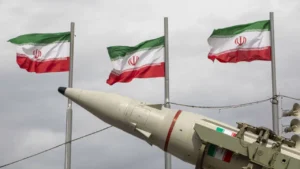
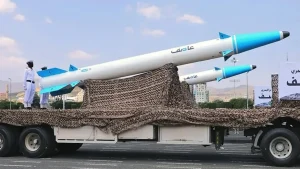
A U.S. military assessment published in The New York Times indicates that 30 of the 33 missile bases situated along the Strait of Hormuz have been reactivated. Furthermore, it is estimated that Iran’s missile stockpile has been restored to approximately 70 percent of its pre-war levels.
Meanwhile, a report by CNN states that the U.S. Department of Defense (the Pentagon) has compiled a list of potential strike targets, which includes Iranian energy and infrastructure facilities.
On May 17, Brigadier General Abolfazl Shekarchi, a spokesperson for Iran’s Armed Forces, issued a warning: if the United States launches another attack, Iran will respond with a counter-attack of even greater intensity and destructiveness.
Analyst Javad Heiran-Nia believes that the current crisis is more perilous than any previous period of heightened tension. He warns that should a direct naval clash erupt, the situation could rapidly escalate into a major conflict within just 48 to 72 hours. The drone attacks over the weekend serve as a stark demonstration of just how volatile the situation can become—and how far Tehran is prepared to go.
Mehran Kamrava, a professor at Georgetown University in Qatar, observes that the risk of accidental escalation is just as high as that of an intentional conflict. He points out that vast quantities of military hardware are deployed across the region, and the level of mistrust among all parties involved remains profoundly deep. During a BRICS alliance meeting held in New Delhi on May 15, Iranian Deputy Foreign Minister Abbas Araqchi acknowledged that he had received a message from Washington regarding new negotiations. However, he noted that a lack of trust remains the primary obstacle.
Speaking at a press conference on Monday, Ismail Baghai stated that the United States no longer possesses credibility in the international arena. At the same time, he urged regional nations—including the United Arab Emirates—to draw lessons from the events of recent months.