



The prospect of a war between the United States and Iran has become a major global concern. With no effective solution in sight, the global energy market faces a crisis. Both Iran and the U.S. continue to trade threats, and the U.S. has issued warnings to its citizens in various Middle Eastern countries while simultaneously increasing its military presence.
Meanwhile, Iran’s Islamic Revolutionary Guard Corps (IRGC) has stated that if the U.S. launches new attacks, Tehran—as part of its new ‘aggressive’ strategy—will strike neighboring countries and target bases used in U.S. military operations. On Wednesday, IRGC spokesperson Hossein Mohebbi declared, “Our previous policy was purely defensive; we would only respond if attacked. But now, we are stating that if anyone attacks us, we will not merely respond—we will launch a counter-offensive.”
These warnings come amidst ongoing attacks on shipping in the Strait of Hormuz and uncertainty surrounding diplomatic efforts to end the conflict, which has persisted for eight months. Furthermore, Washington has ordered the withdrawal of some diplomatic personnel from Saudi Arabia, citing the threat of attacks by Houthi rebels in Yemen. U.S. President Donald Trump has also hinted that a decision regarding the conflict could be reached very soon.
According to media reports, the United States and Israel are devising plans for a potential strike against Iran in the coming weeks.
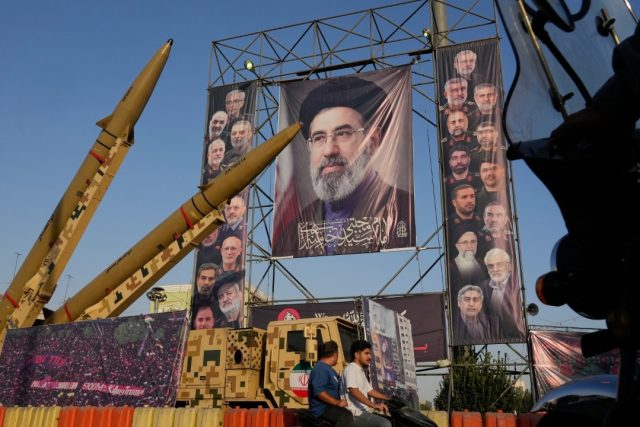
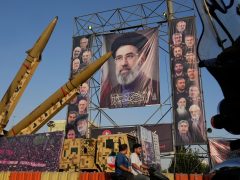
IRGC spokesperson Mohebbi noted that since a 12-day conflict between Iran and Israel in June 2025, Iran’s missile stockpile has increased by 50 percent. He added that the quality, range, destructive power, and precision of these missiles have also improved significantly. Additionally, he mentioned that Iranian forces are preparing to unveil a weapon dubbed the ‘Father of All Bombs.’
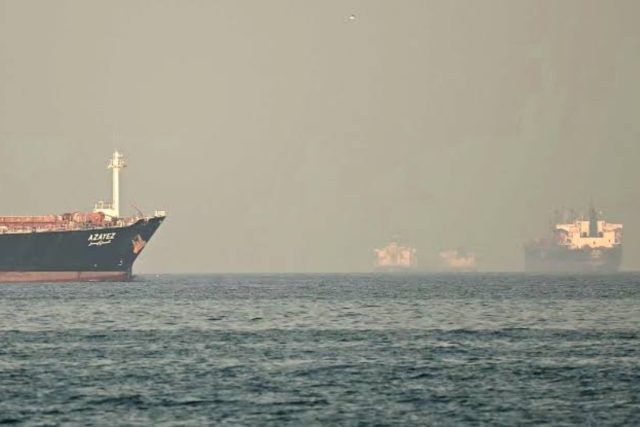
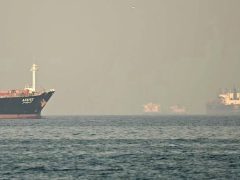
The attacks in the Strait of Hormuz have had a major impact on global oil prices. Before the war, one-fifth of the world’s oil and natural gas was transported through this strait. Recently, attacks along this waterway—coupled with the conflict between Yemen’s Houthi rebels and the Saudi-backed government—have driven oil prices up once again. On Thursday, the price of Brent crude surpassed $110 per barrel.
According to analysts, this new strategy by Iran is intended to make any future U.S.-Israeli attack significantly more costly. Negar Mortazavi, a senior fellow at the Center for International Policy, told Al Jazeera that Tehran is seeking to establish a new equation following the failure of its previous defensive strategy. Unable to match conventional U.S. military capabilities, Iran is increasingly leveraging its missiles, drones, and its influence over the Strait of Hormuz. Rami Khouri, a non-resident senior fellow at the Arab Center, noted that this Iranian strategy could extend the economic impact of the conflict well beyond the Middle East, disrupting energy supplies, transportation, and the movement of goods.
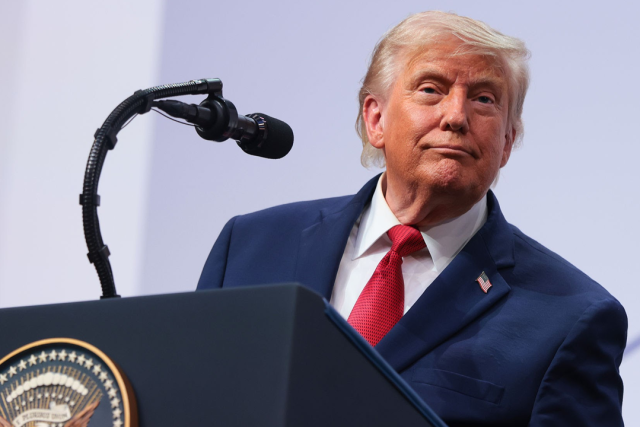
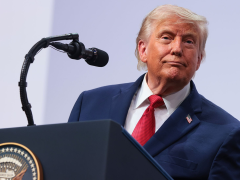
Donald Trump’s remarks regarding the U.S.’s next steps have been quite ambiguous. On Wednesday, he stated that Washington is no longer engaged in talks with Tehran and that “something” is set to happen very soon.
However, he had previously pledged not to launch an attack on Iran before the November elections. U.S. Secretary of State Marco Rubio has asserted that Iran must cease its attacks on commercial vessels in the Strait of Hormuz, adding that the U.S. will not support any agreement that enables the development of nuclear weapons. Meanwhile, Iran has proposed a seven-day plan to normalize shipping through the Strait of Hormuz, contingent upon the lifting of U.S. sanctions, the easing of restrictions, and the unfreezing of Iranian assets.
On Sunday, Israeli Prime Minister Benjamin Netanyahu reiterated his commitment to bringing about the downfall of the Iranian government. In this context, analysts warn that a new conflict could erupt at any moment. The upcoming elections in the United States and Israel over the next two weeks could play a significant role in determining the timing of any potential military action. However, Iran has also made it clear that any attack on it will come at a heavy price.
—Al Jazeera analysis