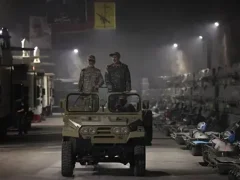






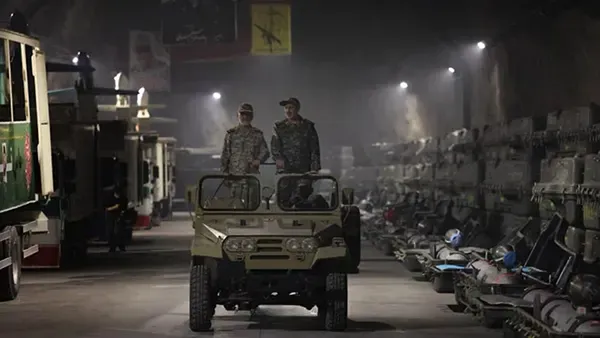
On Tuesday, Iran’s Islamic Revolutionary Guard Corps (IRGC) unveiled a new underground missile facility. State media released footage showing senior military officials inspecting the site.
Ali Abdollahi, Chief of Staff of the Iranian Armed Forces, and Majid Mousavi, commander of the IRGC Aerospace Force, were seen touring various sections of the subterranean complex.
However, authorities did not disclose the location of the facility, nor did they specify when the officials conducted their visit.
During the inspection, Abdollahi issued a warning, stating that if Iran were to face a new attack, the country could launch retaliatory strikes well beyond the Middle East.
“If the enemy takes any further action against us, our response will extend beyond this region,” he declared.
Earlier, on Saturday, IRGC spokesperson Hossein Mohebi had announced the unveiling of a new underground missile facility.
Mohebi explained that parts of the missile production process have been moved underground to protect them from airstrikes and to ensure that production continues during wartime. He also warned that, should conflicts with the United States or Israel escalate, Iran could deploy new, previously undisclosed weaponry.
Tehran’s announcement comes as Washington considers further military action against Iran, following a U.S. strike on Qeshm Island earlier this month.
For years, Iran has been constructing underground facilities for the storage and launch of missiles to safeguard its arsenal from airstrikes. The country refers to these sites as “missile cities.”
These facilities have frequently been targets of Israeli military operations. In conflicts over the past year, Israel has struck Iranian missile launch systems, storage depots, and related infrastructure, aiming to diminish Iran’s capacity for retaliation. Satellite imagery from last February, reviewed by Reuters, shows that Iran is repairing missile bases damaged in the conflict. At the same time, efforts are underway to further fortify sensitive military and nuclear facilities and to conceal their locations.