The Palestinian armed group Hamas and its allied resistance factions have agreed in principle to a roadmap for disarmament. However, they have stated that the implementation of this plan is contingent upon the complete withdrawal of Israeli troops from the Gaza Strip, the commencement of reconstruction efforts, and tangible progress toward establishing an independent Palestinian state.
While this recent announcement has sparked speculation in some quarters that Hamas has completely abandoned armed resistance, analysts believe the reality is far more complex. Hamas maintains that it will not surrender its weapons directly to Israel; instead, the proposal entails handing over arms to the security forces of a future independent Palestinian state.
Under the proposed plan, if Israel fully withdraws its troops from Gaza and refrains from obstructing reconstruction activities, Palestinian resistance groups would begin a phased process of securing and decommissioning heavy weaponry. Personal weapons would be registered, and responsibility for security management would be gradually transferred to Gaza’s administrative structures.
However, the success of this plan hinges largely on Israel’s stance. To date, there have been no positive signals from Israel regarding a full troop withdrawal or the facilitation of reconstruction efforts in Gaza.
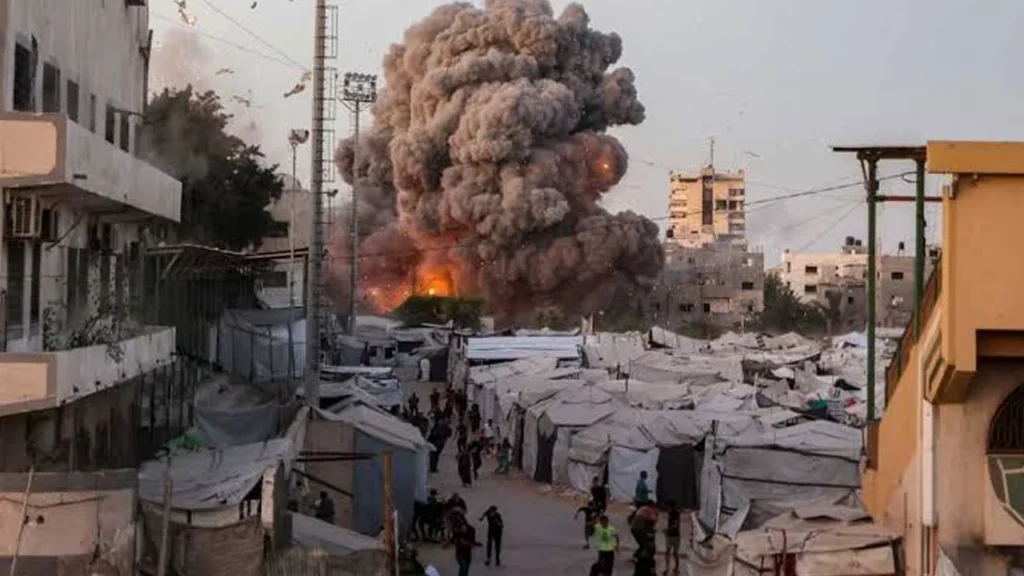
Various sources report that violence in Gaza has not ceased entirely, even following the ceasefire announced in October 2025. Hamas claims it has launched no new attacks against Israeli forces since the ceasefire began and has taken steps to transfer administrative responsibilities to the National Administrative Committee. Conversely, the group accuses Israel of violating ceasefire terms, obstructing the entry of humanitarian aid into Gaza, and continuing military operations.
Analysts further note that Hamas has undertaken this initiative with two primary objectives: alleviating the suffering of Gaza’s civilian population and paving the way for an independent Palestinian state. However, concerns remain that if Israel fails to move forward with the implementation of these conditions, the situation could once again escalate into conflict. Analysts also believe that regional geopolitics could play a crucial role in determining the future of this crisis. In particular, potential regional conflicts involving Iran, the United States, and Israel could add a new dimension to the situation in Gaza.
According to observers, while Hamas’s proposal is viewed as an effort to alleviate the humanitarian crisis in Gaza, its implementation will depend entirely on Israel’s political decisions and future progress regarding the establishment of an independent Palestinian state.