




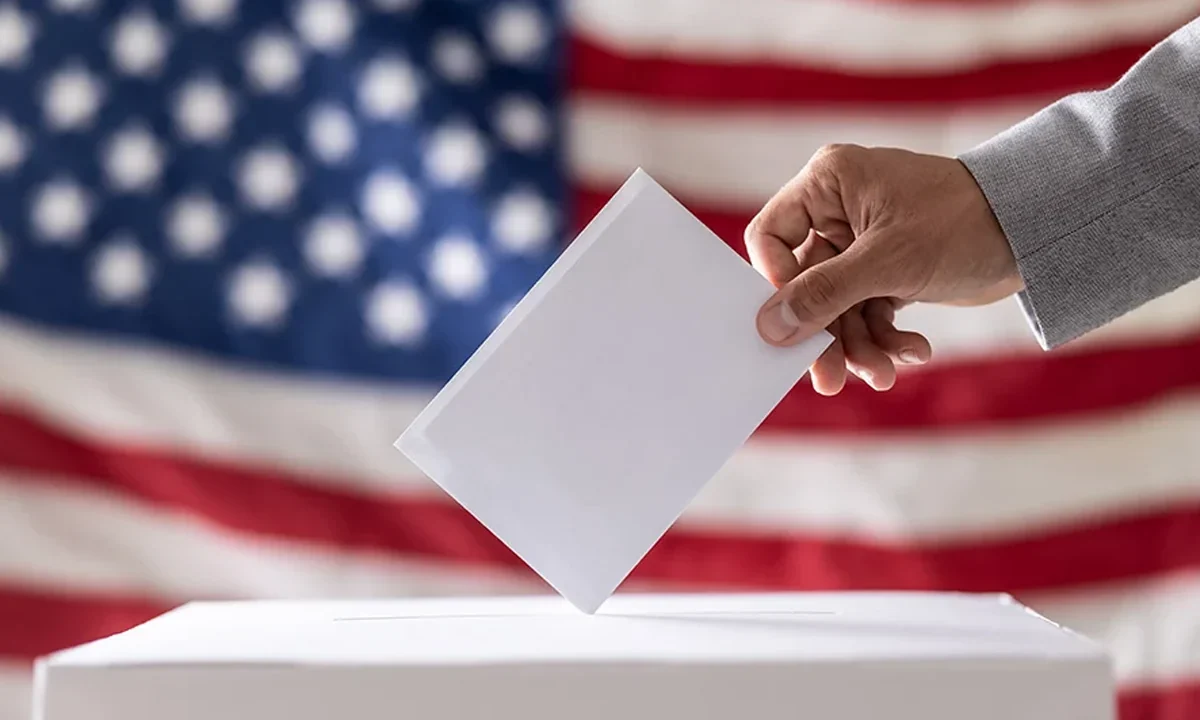
Ahead of the U.S. midterm elections, the emergence of fake public opinion polls has exposed vulnerabilities within the country’s electoral system. Several fraudulent entities have released the results of fabricated surveys—data that even reached news outlets and organizations that aggregate polling information. This has raised concerns about how easily false information can gain credibility.
Such fake polls could be used to cast doubt on the electoral process. Furthermore, once these deceptions are uncovered, they can serve to undermine voter confidence in electoral data as a whole.
The most recent incident occurred earlier this month. An entity called “Wedgwood Polls” issued a statement on social media revealing that the survey results it had released—covering competitive states such as Texas, Ohio, Michigan, Kansas, and Maine—were entirely fabricated.
Wedgwood described its actions as an “experimental project,” claiming the initiative was intended to highlight the weaknesses, lack of oversight, and low barriers to entry within the U.S. public opinion polling industry.
In its social media statement, the group noted that, based on their prior experience in the polling and research sector, they had observed a decline in public trust—a trend they attributed to the increasing use of unverified and substandard methodologies. The social media account used by Wedgwood has since been deleted.
The group argued that their objective was to test how easily fabricated polling data could be accepted by voters and the media.
In Wedgwood’s own words, the short answer is: “Extremely easily.”
However, even before the group’s admission, the fabricated results had already spread across various political information channels—reaching even prominent news outlets like *The New York Times*.
This marks the second such incident during the 2026 election cycle; previously, in August, another entity known as “Median Strategies” also admitted to releasing fake polling results. They also described the incident as a “short-term social experiment.”
As U.S. politics becomes increasingly polarized, such incidents have created instability within the public opinion polling sector. Meanwhile, the general public is also struggling to adapt to an ever-changing information landscape.
How fake polls gained credibility
Wedgwood began its operations in June, releasing polls focused on competitive electoral districts across various states. These results caught the attention of political campaigns, commentators, and organizations that aggregate polling data.
*The New York Times* reported that between June and October, 15 Wedgwood polls were included in its database of election surveys; these were subsequently removed.
Following the revelation, the newspaper stated that inquiries had been made regarding Wedgwood’s staff, polling methodology, and funding—and that the polls were included only after responses to these questions were received.
However, *The New York Times* clarified that Wedgwood’s polls were not factored into its own presidential approval ratings or the aggregated polling data for congressional elections. Nevertheless, the incident highlights vulnerabilities in the process by which polling data gains credibility.
Organizations that aggregate polling data compile results from various research entities, helping journalists and voters navigate the complex landscape of electoral opinion. The credibility of these aggregators hinges on their ability to distinguish between reliable research and low-quality or fraudulent polling.
The fact that Wedgwood managed to pass certain verification checks demonstrates that the mere appearance of transparency on paper does not guarantee that a poll was conducted as claimed.
“Fifty Plus One,” a website focused on polling and election forecasting, investigated Wedgwood’s activities. They identified inconsistencies in the raw polling data, as well as technical identifiers related to the respondents, which raised suspicions.
Following this investigation, Wedgwood admitted that the results of most of the polls it had published were fabricated. Wedgwood has claimed that there was no intention to mislead the public. However, some polling experts remain unconvinced, suspecting that the firm’s motives were more malicious.
G. Elliott Morris, a data journalist involved in the investigation by Fifty Plus One, stated, “We were investigating Wedgwood for fabricating data. Now, they are attempting to mask their deception by framing it as a ‘social experiment’.”
The Impact of Fake Polls on Elections
The consequences of fraudulent public opinion polls extend well beyond the polling industry itself.
Mallory McMorrow, who lost in the Democratic Party’s primary for a Senate seat in Michigan, claimed that a Wedgwood poll showed her support in the single digits—a result that harmed her campaign.
According to McMorrow, the poll results demoralized her campaign staff, and journalists repeatedly asked her whether she intended to withdraw from the race.
She further noted that campaign donations declined, as Democratic supporters began directing their financial contributions toward other candidates.
In a social media post, McMorrow described a poll by Wedgwood—along with another from Mitchell Research & Communications—as a “double blow” to her campaign.
She asserts that these two polls “destroyed” her campaign; she ultimately withdrew from the Senate race in July.
In his post, McMorrow wrote, “By then, we had taken risks and spent money. We had run advertisements, and they were actually working. But the damage was done. Between the massive spending on external outreach and the narrative that we had completely collapsed, I decided to step back.”
According to experts, McMorrow’s experience highlights a broader issue: even when a poll fails to accurately reflect public opinion, it can still influence the decisions of those who believe it to be accurate.
Why this debate matters
The Wedgwood incident illustrates how misinformation can be weaponized in a politically polarized environment.
Researchers at the University of Washington’s Center for an Informed Public tracked how discussions surrounding Wedgwood’s admission spread across social media.
Initially, the conversation was confined to pollsters and those who track election data. Later, it spread to influential political commentators and partisan social media accounts.
Researchers observed that many posts highlighted the fact that prominent news outlets and polling organizations had published Wedgwood’s findings. Others used the incident to cast doubt on the credibility of public opinion polling in general—specifically questioning polls that suggested Democrats were well-positioned in competitive districts.
According to the researchers, this debate became intertwined with allegations that public opinion polls were intentionally misleading voters or underreporting support for a particular political party.
In their analysis, the Center for an Informed Public noted, “Within 24 hours, right-wing media networks were able to bring the issue to the forefront and shape the key terms of the discussion—namely, that polling data regarding the midterm elections, especially those favoring Democrats, was not credible.”
Former U.S. President Donald Trump also leveraged this incident to criticize *The New York Times*. He frequently makes false claims regarding the integrity of elections. Trump criticized the inclusion of Wadhwa’s poll in the newspaper’s election data repository.
On his social media platform, Truth Social, Trump wrote, “The New York Times has been caught. Everything about the failing New York Times is ‘fake’.”
Trump also claimed that this incident would strengthen his $15 billion defamation lawsuit against The New York Times. He wrote, “Our strong case against them is getting stronger by the day.”
How can fake polls be stopped?
In the United States, there is no specific law that classifies the publication of fake public opinion polls as a direct criminal offense.
Some advocacy groups and legal experts argue that the publication of fake polls could be treated as wire fraud or product fraud, which would allow for federal-level prosecution and legal action.
In 2020, writing for the *Missouri Law Review*, Tyler Yargain noted, “It is crucial to prevent such deception before it occurs and to raise awareness about the issue.”
According to him, the existing electoral laws have not been fully utilized to take action against those who conduct fake polls.
Yargain wrote, “Prosecuting such offenses serves a significant federal interest—one that goes beyond mere concerns about the accuracy of academic research or prediction markets. The objective is to deter other bad actors who might use fake polls as a weapon to influence elections.”
Brendan Carr, a commissioner at the Federal Communications Commission (FCC)—the U.S. agency that regulates broadcasting—stated that the number of fake polls has “increased significantly” ahead of the 2026 midterm elections. He urged broadcasters not to air these polls, warning that doing so could put their broadcasting licenses at risk.
On social media, Carr wrote, “Under the terms of their federal licenses, broadcasters are prohibited from distorting news or engaging in broadcast deception.” “It is important for broadcasters to adhere to their obligations to serve the public interest.”
However, Anna Gomez—the only Democratic commissioner at the FCC—disagrees with Carr’s position.
She wrote on X, “Pollsters who deliberately mislead the public should be held accountable. But broadcasters should never be penalized for airing publicly available polling data—even if the results turn out to be incorrect.”
Gomez added, “FCC rules regarding the distortion of news or deception do not apply to broadcasters who air such information in good faith.”
Given the lack of clear legal measures against fraudulent polls, experts suggest that the responsibility for verifying the quality of election-related information rests with the news media and the voters themselves.
Mark Baldassare, director of surveys at the Public Policy Institute of California, notes that there are ways to quickly distinguish between legitimate and fake polls.
In an interview with the institute’s Stephanie Barton, he advised, “Look for transparency. Credible polls disclose the organization’s mission, the purpose of the survey, and the identity of its sponsors or funders.”
He further cautioned, “If a poll is released that is funded by a partisan group or an election campaign, it may well be intended to convey a specific message to the public.”