



For a long time, bipartisan support for Israel has served as a cornerstone of U.S. foreign policy. However, in recent years, a significant shift has begun to take shape. Following growing discontent among Democrats—fueled by Israel’s military campaign in Gaza and the mistreatment of Palestinians—a segment of the Republican camp is now also calling for a change in U.S. policy toward Israel. Factions within both parties are now advocating for a reduction or complete cessation of military aid to Israel.
A report by The New York Times indicates that calls to re-evaluate the relationship with Israel have intensified following a major electoral setback for the Republican Party in the U.S. midterm elections. In particular, Israel’s role in the conflict against Iran—and the resulting economic costs to the United States—have become a focal point of criticism among some Republicans.
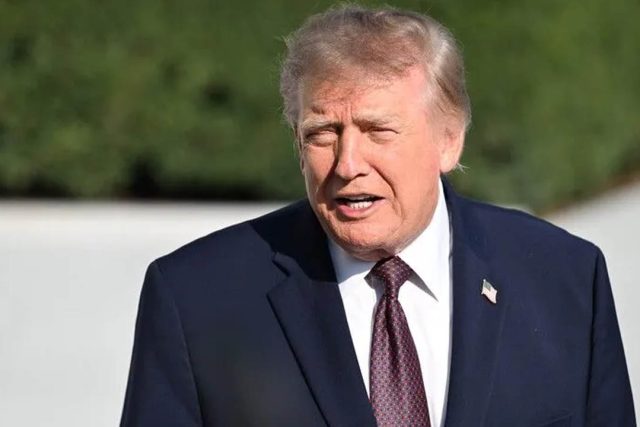
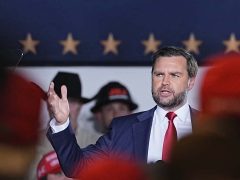
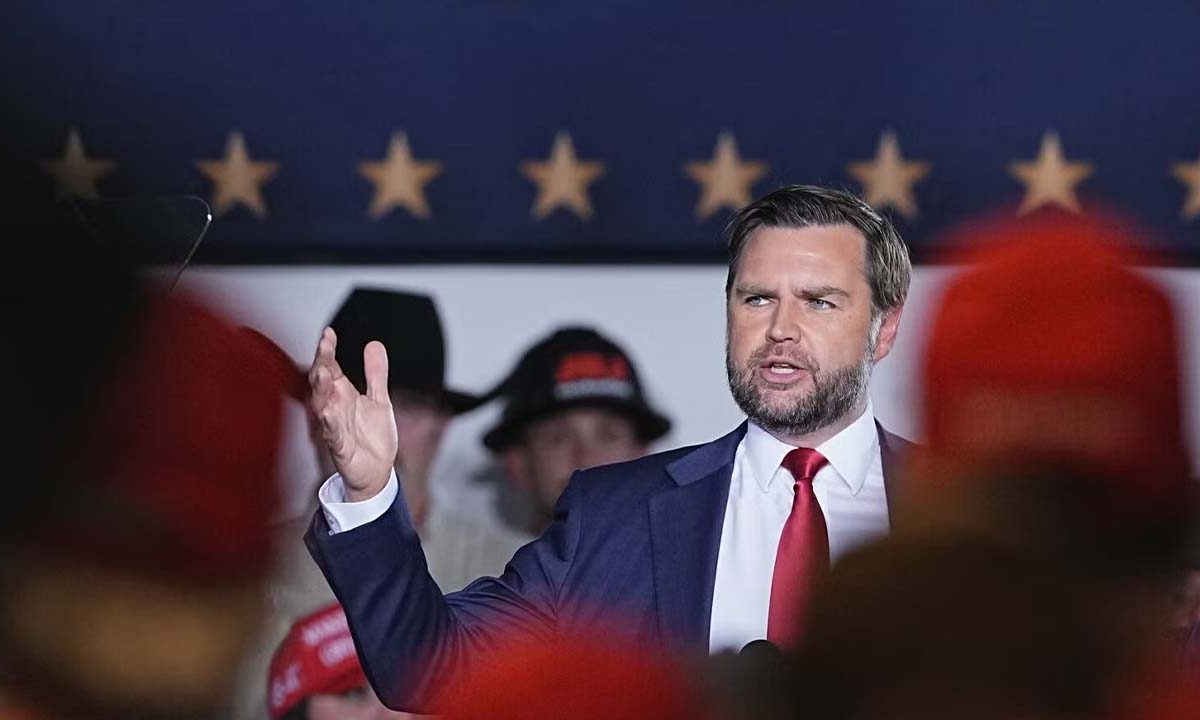
In a statement last Wednesday, U.S. Vice President JD Vance argued that for the Republican Party to recover from its electoral defeat, it must put an end to the war against Iran. He further suggested that the U.S. needs to disengage from the conflict initiated by President Donald Trump and Israel, and fundamentally alter the U.S.-Israel relationship.
Vance’s remarks—made as he considers a potential run in the 2028 presidential election—are being viewed as a significant departure from the long-standing Republican consensus on Israel.
For decades, U.S. support for Israel was a foundational, bipartisan pillar of American foreign policy. This support first began to erode among Democrats, driven by the war in Gaza and Israel’s treatment of Palestinians in the occupied West Bank. More recently, some Republicans have also become vocal in their criticism, blaming the Israeli government for encouraging Trump to pursue a conflict with Iran.
The war with Iran has contributed to rising fuel prices and increased inflation within the United States. Meanwhile, many of Trump’s supporters believe that by engaging in this conflict, the President has broken his promise to avoid entangling the U.S. in long-term foreign wars.
However, support for Israel in Washington has not entirely vanished. Many politicians—including the top Senate Democrat, New York Senator Chuck Schumer—remain in favor of standing by Israel. They argue that the United States has a responsibility to support Israel, a democratic Jewish state that has faced attacks from armed groups for decades. Furthermore, Israel’s robust military makes it a key partner for the United States.
Separately, U.S. Secretary of State Marco Rubio, in remarks made on Friday and Sunday, took a firm stance in favor of a U.S.-Israeli conflict against Iran. Before departing for Paris on Sunday, he stated that presidents are elected to make difficult—and at times unpopular—but necessary decisions.
The situation is further complicated by the fact that criticism of Israel is often conflated with allegations of antisemitism. Nevertheless, many American politicians interpret the results of the midterm elections as a signal from voters that the U.S.-Israel relationship should be re-evaluated.
In an interview, Democratic Senator Chris Van Hollen of Maryland stated that his primary priority in the new Congress would be to end the “blank check”—or unconditional aid—provided to the Israeli government using U.S. taxpayer funds.
Last September, he introduced a bill that would have mandated the U.S. State Department to produce a human rights report concerning Israeli violence in the West Bank, specifically regarding the deaths of Palestinian-Americans. Although every Democratic senator except one voted in favor of the bill, it ultimately failed to pass. Even so, the episode highlights a growing interest among Democrats in potentially imposing sanctions on Israel.
Hadi Amr, a former U.S. State Department official focused on Palestinian affairs—currently a fellow at the Brookings Institution and Chatham House—has described this situation as a transformative moment for U.S.-Israel-Palestine relations. In his view, the future relationship between the United States and Israel will become more “normalized” and contingent upon specific conditions. Ordinary American citizens are likely to evaluate Israel’s actions in the same way they assess the conduct of other nations.
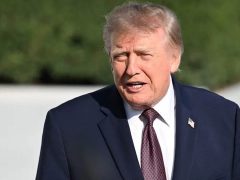
Observers believe that Trump, too, recognizes the shifting political landscape. In a surprising announcement on election day, he told Fox News that he plans to halt most military aid to Israel by the end of this year. He further remarked that providing aid to Israel gives critics a “bad argument” to use against him.
However, it remains unclear whether Trump truly intends to carry out this decision or if it was merely a political message aimed at anti-Israel voters ahead of the election. This is because he continues to support proposed legislation designed to secure other forms of military assistance for Israel. Furthermore, should any move to limit aid to Israel arise in Congress, he retains the power to veto it.
Under an agreement reached during the administration of former U.S. President Barack Obama, the United States committed to providing Israel with $3.3 billion in annual military aid through 2028. Israel uses these funds to purchase weaponry from the U.S. Additionally, there is a provision for another $500 million to be allocated for missile defense.
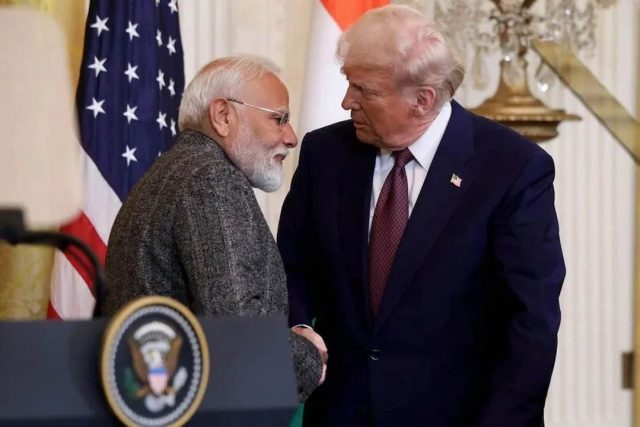
While discussions regarding the cessation of military aid to Israel have recently gained momentum in Washington, such a prospect was once considered nearly unthinkable. Israeli Prime Minister Benjamin Netanyahu has himself acknowledged that his country must gradually achieve self-reliance in arms production, proposing a ten-year plan to this end. However, the prospect of aid being halted within a few months—as suggested by Trump—has taken Israeli officials by surprise.
Following the Hamas attack in October 2023, which claimed the lives of approximately 1,200 people in Israel, the United States provided additional military assistance to the country. According to research from Brown University, the total U.S. military aid to Israel—including regular annual support—reached approximately $22 billion for the period spanning October 2023 to September 2025.
In response to the Hamas attack, Israel launched an extensive military campaign in Gaza. These operations, which utilized U.S.-manufactured bombs and missiles, resulted in the deaths of tens of thousands of Palestinians, and vast areas of Gaza were reduced to rubble.
During this period, both Democratic and some Republican lawmakers pressured the Biden and Trump administrations to halt or limit military aid to Israel. Nevertheless, both administrations continued to expedite arms shipments, bypassing standard congressional approval processes.
Now, with Democrats preparing to take control of both chambers of Congress, there are renewed efforts to halt or restrict aid to Israel. Several lawmakers, including the re-elected Jewish Democratic Senator Jon Ossoff, have already voted in favor of blocking the sale of specific types of weaponry to Israel. Some newly elected Democrats advocate for a tougher stance. Abdul El-Sayed—who, notably, was the first Muslim to run for a major statewide office in Michigan—told National Public Radio (NPR) on Wednesday that he agrees with Trump’s remarks regarding the cessation of aid to Israel.
He argued that the sale of weapons to Israel—which could potentially be used in serious crimes such as genocide or apartheid—should be halted. It is worth noting that during the Democratic primary in Michigan, a super PAC affiliated with the American Israel Public Affairs Committee (AIPAC)—a pro-Israel lobbying group—spent approximately $32 million in an attempt to defeat El-Sayed; however, their efforts were unsuccessful.
Jon Finer, a former top aide to the National Security Advisor in the Biden administration, has also advocated for a shift in U.S. policy toward Israel. He suggests that U.S. military aid should be leveraged as a tool to pressure Israel into changing its conduct.
In an opinion piece for *The New York Times* last month, he proposed imposing conditions on arms sales, ending the long-standing U.S. practice of vetoing anti-Israel resolutions at the United Nations, and implementing financial and travel sanctions against individuals and groups that facilitate the expansion of Israeli settlements in the West Bank.
Conversely, Brett McGurk—a former advisor to Biden on Middle East affairs—has expressed a different view. In his new book, he writes that public discord between the United States and Israel could jeopardize the shared interests of both nations. He further claims that the public disagreement between Biden and Netanyahu regarding the conduct of the war in Gaza led Hamas to adopt a more hardline stance in negotiations concerning the release of hostages.
“Is the world just waiting to watch children freeze to death this winter?” asked a representative from the Gaza Health Ministry.
Danny Danon, Israel’s Ambassador to the United Nations, has also acknowledged that the political climate for Israel in the United States has become more challenging than in the past. In an interview with an Israeli television channel on Wednesday, he noted that critics of Israel can be found not only among Democrats but also within the Republican Party. Their views must be taken seriously. However, he also noted that there are supporters of Israel within both parties.
On the other hand, the primary focus of the debate regarding Israel among Republicans is not the rights of Palestinians; rather, it concerns whether Israel might drag the United States into another costly war in the Middle East. According to Emma Ashford, a senior fellow at the Stimson Center, the prospect of a war with Iran could emerge as the central issue in this debate.
She suggests that even if Trump were to halt military aid to Israel, the impact of such a move could be constrained by proposed legislation. The House of Representatives’ version of an annual U.S. defense budget bill includes provisions to further enhance cooperation between U.S. and Israeli military and intelligence agencies. However, Senator Chris Van Hollen has indicated that he will attempt to have these provisions removed from the final version of the bill.
Meanwhile, a faction within the conservative camp—opposed to U.S. involvement in foreign wars—has declared that it will continue to exert pressure on Trump and other Republican leaders. This position is supported by figures such as popular television host Tucker Carlson. Although he has faced accusations of antisemitism for his criticism of Israel, he has denied these allegations.
Mamdani outlines various strategies for becoming a ‘kingmaker’ in the 2028 US presidential election. He envisions a future that includes a radical overhaul of the relationship with Israel—specifically, by halting arms sales to Israel and ending the exchange of intelligence.
Mills argues that by involving the US in a war against Iran, Trump has betrayed the promises he made to his voters. According to him, in pursuing a long-standing foreign policy objective favored by Israeli leaders, Trump has deviated from the expectations of his own supporters.
Overall, the cracks in the decades-long, bipartisan US support for Israel are becoming increasingly apparent. It remains to be seen, however, to what extent proposals—such as ending military aid, imposing conditions on arms sales, or limiting military and intelligence cooperation between the two nations—will actually be implemented.