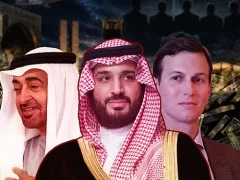



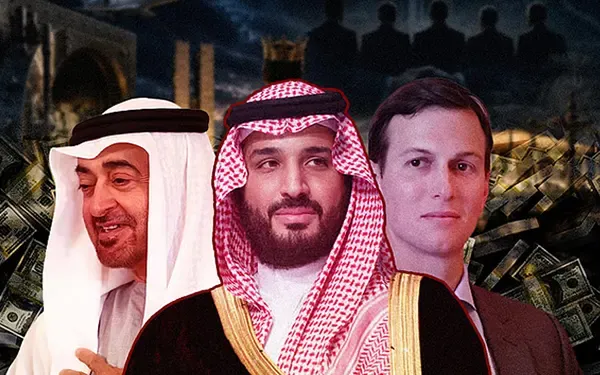
A new book has revealed sensational details regarding the deep ties between Jared Kushner—son-in-law of U.S. President Donald Trump and his special envoy to the Middle East—and the ruling elites of Saudi Arabia and the United Arab Emirates (UAE). The book, Princesses and Thieves: Jared Kushner and Mohammed bin Zayed’s Secret Plot to Remake the Middle East by veteran journalist Matthew Cole, alleges internal conflicts within the Emirati royal family, as well as instances of blackmail, sexual misconduct, abuse, and power struggles within the Trump administration.
The book’s most explosive claim is that the governments of Saudi Arabia and the UAE provided Kushner with approximately $2 billion. Of this amount, $750 million was deposited into the First Abu Dhabi Bank through an Emirati charity, the Watani Al Emarat Foundation. The author asserts that while these funds were ostensibly earmarked for civic development programs, they were instead used to finance the UAE’s arms purchases and covert military operations.
Kushner, who currently serves as an envoy for Trump regarding issues in Ukraine and the Middle East, has vehemently denied these allegations. Meanwhile, The New York Times has suggested that if the Democrats gain control of Congress in the new year, these claims should be investigated. The sources cited in the book have requested anonymity. Neither the Emirati nor the Saudi royal families have commented on these allegations.
The news outlet Middle East Eye has reported that it has not been possible to independently verify all the claims made in the book.
Allegations of Blackmailing and Incapacitating a Brother
The book claims that in the 1990s, the current president of the UAE, Mohammed bin Zayed, orchestrated the recording of a video showing his brother—the late former president, Khalifa bin Zayed—engaged in a homosexual sexual encounter. The video was later sent—via Russian intermediaries—to their father, Zayed bin Sultan, the founder of the UAE. The intent was to embarrass Khalifa. According to the author, this incident was viewed within the family as an early sign of Mohammed bin Zayed’s ambition to seize power.
A more serious allegation is that Khalifa’s brother kept him incapacitated under the guise of medical treatment. While Khalifa effectively disappeared from the public eye following a stroke in 2014, Cole claims that he had been subjected to treatments long before that—treatments that stripped him of his ability to function normally and caused neurological damage. The book notes that an American nurse was enlisted to assist in this process.
Israeli Technology in F-16 Fighter Jets
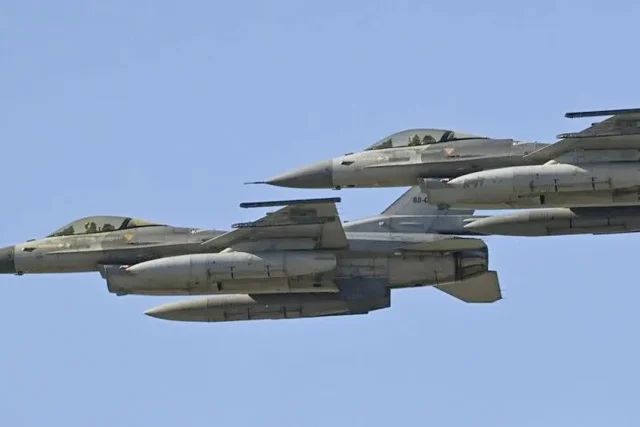
The book also sheds light on the close military ties between the UAE and Israel. Cole asserts that in 1998, Mohammed bin Zayed persuaded his father to purchase new American F-16 fighter jets equipped with Israeli software. The UAE subsequently decided to acquire 80 of these aircraft. At the time, secret discussions took place between Israel and the UAE, facilitated by the administration of U.S. President Bill Clinton. The primary focus of these talks was whether the arms sale would compromise Israel’s military superiority in the Middle East.
Allegations of Torture and Murder of an Anti-Israel Poet
Cole also alleges that in 2019, an influential Emirati poet, Habib Al Sayegh, was tortured to death. The book claims he was abducted from his home after writing an article titled “Israel Is Our Real Enemy and a Dangerous Project,” in which he opposed the normalization of relations with Israel. He died after three days of torture. The author alleges that security officials pulled out his teeth with pliers and beat him with a belt featuring metal components.
Power Struggle Between Kushner and Tom Barrack
The book also details a conflict between two influential figures in the Trump administration: Jared Kushner and Tom Barrack. Thomas Barrack—who served as the U.S. Ambassador to Turkey and as a special envoy for Iraq and Syria—had sought to develop a “Marshall Plan”-style initiative for the Middle East, to be funded by Saudi Arabia and the United Arab Emirates. However, Jared Kushner restricted his role, limiting his responsibilities solely to matters concerning Egypt.
The conflict intensified in 2017 when Saudi Arabia and the UAE imposed a blockade on Qatar. While Kushner supported the blockade, Barrack—in coordination with then-Secretary of State Rex Tillerson—advised President Trump against getting involved.
In addition to these allegations, Koler’s book sheds light on power struggles within Middle Eastern royal families and the influence exerted by Gulf nations over U.S. policymaking. It should be noted, however, that the veracity of these claims has not yet been independently verified.