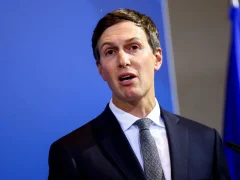






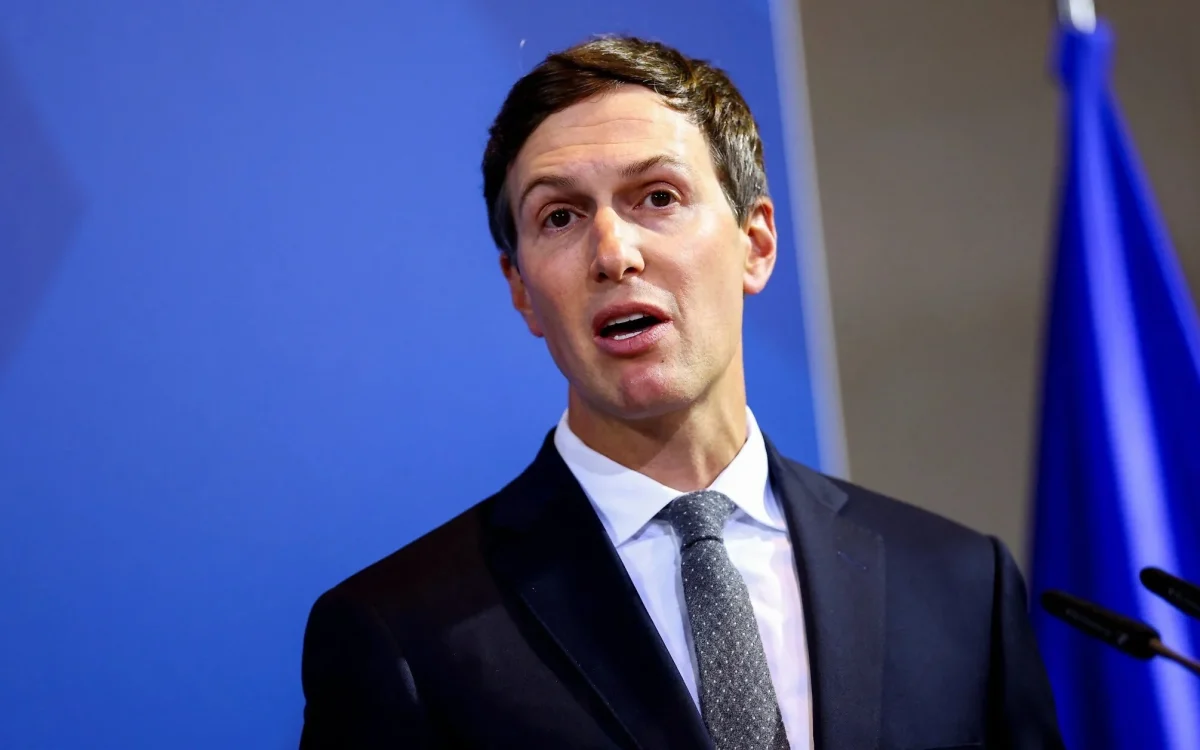
Jared Kushner, son-in-law and Middle East advisor to former U.S. President Donald Trump, has stated that Israel risks becoming internationally isolated due to Prime Minister Benjamin Netanyahu’s reluctance to implement a reconstruction plan for Gaza. According to Kushner, Israel faces a choice: either pursue regional cooperation and greater international engagement, or maintain its current course and become increasingly cut off from the rest of the world.
Kushner made these remarks in an interview with *New York* magazine on Sunday. He suggested that Israel could emerge from the situation that followed the events of October 7, 2023, to become more secure and better integrated globally; however, if it continues on its current path, it will face growing international isolation.
In the interview, Kushner also noted that Netanyahu did not believe U.S. diplomatic efforts—aimed at ending the war in Gaza and securing the release of hostages held by Hamas—would succeed. Referring to the Prime Minister by his nickname, Kushner said, “Bibi didn’t think we could do it.”
Kushner revealed that he had spent the last few months trying to persuade Netanyahu to move forward with a U.S.-backed reconstruction plan for Gaza, but the process has effectively stalled due to the Israeli Prime Minister’s reluctance.
The Window for Gaza Reconstruction Is Rapidly Closing
Josh Greenbaum, a senior advisor at the U.S.-based Board of Peace, has also criticized Israel’s position on Gaza’s reconstruction. In an interview with journalist Nadav Eyal last week, he stated that progress on reconstruction plans is being hindered by the internal political considerations of Netanyahu’s government. Greenbaum stated, “We are at a standstill due to political figures within the Netanyahu government.”
He noted that Israel is simply expected to uphold the commitments it made to U.S. President Donald Trump. He further described Trump as one of the strongest partners Israel has ever had in the White House.
In Greenbaum’s words, “This window of opportunity is literally closing with each passing day.”
He also pointed to the U.S. midterm elections and the shifting political landscape in Washington. In his view, the window of opportunity to work closely with Trump to ensure Israel’s national security is steadily narrowing.
Greenbaum asserted that the plan proposed by the United States would not jeopardize Israel’s security. The plan for the reconstruction of Gaza is not predicated on trust in Hamas; rather, its success depends on the actions taken by the Palestinians and the fulfillment of specific commitments.
Meanwhile, with winter approaching, Greenbaum expressed concern over a potential humanitarian catastrophe in Gaza. “A disastrous winter is looming for Gaza,” he warned, urging Israel to respond to calls from the international community to address this crisis.
Holding Hamas responsible for the October 7 attacks, Greenbaum stated that the group diverted infrastructure and resources—such as pipes, concrete, and underground facilities—away from civilian use and toward military objectives. He further accused Hamas of failing to provide essential services to the people of Gaza.
According to Greenbaum, because Israel controls the entry of goods and aid into Gaza, it bears a responsibility to prevent a humanitarian catastrophe. He argued that, regardless of whether Israel likes it or not, as the power controlling access to the territory, it carries a corresponding responsibility.
How the agreement with Hamas was reached
Kushner also highlighted his own role in the process of establishing an agreement with Hamas aimed at ending the war in Gaza and securing the release of hostages. He stated that, together with U.S. Special Envoy Steve Witkoff, they decided to engage in direct talks with Hamas representatives in Sharm El-Sheikh, Egypt—an initiative that Israel opposed.
Kushner noted that he had proposed direct talks with Hamas during Trump’s first term as well, but at that time, his suggestion was rejected and met with ridicule.
During the discussions, Witkoff sought to build a personal rapport with a Hamas representative whose three sons had been killed in Israeli strikes.
Witkoff himself had lost a son to a drug overdose. Kushner explained that this shared experience of losing a child served as the basis for Witkoff’s attempt to establish a personal connection with the Hamas representative.
Ultimately, the discussions led to an agreement that Hamas accepted, paving the way for the release of hostages.
Kushner also discussed the Abraham Accords—agreements reached during Trump’s first term to normalize relations between Israel and several Arab nations. He argued that these accords did not sideline the Palestinian issue; rather, they created opportunities for the Palestinians to benefit economically.
Kushner remarked that regional cooperation can generate opportunities that are unattainable through conflict. In his words, “The economy is an area where everyone can benefit, whereas the consequences of war are harmful to all.”
Kushner recalled a meeting at the White House—involving Trump, former British Prime Minister Tony Blair, and a senior advisor to Netanyahu—held while the Gaza peace plan was being drafted. According to Kushner, Trump remarked during that meeting, “The Palestinians have suffered enough.”
A Gaza reconstruction plan centered on economic development.
Kushner’s plan for the reconstruction of Gaza has been a subject of discussion from the outset. Departing from conventional diplomatic approaches, it proposes a development model centered largely on housing and tourism.
The plan envisions transforming Gaza’s Mediterranean coastline into a hub for tourism and residential development. It includes the construction of hotels, residential buildings, and tourist facilities on sites currently occupied by refugee camps or areas left in ruins.
A “Board of Peace”—comprising individuals including Kushner and Tony Blair—has initiated an effort to raise $2.45 billion for urgent reconstruction. These funds are intended for the rehabilitation of hospitals, the removal of debris, and the provision of support to local residents.
Trump serves as the lifetime chairman of this board, and a contribution of $1 billion is required for membership.
Saudi Arabia, the United Arab Emirates, and Qatar are among the founding member nations of this board. The sovereign wealth funds of these countries have also invested capital in Kushner’s private investment firm, raising questions about potential conflicts between his diplomatic responsibilities and his personal business interests.
Kushner, however, has consistently maintained that his work on behalf of the United States is entirely separate from his private business interests.
Kushner also played a role in discussions leading up to a potential conflict with Iran.
In an interview, Kushner revealed his involvement in deliberations that took place prior to the launch of a potential U.S. military operation against Iran.
He stated that he and Witkoff participated in the final round of talks held in Geneva. Their assessment was that Iran’s nuclear proposal contained loopholes that would allow Tehran to retain the capacity to develop nuclear weapons.
Kushner recalled telling Trump, “Look, they are playing games.” He noted that Witkoff reached a similar conclusion.
Shortly thereafter, Trump ordered a military strike. However, Kushner declined to state explicitly whether he personally supported the decision to engage in conflict with Iran.
He remarked that while the past cannot be altered, one should instead focus on learning from it. According to him, several achievements have been made, and it is their responsibility to strive for the best possible deal for the President.
Citing former U.S. administration and intelligence officials, the report states that Netanyahu played a significant role in pressuring Washington to adopt a hardline stance in negotiations with Iran.
They claim that Israel urged the U.S. to demand a complete halt to Iran’s uranium enrichment—rather than agreeing to a deal that would allow for limited enrichment. Subsequently, Israel also advocated for further military action aimed at toppling the Iranian government.
Meanwhile, despite skepticism among the American public and the administration regarding the possibility of a diplomatic solution, Kushner has continued his engagement with Iranian representatives.
The discussions include a proposal to establish a $300 billion fund for the reconstruction of Iran, with plans for the fund to be financed by Gulf nations and private investors.
When asked whether the Iranian leadership might be interested in an agreement that could be mutually beneficial, Kushner replied, “Possibly.”
**Engaging with World Leaders Despite Holding No Official Government Position**
There has been much discussion regarding Kushner’s influence on Middle East policy, even though he holds no formal position within the Trump administration. Explaining his situation, he noted that, unlike someone like Witkoff, he possesses neither an official government title nor a dedicated staff.
In Kushner’s own words, “Steve is an official government employee. He has his own staff. As for me—I basically just have a cell phone.”
However, he has faced lawsuits alleging that he has been performing government functions without having been legally appointed to a government role.
Kushner also emphasized his loyalty to Trump, stating that he would never publicly distance himself from him—even if doing so meant suffering personal consequences.
He described Trump as a unique politician, leader, boss, and father-in-law.
Kushner also recounted his experience of meeting with Russian President Vladimir Putin at the Kremlin. Notably, his grandfather had participated in guerrilla warfare against the Nazis during World War II. Putin presented him with some archived documents concerning his grandfather.
According to Kushner, Putin intended this as a subtle reminder that Russia and the United States had served as allies during the Second World War.
Questions regarding investments in Kushner’s business
Beyond his diplomatic activities, questions have also been raised about Kushner’s private investment business.
Affinity Partners, the investment firm he founded, manages assets worth approximately $6 billion. Its investors include Saudi Arabia’s sovereign wealth fund, which has pledged $2 billion; investors from the United Arab Emirates and Qatar are also involved.
The firm has also invested in an Israeli financial institution, which, in turn, has invested in various businesses that supply the Israeli military with ammunition, drones, and other equipment.
A previous investigation by the U.S. Senate Committee on Finance indicated that Affinity Partners had collected $157 million in management fees—a figure that Kushner has disputed.
A recently published book discusses allegations regarding secret financial dealings involving Israel and the receipt of bribes from Gulf rulers. The book further claims that Netanyahu encouraged these activities. Kushner, however, has denied these allegations, stating that he never conflated his personal financial interests with the interests of the United States.
Kushner’s relationship with Saudi Crown Prince Mohammed bin Salman extends beyond mere diplomacy and investment. According to interviews, the two communicate regularly via WhatsApp and have even played the online game “League of Legends” together.
Their personal relationship has drawn particular attention, given that Saudi Arabia is a major investor in Kushner’s firm while also serving as a key partner in the Trump administration’s Middle East policy.
Democrats Prepare to Investigate Kushner’s Role
As Democrats prepare to take control of the U.S. House of Representatives this coming January, senior party leaders have pledged to investigate Kushner’s business dealings, as well as the power and influence he wielded within the Trump administration.
Jamie Raskin, a potential chair of the House Judiciary Committee, has questioned whether Kushner’s diplomatic activities were truly serving U.S. interests or, rather, advancing the financial interests of the Trump family.
“Either he is being unfairly accused, or he is a fundraiser for the Trump family, bringing in billions of dollars,” Raskin remarked.
The investigation could encompass several areas: Kushner’s interactions with foreign leaders, the sources of funding for his investment firm, and the legal basis for his undertaking diplomatic responsibilities despite holding no official government position.
Kushner has rejected accusations that he violated ethical standards or rules regarding conflicts of interest. He maintains that he is well-versed in the relevant laws and regulations and has never come close to violating them.
A Long-standing Connection Between the Kushner Family and Netanyahu
The relationship between Netanyahu and Kushner—Trump’s son-in-law—dates back many years. The two families were close long before Kushner became involved in U.S. Middle East policy.
Kushner’s father, Charles Kushner, a real estate developer, is a long-time friend of Netanyahu. He has also made substantial financial contributions to various pro-Israel initiatives.
Kushner has known Netanyahu as a family friend since his childhood in Livingston, New Jersey. On one occasion, during a visit to the United States, Netanyahu stayed overnight at the Kushner family home; Kushner had to give up his own bedroom for Netanyahu and sleep in the basement instead.
Currently, Kushner resides in Indian Creek—an exclusive island enclave near Miami known as a home for the ultra-wealthy. He lives there with his wife, Ivanka Trump, and their three children in a house purchased for $24 million. Their neighbors include Amazon founder Jeff Bezos and Meta CEO Mark Zuckerberg.
In the garden of the residence, there is a *sukkah*—a structure reflecting Jewish religious tradition. Kushner’s office also features a map of Israel, which bears a handwritten note from Trump: “Jared, great job.”
Although a long-standing family connection fostered a close relationship with Netanyahu, it has now become difficult for Kushner to persuade the Israeli leader to support Trump’s plans regarding the reconstruction of Gaza and regional cooperation.
Kushner aims to advance the Trump administration’s vision for the reconstruction of Gaza and broader regional cooperation in the Middle East. However, Netanyahu’s reluctance—along with his cautionary stance regarding Israel’s current position—has highlighted a growing rift between the plans envisioned in Washington and the stance of the Israeli government.