





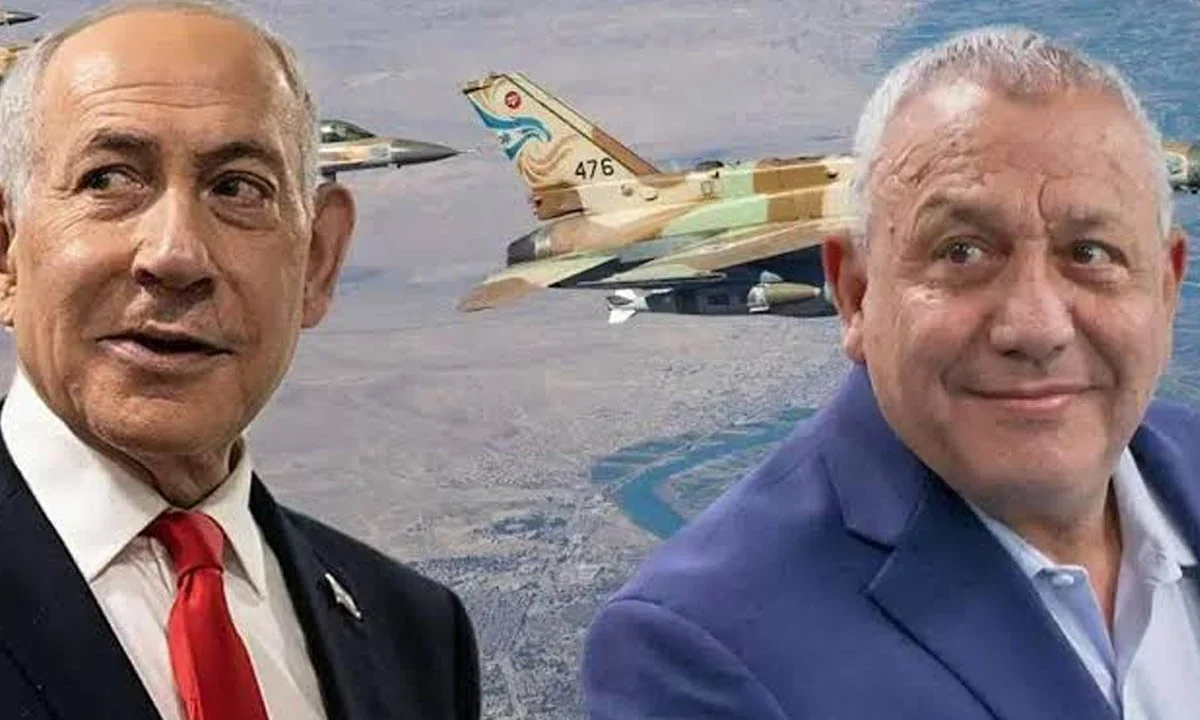
Gadi Eisenkot, tasked with forming a new government in Israel, has stated that the country should avoid engaging in any new conflict over the coming weeks, provided there is no immediate, pressing threat.
Amid the complex political landscape surrounding the formation of a new government, Eisenkot argued that outgoing Prime Minister Benjamin Netanyahu should refrain from taking any “risky actions”—especially those that could be deferred—until a new administration is in place.
Eisenkot warned that if Netanyahu were to order troops into combat during this period, it could trigger a “constitutional crisis” within the country. Many might perceive such a move as a political maneuver designed solely to cling to power.
Eisenkot’s appeal comes at a time when U.S. President Donald Trump is reportedly considering the possibility of new attacks against Iran.
Following Israel’s national elections last October, no single party secured a parliamentary majority, leaving Benjamin Netanyahu to serve as caretaker Prime Minister amidst ongoing political uncertainty. On Sunday, Israeli President Isaac Herzog granted Eisenkot 28 days to form a government—a period that could potentially be extended to 42 days.
Should Eisenkot fail, Netanyahu might get another opportunity to form a government. Reports suggest that Netanyahu is keen on launching new attacks against Iran; such a move could potentially pave the way for a national unity government and help him maintain his grip on power.
Addressing Netanyahu, Eisenkot stated, “In the absence of an immediate and direct threat, a decision to deploy security forces could have dire consequences for Israeli democracy and public trust in state institutions.”
In response, Netanyahu remarked that discussing sensitive security matters in the public sphere is irresponsible. According to Israeli media, his office asserted that all of Netanyahu’s decisions are made exclusively in the interest of national security and in full coordination with the country’s security agencies. However, Eisenkot claims that, in accordance with established protocol, he requested an update on military operations but was not provided with one. He stated, “I will not accept even a millimeter of deviation when it comes to security considerations.”
On Tuesday, the Knesset—Israel’s new parliament—held its inaugural session. Eisenkot and fellow opposition leaders have reached a preliminary agreement regarding appointments to key parliamentary positions. Nevertheless, it is anticipated that negotiations for the formation of a full-fledged coalition may prove more challenging.
Source: The Jerusalem Post