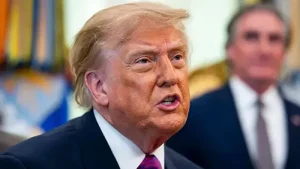
US President Donald Trump shifted his tone just hours after threatening a “very strong” response against Iran. After warning that the US military would seize control of Iran’s strategically vital Kharg Island and oil infrastructure, he announced the suspension of planned airstrikes that very night. Trump also claimed that the ongoing conflict had been resolved through a major agreement with the Iranian government. In a post on his social media platform, Truth Social, Trump stated, “Our discussions with Iran’s top leadership have reached the highest level, and they have agreed to the terms. As President of the United States, I have cancelled the airstrikes and bombing raids scheduled for tonight.”
Trump further claimed that the draft and key elements of this agreement have been approved by all relevant parties, including the US, Israel, Saudi Arabia, the UAE, Qatar, Turkey, Pakistan, and Egypt. However, the US naval blockade of Iranian ports will remain in full force until the agreement is formally signed. Later, speaking to reporters in the Oval Office, he indicated that the deal could be signed in a European country within the next few days, after which the currently closed Strait of Hormuz would be reopened.
Divergent Views from Tehran and Israel: Although Donald Trump claimed the conflict had ended, neither Iran nor Israel has provided official confirmation. Iran’s semi-official news agency, Tasnim, reported Foreign Ministry spokesman Esmaeil Baghaei as saying that Tehran remains steadfast regarding its “red lines” or core principles. Meanwhile, Israel—America’s ally in this conflict—has signaled that it is not a party to this agreement. Israeli Prime Minister Benjamin Netanyahu confirmed he had spoken with Trump and praised him for remaining firm on strict conditions, such as removing enriched uranium from Iran, halting the nuclear program, and banning missile production.
Threats vs. Diplomacy: Earlier, on Thursday morning, Trump had threatened that the US would soon take full control of Iran’s Kharg Island and its oil and gas markets. Ninety percent of Iran’s crude oil exports are processed through Kharg Island. In an interview with Fox News, Trump stated that seizing this island was his first choice. Analysts observe that Donald Trump’s strategy was essentially to exert military pressure on Iran and use provocative rhetoric to compel them to accept his terms at the negotiating table. According to Trump, if such a deal were to materialize, it would bring significant relief to the global market.