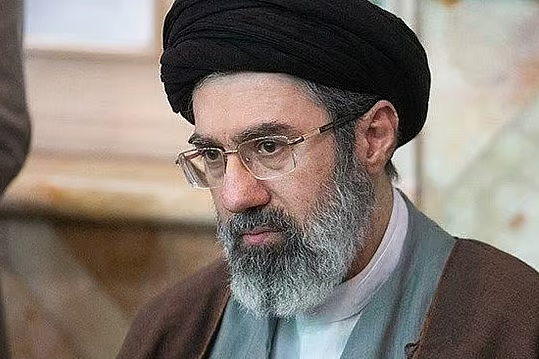
US Secretary of State Marco Rubio has stated that Iran’s Supreme Leader, Mojtaba Ali Khamenei, is alive and is “increasingly maintaining communication” through intermediaries. This information was reported by the Anadolu Agency.
Speaking to lawmakers yesterday, Tuesday, during a hearing of the Senate Foreign Relations Committee, the US Secretary of State noted that Mojtaba Khamenei has not been seen in public since being injured at the onset of the conflict.
Marco Rubio said, “We have not seen him [Mojtaba Khamenei] in public. Considering what has happened to several leaders within that regime [Iran], it is likely deemed unsafe—perhaps by their own assessment—for them to appear in public at this time. However, there are indications that he is increasing his level of communication to a certain extent, although all his communications thus far have been conducted in writing and through intermediaries.”
Rubio further indicated that Iran’s internal decision-making process appears to be highly centralized. Any message from the country’s negotiators is first sent to a governing council for final approval; a response is issued only after receiving authorization from that body.
Secretary Rubio stated, “As we understand it—based on what both the intermediaries and Iran have directly disclosed to us—the structure of this regime is such that whatever is exchanged between us and figures like Abbas Araqchi and Mohammad Bagher Ghalibaf must be taken back to that council for approval. Ultimately, they must seek directives from that body. This process often results in a delay of three to five days before a response is received.”
Although Rubio and US President Donald Trump maintain that negotiations with Iran are ongoing, Iranian media reported yesterday that the exchange of messages between the two nations has been halted for at least several days.
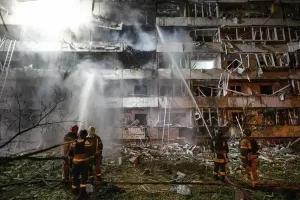
Washington and Tehran are currently striving to transform the months-long conflict—which began on February 28 following a US-Israeli strike on Iran—from a fragile ceasefire into a permanent agreement. It was amidst this very situation that Rubio made such remarks.
According to figures provided by Iranian authorities, more than 3,000 people have been killed since the outbreak of hostilities. Conversely, at least 13 U.S. military personnel have lost their lives in retaliatory attacks launched by Iran.
In response to U.S.–Israeli strikes, Tehran carried out retaliatory attacks targeting Israel as well as U.S. allies in the Persian Gulf region. Simultaneously, they blocked the strategically vital Strait of Hormuz.
Meanwhile, a ceasefire brokered by Pakistan went into effect on April 8. However, subsequent talks held in Islamabad failed to yield a lasting agreement. Nevertheless, efforts to resolve the crisis remain ongoing.