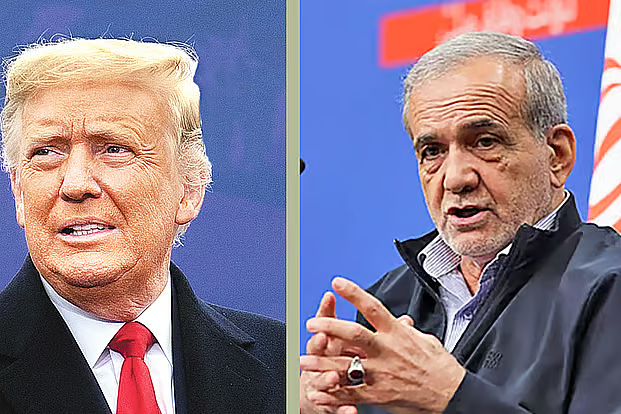
The United States has responded to the latest proposal submitted by Iran regarding negotiations aimed at ending the war. In its response, the US declined to offer any specific concessions. Citing several Iranian news agencies, various international media outlets reported this development on Sunday. Meanwhile, US President Donald Trump has issued a warning that Iran will face consequences if it does not agree to a deal promptly.
Nevertheless, Pakistan and other mediators are making all-out efforts to advance peace talks between the United States and Iran. On Saturday, Pakistani Prime Minister Shehbaz Sharif told the British newspaper The Times that his country remains optimistic about facilitating a second round of direct talks between top-ranking US and Iranian officials. On the same day, Pakistan’s Interior Minister, Syed Mohsin Naqvi, arrived in Tehran for a two-day visit. On April 8—marking the 40th day of the conflict—the United States and Iran agreed to a temporary ceasefire through Pakistan’s mediation. A few days later, top-level officials from both nations held talks lasting over 20 hours in Islamabad, the capital of Pakistan; however, they were unable to reach a consensus.
Since then, efforts to arrange a second round of talks have been ongoing. Washington and Tehran have already exchanged several counter-proposals; however, as the terms of these proposals were deemed unacceptable by the respective parties, they have so far failed to convene for a second round of negotiations.
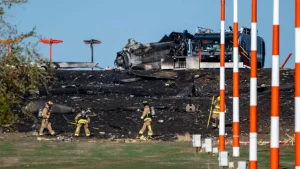
Meanwhile, a drone attack targeted a nuclear power plant in the United Arab Emirates on Sunday. The attack resulted in a fire breaking out in one of the facility’s generators. However, no casualties were reported.
On Sunday, the Foreign Ministers of Qatar and Saudi Arabia held a telephone conversation to discuss the situation involving Iran, among other topics.
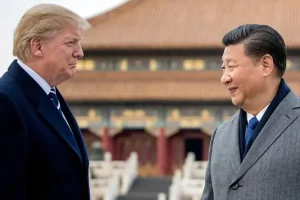
Also on Sunday, President Trump spoke by phone with Israeli Prime Minister Benjamin Netanyahu. During the conversation, which lasted over half an hour, the two leaders discussed the possibility of a renewed conflict with Iran, and Trump briefed Netanyahu on his recent visit to China.
The US’s New Five-Point Plan
On Sunday, the Iranian news agency Fars News reported that Washington has submitted a five-point list of demands. According to the report, the proposal stipulates that Iran would be permitted to keep only one nuclear facility operational. Furthermore, Iran would be required to transfer all of its highly enriched uranium to the United States.
Fars News further reported that, in its latest proposal, the United States declined to agree to release even “25 percent”—or any specific portion—of the Iranian assets currently frozen in banks across various countries. They have also refused to pay compensation for the damages Iran sustained during the war. The report further states that Washington has indicated that a ceasefire across all fronts will take effect only once negotiations have commenced.
Meanwhile, a report by another Iranian news agency, Mehr News, suggests that the United States seeks to secure concessions—which it failed to achieve during the war—without offering any tangible concessions of its own. These demands by the United States have created a deadlock in the negotiations.
Iran has not yet issued an immediate response regarding the United States’ five-point proposal.
What Iran Wants
In its own proposal, Iran has demanded a cessation of hostilities across all fronts—including Israeli military operations in Lebanon—and the lifting of the ongoing U.S. naval blockade on its ports. Tehran seeks firm assurances from international powers that no further attacks will be launched against Iran. Furthermore, Iran demands the unfreezing of all assets held abroad that have long been subject to U.S. sanctions, as well as the lifting of all forms of sanctions.
Fars News has reported that Iran’s latest proposal emphatically asserts that control over the Strait of Hormuz will remain in Tehran’s hands.
This strait, a vital conduit for global energy supplies, has remained effectively closed since the outbreak of the war. Iran states that it has formulated new regulations governing maritime traffic through the strait; these regulations include provisions for the collection of tolls. Discussions regarding this matter are currently underway with various nations, including European countries. Once finalized, these regulations must be adhered to by all parties. The United States remains staunchly opposed to this stance taken by Iran.
On Sunday, Abolfazl Shekarchi, the spokesperson for the Iranian Armed Forces, issued a warning to U.S. President Donald Trump regarding the possibility of renewed attacks. He stated that the U.S. President should be fully aware that if another attack is launched against Iran, his country’s assets and military forces will face unprecedentedly dire consequences.
Earlier this month, the United States conveyed a 14-point proposal to Iran through the mediation of Pakistan. Iran delivered its response last week. Commenting on Iran’s reply, Trump remarked that he was thoroughly displeased with the proposal put forward by Tehran.
Since then, Trump has repeatedly issued threats of launching fresh military strikes against Iran. He has issued a renewed warning, stating that if the Iranian leadership fails to take swift action regarding a potential agreement, they will be forced to face the consequences. In a post shared on Truth Social on Sunday, he wrote: “Time is running out for Iran. They must take immediate action; otherwise, nothing will remain of them.” Time is of the essence!
‘Second Round of Talks Could Bring Peace’
Pakistani Prime Minister Shehbaz Sharif told The Times on Saturday that a second round of direct talks between the United States and Iran could pave the way toward a lasting peace agreement. Pakistan has successfully earned the trust of all parties involved—ranging from the Iranian and U.S. administrations to the nations of the Gulf region.
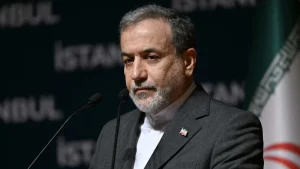
Pakistan’s Interior Minister Mohsin Naqvi, currently visiting Tehran, held a meeting lasting approximately 90 minutes with Iranian President Masoud Pezeshkian on Sunday. Iranian Interior Minister Eskandar Momeni and Foreign Minister Abbas Araghchi were also present at the meeting.
During the meeting, Pezeshkian stated that the objective behind U.S.-Israeli attacks targeting Iran was to sow internal chaos by providing support to terrorist groups. However, this plan was thwarted thanks to the cooperation and responsible conduct of neighboring nations—an act that was both invaluable and praiseworthy.
Citing relevant Pakistani sources, the Pakistani media outlet Dawn reported that one of the primary objectives of Naqvi’s visit to Tehran was to prevent a complete breakdown in the dialogue between the United States and Iran.