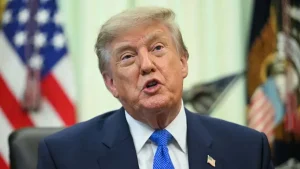
Hopes for a peace agreement with Iran have dimmed. US President Donald Trump has rejected the response sent by Tehran to the latest US proposal, dismissing it as “garbage.”
Speaking on the matter today, Tuesday, Trump stated that the ongoing ceasefire with Iran is currently on “life support.” He added that the conditions Tehran has put forward to halt hostilities are unacceptable to the United States.
In response to the US proposal, Iran called for a cessation of hostilities on all fronts. This includes Lebanon, where the US ally—Israel—has violated the ceasefire and is currently engaged in combat against Iran-backed Hezbollah fighters. Furthermore, Tehran has demanded the recognition of its sovereignty over the strategic Strait of Hormuz, compensation for war-related damages, and the lifting of the US naval blockade on Iranian ports.
Commenting on the future of the ceasefire—which began on April 7—Trump remarked, “After reading the ‘garbage’ Iran sent us, I would say that it [the ceasefire] is now in its most precarious state. I didn’t even finish reading it.”
Trump has repeatedly threatened to scrap this ceasefire. The United States had proposed that hostilities must cease before any discussions could be held regarding contentious issues, such as Iran’s nuclear program. In essence, the US sought unconditional ceasefire followed by negotiations, whereas Iran demanded that its conditions be met before agreeing to halt hostilities.
Due to this escalating tension and diplomatic impasse, the Strait of Hormuz remains virtually closed. Consequently, on Tuesday, crude oil prices in Asian markets surged past $104.50 per barrel.
Prior to the outbreak of hostilities between Iran—on one side—and the US and Israel—on the other—on February 28, this narrow waterway served as the transit route for one-fifth of the world’s oil and liquefied natural gas. It has now emerged as a central focal point of the conflict. With the strait effectively closed, oil producers have been compelled to curtail their exports.
With less than six months remaining until the US midterm elections, rising oil prices are fueling growing voter discontent regarding this war. A recent survey indicates that two-thirds of American citizens believe Trump has failed to clearly articulate why the United States became embroiled in this conflict.
Meanwhile, Washington is struggling to garner international support. NATO allies are unwilling to dispatch any vessels to reopen this waterway without a comprehensive peace agreement. Although U.S. Secretary of State Marco Rubio has discussed this matter with his Australian and British counterparts, no concrete results have emerged.
Trump Losing Patience; Considering Full-Scale War
Donald Trump is growing increasingly frustrated with Iran’s conduct regarding negotiations to end the conflict. Several officials within the Trump administration have indicated that, compared to recent weeks, Trump is now giving serious consideration to launching a major military operation.
Sources familiar with the situation report that the prolonged closure of the Strait of Hormuz, coupled with internal divisions within the Iranian leadership, is pushing Trump’s patience to its breaking point. Trump believes that it is precisely because of these internal rifts that Iran is unable to reach a significant agreement regarding its nuclear program.
Trump’s characterization of Iran’s latest proposal as “completely unacceptable” and “foolish” has raised doubts among U.S. officials as to whether Tehran genuinely intends to engage in serious negotiations.
— Donald Trump, U.S. President
There are differing opinions among Trump administration officials regarding the appropriate next steps in the current situation. Pentagon officials believe that a more aggressive stance is necessary to bring Iran to the negotiating table. To this end, they have advocated for strikes against specific targets that would degrade Tehran’s capabilities. However, another faction within the administration maintains that diplomacy should be given a further opportunity.
Many within Trump’s inner circle are urging Pakistan—a mediating nation—to engage more directly with Iran. For some time, certain administration officials have suspected that Pakistan is not accurately conveying to Iran the full extent of the dissatisfaction Trump has expressed regarding the negotiations. Indeed, according to some officials, Pakistan may even be presenting Iran’s position to the United States in a more positive light than reality warrants.
An official stated yesterday, Monday, that countries in the region—including Pakistan—are attempting to impress upon Iran that Trump is deeply exasperated and that this represents their final opportunity for a diplomatic resolution. However, it appears that Iran is paying no heed to anyone.
According to the official, both the United States and Iran are proceeding with entirely different mindsets and timelines. Moreover, Iran possesses decades of experience in enduring economic pressure.
Against this backdrop, Trump held another meeting yesterday at the White House with his national security team. Relevant sources suggest that it is unlikely he will make any major decisions before departing the country this Tuesday afternoon for a visit to China.