Following an exchange of fire with Iranian forces in the Strait of Hormuz last night, US forces disabled two Iranian oil tankers with gunfire on Friday. Meanwhile, the United Arab Emirates (UAE) has reported yet another Iranian missile and drone attack.
These attacks have cast further doubt on the efficacy of the fragile, month-long ceasefire—a truce that the United States continues to insist remains in effect. Washington is currently awaiting Iran’s response to its latest proposal regarding an agreement aimed at ending the conflict, reopening the Strait of Hormuz, and dismantling Tehran’s controversial nuclear program.
US Secretary of State Marco Rubio stated that he expects to receive “a sincere proposal” from Iran later in the day on Friday. On Friday,
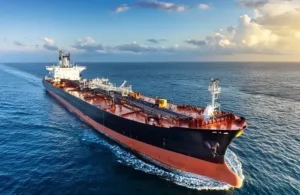
the US military announced that its forces had disabled two Iranian tankers; the vessels were attempting to enter the area in violation of the US blockade on Iranian ports. Hours earlier, the military had reported successfully repelling attacks on three of its naval vessels and launching retaliatory strikes against Iranian military installations situated within the Strait of Hormuz.
Since the outbreak of hostilities between the United States and Israel on February 28, Iran has effectively blockaded this vital global energy transit route; this has caused energy prices worldwide to skyrocket and triggered instability in global markets. Concurrently, the United States has imposed its own blockade on Iranian ports.
Separately, the UAE Ministry of Defense reported that three individuals sustained injuries while its air defense systems were engaging two ballistic missiles and three drones launched from Iran. However, it remains unclear whether all of the incoming missiles and drones were successfully intercepted.
The US asserts that its actions were taken in retaliation for attacks in the Strait of Hormuz.
On Friday, the US military released video footage of the two Iranian tankers; the video depicts a US warplane striking the vessels’ smokestacks. Earlier this week, a U.S. military warplane fired upon and disabled the radar—or navigation system—of an oil tanker; the U.S. forces claimed that this tanker, too, was attempting to breach their blockade.
Late Thursday night, the U.S. military announced that it had thwarted an Iranian attack on three U.S. Navy vessels in the Strait of Hormuz and, in retaliation, had launched counter-strikes against Iranian military installations. They further stated that no U.S. Navy vessels had sustained any damage during the incident.
Speaking to reporters on Friday, Rubio declared, “If they threaten Americans, they will be blown up.”
Iran’s Foreign Ministry has strongly condemned this U.S. military action, labeling it a “hostile” act; they assert that this move constitutes a violation of the ceasefire. “Whenever an opportunity for a diplomatic solution arises, the United States invariably chooses the path of reckless military action,” remarked Iranian Foreign Minister Abbas Araqchi in a post on the ‘X’ platform.
A news agency affiliated with Iran’s judiciary reported that a cargo vessel caught fire during a U.S. attack last night, resulting in the death of at least one sailor and injuries to ten others. It remains unconfirmed, however, whether this vessel is one of the two oil tankers that the United States had admitted to attacking.
U.S. President Donald Trump has emphasized that the ceasefire remains in effect. He also reiterated his warning that if Iran fails to agree to a deal regarding the reopening of the waterway and the curtailment of its nuclear program, the United States will resume its bombing campaign with full intensity.
**Oil Slick Visible Near Iranian Terminal**
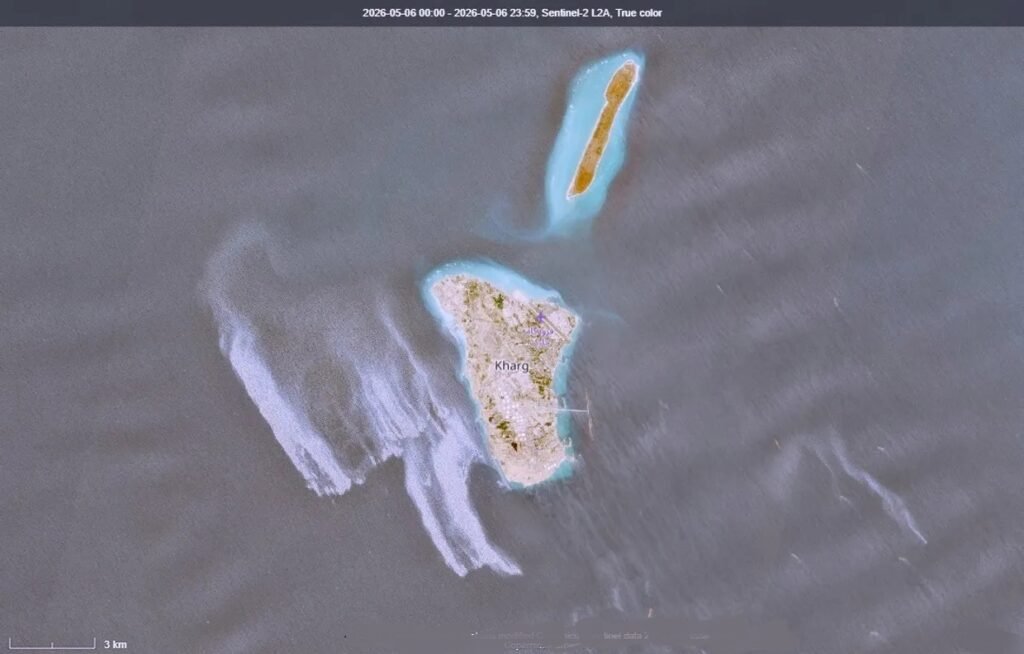
Satellite imagery reviewed by the Associated Press (AP) reveals an oil slick floating across the waters of the Persian Gulf; The source of this oil is the western edge of Kharg Island—which serves as Iran’s primary terminal for crude oil exports.
Ami Daniel, CEO of Windward AI—a maritime intelligence analysis firm—stated that images captured on Friday reveal the oil slick to be spread across an area of approximately 71 square kilometers (27 square miles); furthermore, it appears that oil is still leaking from the terminal.
According to Daniel’s calculations, since the oil slick was first detected in satellite imagery last Tuesday, an estimated 80,000 barrels’ worth of oil has spilled into the sea from Kharg Island. It remains unclear whether a mechanical failure, an airstrike, or some other factor is responsible for this oil spill.
“This is the risk of fighting in an oil-rich area,” said Daniel, adding that it’s unlikely any cleanup efforts will be launched in Gulf waters that have become an active war zone.
He said the spill appears to be spreading southwest and within the next two weeks could potentially reach the shores of the UAE, Qatar or Saudi Arabia.
Nina Noelle, an international crisis operations expert with Greenpeace Germany, said Friday that preliminary assessment and recent images show the spill beginning to disperse and it appears unlikely that it will impact land. She said depending on wind, waves and current conditions, parts of the slick could still possibly affect some sensitive marine habitats.